Information


Supreme Court Allows Centre to Review Vodafone Idea’s AGR Dues: A Relief Move for 20 Crore Subscribers
.webp)

Key Takeaways
- The Supreme Court allowed the government to reassess Vodafone Idea’s adjusted gross revenue (AGR) dues.
- The decision could ease VIL’s financial pressure and ensure service continuity for millions of subscribers.
- Relief may support telco sector recovery and attract fresh capital.
- Investors eye improved prospects for telecom stocks.
Supreme Court Allows Centre to Review Vodafone Idea’s AGR Dues: A Relief Move for 20 Crore Subscribers
In a landmark ruling, the Supreme Court of India has permitted the Central Government to reassess Vodafone Idea’s long-standing Adjusted Gross Revenue (AGR) dues—an issue that has clouded India’s telecom sector for years.
The verdict offers not just relief to Vodafone Idea (VIL) but also assurance to nearly 20 crore mobile subscribers worried about service continuity.
⚖️ 1. The AGR Battle: A Recap
The AGR dispute originated from how telecom operators calculate their gross revenue for license fees and spectrum charges. The Department of Telecommunications (DoT) included non-core revenue items (like rent and interest), inflating the dues.
This led to massive liabilities:
- Vodafone Idea: ₹58,000+ crore
- Bharti Airtel: ₹43,000 crore
- Tata Tele: ₹12,000 crore
The 2025 Supreme Court ruling allows the Centre to review these dues, recognizing the financial stress of the telecom industry and the importance of digital connectivity.
📉 2. What This Means for Vodafone Idea
Debt Relief and Stability
If the reassessment leads to reduced dues, Vodafone Idea can free up capital for 5G expansion, network upgrades, and debt repayment. Analysts estimate a potential relief of ₹15,000–₹20,000 crore if non-core items are excluded.
Investor Sentiment
Following the judgment, Vodafone Idea’s stock surged nearly 10% intraday, reflecting renewed investor confidence.
Strategic Funding Prospects
This relief could also make it easier for the telco to secure new funding from investors and strategic partners, including foreign telecom giants or sovereign funds.
📡 3. Impact on the Indian Telecom Sector
a. Healthy Competition Restored
The relief ensures Vodafone Idea’s survival, preserving competition against Bharti Airtel and Reliance Jio. A three-player market structure is essential to maintain consumer choice and reasonable tariffs.
b. 5G Rollout Acceleration
With less financial stress, VIL can accelerate its 5G rollout, complementing government initiatives like Digital India and BharatNet.
c. Regulatory Signal
The decision signals a pragmatic regulatory shift—recognizing that punitive dues could damage long-term digital infrastructure goals.
4. What Investors Should Watch
- Debt Restructuring: How Vodafone Idea manages its upcoming debt repayments and capital infusion.
- Tariff Hikes: Expected in 2026 to improve sector profitability.
- Government Stake: The Centre remains the largest shareholder (~33%), so any policy revision could directly impact valuations.
- Peer Reaction: Airtel and Jio may adjust strategies to retain market share as competition stabilizes.
FAQs
Q1. What are AGR dues?
A1. AGR dues are the government’s share of telecom operators’ adjusted gross revenue, including spectrum fees and license charges.
Q2. Will Vodafone Idea’s dues be completely waived?
A2. No, but they could be reduced after reassessment, offering significant breathing space.
Q3. How does this affect subscribers?
A3. It ensures uninterrupted services, better network investment, and potentially improved service quality.
Q4. Should investors consider buying VIL stock?
A4. Cautiously, yes—if the company demonstrates a clear funding and growth plan post-relief.
📈 Conclusion
The Supreme Court’s ruling is a turning point for India’s telecom ecosystem. By enabling a realistic review of dues, it revives faith in regulatory balance and long-term digital growth.
For investors, the move opens up opportunities in telecom and allied infrastructure segments.
👉 Open your Swastika Investmart account to explore telecom-sector insights and invest strategically in India’s digital future.
.avif)
Trade Talks and Tariffs: How the US–China Deal Could Reshape the Global Metal Market
Key Takeaways
- The latest US–China trade deal pauses steep tariffs and delays China’s rare-earth export restrictions.
- Global metal prices could stabilize as supply chains rebalance.
- India’s manufacturing and infrastructure sectors may benefit from cheaper raw materials.
- Indian metal producers could face pressure from Chinese import diversion.
- Investors should track global trade moves and use research-backed tools like Swastika Investmart.
Trade Talks and Tariffs: How the US–China Deal Could Reshape the Global Metal Market
The global metals market—steel, aluminium, copper, and rare earths—has entered a new chapter as the United States and China move closer to a trade truce. Both economic powerhouses have agreed to ease tariff escalation and relax export curbs, a shift that could realign supply chains worldwide.
For India and global investors alike, this development is more than a diplomatic headline—it’s a potential market mover.
🌐 1. What’s Inside the US–China Trade Deal
After months of tense negotiations, Washington and Beijing have agreed to a framework that pauses tariff hikes on Chinese goods and delays China’s restrictive export licensing regime for rare-earth minerals and magnets.
The deal hints at increased Chinese purchases of US goods and greater transparency in trade flows, especially in critical minerals like lithium and cobalt—vital for electric vehicles and renewable energy systems.
This pause comes as a relief for global manufacturers and metal buyers, who were grappling with supply uncertainty and rising prices due to protectionist trade policies.
⚙️ 2. How the Deal Impacts the Global Metal Landscape
a. Supply Chain Reset
- The deal temporarily halts restrictions on China’s export of rare-earths, giving breathing space to tech and EV manufacturers globally.
- The US, in turn, may reconsider its 100% tariff threat, calming price volatility.
- Mining-heavy economies such as Australia, India, and parts of Africa could see rising demand as global buyers diversify supply away from China.
b. Pricing Stability
Metal prices often swing wildly with geopolitical developments. In 2025, copper and aluminium prices fell sharply after optimism over the deal spread, reflecting reduced tariff risk.
For India, which imports a significant portion of its base metals, stable prices mean predictable input costs for sectors like auto, power, and infrastructure.
c. Global Winners and Losers
Countries like India, Vietnam, and Indonesia could emerge as indirect winners, offering alternative manufacturing and supply capabilities. However, traditional exporters that rely heavily on China–US trade routes might face reduced demand.
3. What It Means for India
Manufacturing Boost
India’s “Make in India” drive and infrastructure expansion depend on affordable access to metals. If global supply improves, manufacturers in auto, real estate, and energy could see margin gains.
Competitive Pressure on Producers
However, if China diverts its surplus steel and aluminium to India, local producers may feel the heat. The Indian Steel Association has already cautioned about rising Chinese imports. The government may consider safeguard duties if the imbalance grows.
Investor Outlook
For Indian investors, this is a cue to monitor metal producers, engineering firms, and companies tied to global supply chains. A short-term dip in global metal prices could be an entry opportunity into quality stocks.
📊 Real-World Example: Copper Market Reaction
In early October 2025, when news of a US–China tariff pause broke, copper futures fell 2.5% on global exchanges, easing input costs for Indian electrical and manufacturing firms. However, analysts warned that if talks fail, volatility could return.
FAQs
Q1. How will this deal affect metal prices in India?
A1. It’s likely to bring short-term stability, but longer-term effects depend on actual implementation and global demand.
Q2. Which sectors in India benefit most?
A2. Infrastructure, automobiles, renewable energy, and manufacturing will benefit from lower input costs.
Q3. Could Indian metal producers lose competitiveness?
A3. Possibly, if cheaper imports flood the market. Monitoring anti-dumping policies will be key.
Q4. Is this a good time to invest in metal stocks?
A4. Investors should stay selective and focus on companies with strong fundamentals and low debt ratios.
🧩 Conclusion
The US–China trade thaw could rewrite the rules of the global metal market. For India, it’s both an opportunity and a challenge—cheaper inputs for manufacturers but greater competition for domestic producers.
Investors must stay agile, track global developments, and rely on expert-backed research to make informed decisions.
👉 Open an account with Swastika Investmart and navigate this changing metals landscape with confidence.
%20(7)%20(1).avif)
Weekly Market Outlook: Nifty Near 26,000 | Bank Nifty Hits Record High!
Key Takeaways
- Nifty closed above 25,800, showing strong recovery from key support zones.
- Bank Nifty hit a fresh all-time high amid upbeat festive sentiment.
- FII inflows, strong Q2 earnings, and festive optimism fueled momentum.
- Key focus ahead: corporate earnings, Trump–Modi trade talks, and global cues.
- Trend remains bullish as long as Nifty sustains above 25,600–25,700 support levels.
Market Recap: Momentum Returns Ahead of the Festive Rush
The Indian equity markets ended last week on a high note, regaining momentum after a brief consolidation phase. The Nifty 50 closed comfortably above the 25,800 mark, recovering smartly from its key support zones, while the Bank Nifty scaled new record highs. The rally was supported by robust FII inflows, strong Q2 corporate earnings, and the ongoing festive demand optimism that lifted investor confidence.
Sectorally, banking and auto stocks were the key outperformers as consumer sentiment strengthened during the festive period. Midcaps and smallcaps also witnessed selective buying after recent corrections, suggesting that the undertone of the market remains positive.
Key Drivers Behind the Market Momentum
1. Festive Optimism and Consumption Boost
The festive season has historically acted as a tailwind for the Indian markets, driving demand across sectors like automobiles, FMCG, and banking. This year, with inflation cooling and rural demand showing early signs of recovery, consumption-linked stocks are finding renewed interest from investors.
2. Strong FII Flows and Institutional Support
Foreign Institutional Investors (FIIs) turned net buyers over the past week, adding momentum to the market’s upward trajectory. Their return signals confidence in India’s macroeconomic fundamentals, particularly amid global uncertainty. Domestic Institutional Investors (DIIs) also continued their steady participation, providing further support.
3. Technical Structure Remains Bullish
Technically, the Nifty 50 has established a solid base near 25,600–25,700, with immediate resistance at 26,000–26,200. As long as these support levels hold, the short-term trend remains bullish. The Bank Nifty, on the other hand, continues to show strength, with resistance around 58,000–58,500 and near-term support near 57,300.
Traders are advised to keep a close eye on these levels, as a decisive breakout above 26,200 could open doors to fresh lifetime highs in the coming sessions.
Global Cues: The External Forces at Play
The upcoming Trump–Modi trade talks have captured investor attention, with expectations of potential tariff relief and strengthened bilateral trade ties. Any positive outcome could lift sentiment across export-oriented sectors such as metals, auto, and chemicals.
Additionally, global commodity trends—especially crude oil and aluminium—may influence domestic inflation expectations and input costs for key industries. Investors are also watching for cues from the US Federal Reserve’s stance on interest rates, as global liquidity flows remain sensitive to policy signals.
Sectoral Outlook: Where the Action Lies
Banking and Financials
The Bank Nifty’s record-high performance reflects confidence in the sector’s earnings resilience. With improving credit growth and stable NPAs, the sector remains well-positioned. PSU banks have also joined the rally, supported by strong quarterly numbers.
Auto and FMCG
Festive demand continues to drive sales momentum, particularly in the two-wheeler and passenger vehicle segments. FMCG players are witnessing stable rural demand and increased urban consumption, benefiting from price stability and festive promotions.
IT and Metals
The IT sector remains range-bound amid global macro headwinds, while the metal sector—especially aluminium and copper producers—may see renewed interest on the back of rising global prices and improving trade sentiment.
Market Outlook: Bullish Bias Intact but Volatility May Persist
While the overall market trend remains bullish, short-term volatility cannot be ruled out. With multiple triggers—including corporate results, global geopolitical updates, and FII activity—traders should stay alert to sudden shifts in sentiment.
As long as Nifty sustains above 25,600, the market is likely to maintain its upward bias. A breakout beyond 26,200 may open fresh upside targets, while a dip below 25,600 could trigger mild profit booking.
For investors, this remains a phase to stay stock-specific—favoring sectors benefiting from domestic demand and festive consumption trends.
FAQs
1. What caused the recent rally in Indian markets?
The rally was driven by festive optimism, strong corporate earnings, and sustained FII inflows that boosted overall market sentiment.
2. Are Indian markets overvalued now?
While valuations are on the higher side, India’s strong growth outlook and robust earnings trajectory continue to justify investor confidence.
3. Which sectors could outperform in the coming week?
Banking, Auto, and FMCG are expected to remain in focus due to festive-driven demand and healthy Q2 performance.
4. What are the key levels to watch for Nifty and Bank Nifty?
Nifty support lies at 25,600–25,700 and resistance at 26,000–26,200. Bank Nifty support is seen near 57,300, with resistance at 58,500.
5. Should investors book profits or stay invested?
Long-term investors can stay invested in fundamentally strong sectors, while traders may consider partial profit booking near resistance levels.
Conclusion
The Indian stock market continues to exhibit strength backed by solid fundamentals and festive momentum. While volatility may persist due to global factors, the broader trend remains positive. For investors, the focus should remain on high-quality stocks and disciplined allocation.
At Swastika Investmart, our team of SEBI-registered research analysts provides expert insights, advanced trading tools, and personalized support to help you make informed investment decisions. Whether you are a trader or long-term investor, Swastika’s tech-enabled platform and educational initiatives empower you to invest with confidence.
👉 Open your account today with Swastika Investmart and stay ahead in your investment journey.
%20(6)%20(1).avif)
How to Secure Your Demat Account: TPIN, Nominee & Freezing Options Explained
Key Takeaways
- A Demat account stores your shares digitally with NSDL/CDSL.
- TPIN adds a layer of protection for every transaction.
- Nominee registration ensures smooth transfer of assets.
- Freezing your account prevents unauthorized transactions.
- Swastika Investmart offers SEBI-compliant, tech-driven investor safety.
Why Securing Your Demat Account Matters
Your Demat account is the digital vault that holds your stocks, mutual funds, ETFs, and bonds. It’s regulated by SEBI and operated through depositories like NSDL and CDSL—ensuring every Indian investor’s holdings are safe and traceable.
However, as online investing grows, cyber risks and unauthorized access attempts have also increased. This makes understanding safety features like TPIN, nominee registration, and account freezing absolutely essential.
Whether you use Zerodha, Groww, Upstox, Angel One, ICICI Direct, or Swastika Investmart, these security tools help you protect your portfolio from misuse and identity theft.
Understanding the Role of SEBI and Depositories
Before we explore the security tools, let’s understand how the system works.
All Demat accounts in India are linked to one of two depositories—NSDL (National Securities Depository Limited) or CDSL (Central Depository Services Limited).
Your broker, known as a Depository Participant (DP), acts as the intermediary.
SEBI mandates brokers to follow strict KYC, audit, and data encryption standards to prevent fraud.
Platforms like Swastika Investmart, being a SEBI-registered DP, not only follow these guidelines but also go beyond by offering client-level transaction verification and regional investor support for extra safety.
1. What is TPIN and Why Is It Crucial?
TPIN (Transaction Personal Identification Number) is a 6-digit security code introduced by CDSL to authorize debit transactions from your Demat account.
Instead of sharing your login or password, you confirm trades using your TPIN—making it a second layer of protection.
Key Benefits of TPIN:
- Prevents unauthorized share transfers.
- Ensures only account holders can approve debits.
- Reduces dependency on brokers for trade authorization.
- Provides instant e-verification through OTP.
Example:
When you sell shares using Groww, Zerodha, or Swastika Investmart, you receive a prompt to enter your TPIN (or OTP) before execution. Without it, no shares can be sold from your Demat account making it hacker-resistant.
Pro Tip: Always set your TPIN directly through the CDSL website or official app, not via third-party links.
2. Nominee Registration – Protecting Your Legacy
Accidents and uncertainties can happen anytime, and that’s where the Nominee feature ensures your investments are safely passed on.
Nominee registration allows your family member or legal heir to inherit your holdings in case of an unfortunate event—without legal hurdles.
Why You Must Add a Nominee:
- Ensures smooth transfer of shares and mutual funds.
- Avoids legal disputes and delays in claim settlement.
- Acts as proof of relationship during asset transfer.
- Complies with SEBI’s nominee mandate for all investors.
Brokers like Swastika Investmart make the process easy with e-sign-based nominee addition, ensuring you don’t have to submit physical forms. If you haven’t added a nominee yet, visit your broker’s portal or CDSL’s “Easiest” service and update your details.
3. Freezing Your Demat Account – The Ultimate Safety Net
A lesser-known but powerful security feature, Freezing allows you to temporarily block debit transactions from your Demat account.
When you freeze your account, no securities can be sold, transferred, or pledged until you unfreeze it. This is ideal if:
- You are not actively trading.
- You suspect unauthorized login attempts.
- You want to lock your holdings for long-term investment.
Benefits of Freezing:
- Complete control over share movements.
- Zero risk of unauthorized debits.
- Instant unfreeze through your DP’s request or e-verification.
Example:
If you’re traveling abroad or taking a trading break, you can request your broker—like Swastika Investmart—to freeze your Demat account for specific securities or the entire account.
It’s a SEBI-approved safety measure that’s completely reversible.
4. Real-World Security Tips for Investors
Even with SEBI and CDSL safeguards, investor awareness remains your first line of defense.
Follow these simple best practices to keep your Demat account safe:
✅ Set strong passwords and update them regularly.
✅ Enable TPIN authorization for every sell transaction.
✅ Add or update your nominee details immediately.
✅ Use official apps/websites for login (avoid links from emails).
✅ Freeze the account when inactive or in case of suspicious activity.
✅ Monitor SMS/email alerts sent by your broker and depository.
Swastika Investmart also sends real-time trade alerts and periodic statements, giving you full visibility of your portfolio and ensuring no transaction goes unnoticed.
5. How Swastika Investmart Enhances Investor Security
Swastika Investmart stands out as a trusted SEBI-registered broker with a legacy of investor trust, regional presence, and ethical advisory.
Here’s how it enhances investor safety:
- Robust SEBI & CDSL compliance framework
- Advanced encryption on mobile and web platforms
- Dedicated compliance and investor grievance redressal cell
- Regional support centers across India for personalized help
- AI-based risk alerts and transaction monitoring for unusual activity
This makes Swastika a safe and transparent choice for investors who prioritize long-term security and local expertise.
FAQs
1. What is a TPIN in a Demat account?
A TPIN is a 6-digit code used to verify transactions from your Demat account. It replaces manual authorization and adds an extra layer of security.
2. How do I add a nominee to my Demat account?
You can add a nominee online through your broker’s portal or via e-sign on CDSL’s official site. It ensures your assets are transferred smoothly.
3. Can I freeze my Demat account anytime?
Yes. You can freeze specific securities or the entire account anytime by raising a request with your broker or through NSDL/CDSL’s online services.
4. Are TPIN and OTP the same?
No. TPIN is a static code for authorization, while OTP (One-Time Password) changes for each transaction. Both enhance security in different ways.
5. How does Swastika Investmart protect investor data?
Swastika uses advanced encryption, SEBI-compliant protocols, and real-time alerts to ensure client data and securities remain safe at all times.
Conclusion
Securing your Demat account isn’t just about having a strong password—it’s about using the right tools. By enabling TPIN authorization, registering a nominee, and using the freezing option when needed, you can ensure complete protection of your investments.
In an era of digital investing, Swastika Investmart combines technology, compliance, and trust to offer investors peace of mind. Whether you’re a beginner or a seasoned trader, safety should always come first—because wealth grows best when it’s well-guarded.
%20(5)%20(1).avif)
Why today’s U.S. inflation number could shake global equity markets
Key Takeaways
- U.S. inflation in September 2025 edged up to 3.1%, the highest since May 2024, driven by gas, food, and housing costs.
- Rising inflation often prompts central banks like the Fed to adjust interest rates, causing global market volatility.
- Indian markets react to U.S. inflation through currency fluctuations, import costs, and investor sentiment.
- Sectors like IT, pharma, and exports are sensitive to global economic shifts tied to U.S. inflation trends.
- Swastika Investmart offers timely research and tech tools to help Indian investors adapt strategically.
Introduction
Investors worldwide keep a close watch on the U.S. inflation rate as a vital economic indicator, and October 2025’s inflation figures have grabbed particular attention. With U.S. consumer prices rising to an annual rate of 3.1% in September—the highest since May 2024—the ripple effects on global equity markets and Indian investments are significant. Understanding how these developments influence market movements and sectors can empower Indian investors to navigate uncertainty confidently.
What Drove the Latest U.S. Inflation Number?
The recent inflation surge is attributed mainly to higher prices for gasoline, food, and housing-related services. Core inflation, which excludes volatile food and energy prices, remains steady at 3.1%, signaling persistent underlying price pressures in the economy. These elevated figures emerged despite expectations of inflation cooling down, highlighting ongoing tariff impacts and supply chain pressures.
How Inflation Influences Global Equity Markets
Central banks, including the U.S. Federal Reserve, use inflation numbers critically to set monetary policy. An unexpected rise in inflation often triggers fears of quicker interest rate hikes, increasing borrowing costs for businesses and consumers. This scenario can dampen corporate profits and slow economic growth, leading to volatility or declines in equity markets worldwide. Conversely, easing inflation tends to boost market confidence.
Real-World Example: The 2025 Market Reaction
In mid-2025, when inflation data showed signs of rising, global markets, including India’s stock indices like Sensex and Nifty, experienced increased volatility. Investors became wary of sectors highly sensitive to rates and currency swings, such as IT exports, pharmaceuticals, and manufacturing. For example, the growing cost of capital affected IT firms reliant on dollar revenues and pharma companies dependent on global supply chains.
Impact on Indian Markets and Investors
India’s open economy means that changes in U.S. inflation affect currency volatility and capital flows. A stronger dollar relative to the rupee increases the cost of imports, including crucial commodities like oil, aggravating domestic inflation pressures and raising input costs for businesses. The Reserve Bank of India often aligns its monetary policies in response to global trends to manage inflation and growth balance.
Sectors Most Sensitive to U.S. Inflation Changes
- Exporters and IT firms reckon with currency risks and demand shifts.
- Pharma companies face supply chain cost escalations.
- Financials experience margin pressures due to interest rate changes.
- Consumer goods and discretionary sectors react to inflation-driven spending shifts.
Why Swastika Investmart Is Essential in Volatile Times
In an environment of inflation-driven market shifts, investors need a reliable platform offering regulatory safety, insightful research, and tech-enabled tools. Swastika Investmart stands out by being SEBI-registered, providing comprehensive market analysis, personalized customer support, and investor education to help navigate global and domestic market complexities. Their advanced trading technology ensures seamless investing, whether in metros or emerging cities.
Ready to adapt your investment strategy in this global inflation era? Open your Trading account with Swastika Investmart
Frequently Asked Questions
Q1. Why is U.S. inflation important to India’s markets?
A1. U.S. inflation affects global interest rates, currency values, and investor sentiment, which in turn impact India’s capital flows, import costs, and stock market performance.
Q2. How might RBI respond to rising U.S. inflation?
A2. RBI monitors global inflation trends to calibrate its rate policies, balancing inflation control with growth objectives, often adjusting rates or liquidity accordingly.
Q3. Which Indian sectors are vulnerable to U.S. inflation changes?
A3. IT, pharma, exporters, financials, and consumer goods sectors are typically most sensitive due to currency exposure and cost structures.
Q4. How can investors protect their portfolios amid inflation volatility?
A4. Diversifying investments, leveraging expert research, and using tech-powered platforms like Swastika Investmart can help manage risks and spot opportunities.
Q5. What makes Swastika Investmart a trusted choice?
A5. SEBI registration, strong research capabilities, personalized support, and advanced trading tools ensure safe, informed investing even in volatile markets.
Conclusion
The latest U.S. inflation number underscores the ongoing uncertainty in global markets, requiring Indian investors to stay vigilant and informed. Partnering with Swastika Investmart provides access to expert analysis, regulatory trust, and cutting-edge technology—equipping investors to adapt confidently to evolving market landscapes. Take control of your investments and open your Swastika Investmart account today.
%20(4)%20(1).avif)
Crude Oil Prices Surge After US Sanctions on Russia — What It Means for Indian Markets
Key Takeaways
- US sanctions on Russian oil majors have sent crude prices surging globally.
- Indian refiners are forced to find alternative oil sources, likely raising import costs.
- Rising crude impacts inflation, interest rates, and several sensitive sectors in India.
- Investors should watch transport, paints, aviation, auto, and oil stocks closely.
- Swastika Investmart offers trusted research and support in volatile conditions.
Introduction
In October 2025, the financial world was rocked as US President Donald Trump imposed sweeping sanctions on Russia’s largest oil producers—Rosneft and Lukoil. Brent Crude jumped to $65.45 a barrel, marking a swift 7% weekly rally. As India relies on Russian oil for over a third of its crude imports, these sanctions have immediate consequences for Indian companies, investors, and even everyday consumers.
Understanding the Sanctions and Price Surge
The new US sanctions directly target Russian export giants, effectively cutting off a major crude supply source for India, China, and Turkey. Indian refiners, including both government-owned and private players, are reviewing their contracts, with most industry sources predicting Russian oil flows to India could fall to near zero within months. The supply crunch, with around 3.1 million barrels per day potentially removed from the market, has triggered a rush for alternate sources and pushed up prices worldwide.
Real-World Example
Consider Reliance Industries and Nayara Energy, two private Indian refiners that source nearly half their crude from Russia. With sanctions in place, they must quickly source oil elsewhere, likely at higher market rates, putting pressure on margins and possibly passing on costs to consumers. At a macro level, this could mean a 2–3% jump in India’s annual crude import bill—even if only a part of existing demand is filled by costlier non-Russian oil.
The Domino Effect: Ripple Across Indian Markets
Crude Oil’s Immediate Impact on Stocks
Indian companies in oil, aviation, paints, tyres, and auto are particularly sensitive to rising crude prices. Airlines like Indigo and SpiceJet see fuel expense rise, pressuring profits. Paint makers such as Asian Paints and Berger face costlier inputs, impacting margins. Logistics firms, tyre manufacturers, and automakers struggle with higher transport and production costs, often resulting in reduced consumer demand or squeezed earnings.
Sector-wise Impact Table
FX, Inflation, and Bond Market Effects
Rising crude prices often lead to currency outflows and depreciation of the rupee, as import bills swell. This can stoke inflation, prompting the RBI to raise interest rates to cool off prices, and affect bond markets with higher yields and volatility. Recent history shows that spikes in global oil prices have directly driven headline inflation above RBI targets.
Stock Indices: Sensex, Nifty Reaction
A 2025 study revealed a significant positive correlation between crude price surges and movements in the Nifty 50 and Sensex during periods of high volatility, though other factors such as global or pandemic stresses can dilute this link. In June 2025, for example, the Sensex slipped by 1% on crude-related panic even as broader economic mood remained uncertain.
India’s Policy and Regulatory Response
Indian refiners will now focus on Middle Eastern, African, and domestic alternatives, likely negotiating harder for discounts to offset import costs. The Indian government and RBI may consider fuel excise reductions or other consumer relief—for context, regulatory caution is heightened around elections when fuel costs become a political flashpoint. SEBI closely monitors derivatives and futures trading in crude for excess volatility or manipulative activity, maintaining fair, orderly markets.
Opportunities and Resilience for Investors
While some sectors face headwinds, there are also opportunities. Oil exploration and upstream companies may benefit from firmer prices. Investors should seek trusted partners who offer robust research, strong support, and educational resources to navigate market turbulence.
Why Swastika Investmart Stands Out
Swastika Investmart ticks every box for proactive, knowledgeable investing in uncertain times:
- SEBI registration ensures regulatory safety and transparent operations.
- Deep research and advanced tech tools help investors spot both risks and opportunities in oil-impacted stocks.
- Dedicated relationship managers and a PAN-India branch presence offer reliable, human support—crucial during market volatility.
- Powerful investor education resources guide decisions, even in fast-moving scenarios.
- The Swastika app delivers seamless, tech-enabled trading whether in metro cities or smaller towns.
Ready to make informed moves? Open your account now at Swastika Investmart
FAQ Section
Q1. Why did crude oil prices surge after US sanctions on Russia?
A1. The US sanctions removed millions of barrels of Russian oil from global markets, intensifying competition and sending prices higher.
Q2. Which sectors in India suffer most from crude price hikes?
A2. Airlines, paint makers, logistics, tyres, automakers, and oil marketing companies are most directly impacted due to higher input, transport, or fuel costs.
Q3. How is Swastika Investmart helping investors in this volatile market?
A3. Swastika offers expert research, responsive support, and advanced trading tools, keeping investors educated and prepared for sharp market swings.
Q4. Will RBI or the government intervene if crude stays high?
A4. RBI may raise interest rates to check inflation, and the government might adjust tax/excise on fuel to cushion consumer impact, especially near elections.
Q5. Should investors buy or avoid oil-linked stocks?
A5. Volatility can create both risk and opportunity; using robust research and reliable platforms like Swastika can help you position wisely in affected sectors.
Conclusion
In turbulent times, choosing an investment partner with strong research, regulatory backing, and excellent support is critical. Swastika Investmart continues to empower Indian investors, offering trusted advice, robust tech, and a personal touch. Grow your investing confidence and stay informed with Swastika Investmart.
Ready to navigate market volatility? Open your account now.
%20(2).avif)
HUL Q2 FY26 Results Explained: Profit Up 3.8%, Margins Under Strain Amid GST Shift and Demand Softness
Key Takeaways
- HUL’s consolidated net profit rose 3.8% YoY to ₹2,694 crore in Q2 FY26.
- Revenue grew modestly by 2.1% to ₹16,034 crore, affected by GST rate cuts and monsoon.
- EBITDA margin contracted by 90 basis points to 23.2% due to cost pressures and investments.
- Home Care and Beauty & Wellbeing segments showed growth; Personal Care and Foods remained stable or declined slightly.
- Management expects market normalization and demand recovery from November onward.
HUL Q2 FY26 Results Explained: Profit Up 3.8%, Margins Under Strain Amid GST Shift and Demand Softness
Hindustan Unilever Limited (HUL), India’s leading FMCG giant, announced its Q2 FY26 results presenting a controlled profit growth amid challenging macroeconomic conditions. Despite a 2.1% revenue rise to ₹16,034 crore, the company’s EBITDA margin shrank by 90 basis points to 23.2%, reflecting margin pressures from shifts in the GST regime and softer demand across segments.
Resilient Profit Growth Despite Headwinds
HUL’s consolidated net profit increased 3.8% year-on-year to ₹2,694 crore, driven partly by a one-off favorable tax adjustment. The company’s steady topline growth was weighed down by a transitional impact of GST rate reductions on nearly 40% of its product portfolio—such as soaps, shampoos, and packaged foods—from 18% and 12% to 5%. This, coupled with prolonged monsoon conditions and consumer cautiousness, led to muted volume growth during the quarter.
Segment Performance: Winners & Challenges
- The Home Care segment posted mid-single digit volume gains, supported by hygiene and cleaning products which remained in demand even as prices adjusted.
- Beauty & Wellbeing grew around 9%, powered by skincare and health products that are increasingly budgeted into discretionary spends by Indian consumers.
- Personal Care, which includes hair oils and oral care, faced growth headwinds due to GST-related channel destocking and pricing transitions.
- The Foods & Refreshments arm sustained a 3% sales growth led by vigorous beverage demand, offsetting tepid volume trends in other categories.
Margin Squeeze and Cost Investments
Despite revenues and profits advancing moderately, HUL’s gross and EBITDA margins contracted, pressured by increased investments in marketing, innovation, and e-commerce capabilities to future-proof growth. The fiscal environment’s inflationary components further strained profitability.
Management Outlook: Recovery on the Horizon
CEO Priya Nair underscored that these short-term disruptions are temporary and expects normalized trading conditions by early November as prices stabilize. She emphasized the company’s commitment to accelerating portfolio transformation by refining consumer segmentation and amplifying digital and online brand engagement.
This strategic focus aims to counterbalance near-term softness by driving volume-led growth sustainably in the mid-to-long term.
HUL in the Broader Indian Market Context
The Q2 performance mirrors broader market dynamics where GST reforms, coupled with evolving consumer spending patterns amid variable urban-rural recovery, are key themes. For investors tracking Indian FMCG, these quarterly insights provide signals on demand elasticity and shifting product preferences.
Regulatory environments guided by SEBI and consumer protection norms also influence company strategies on pricing and portfolio adjustments, relevant for market participants and shareholders alike.
Frequently Asked Questions
Q1: What caused the margin decline in HUL’s Q2 FY26 results?
A1: Margins contracted mainly due to transitional GST rate cuts affecting product pricing, higher marketing and operational investments, and inflationary cost pressures.
Q2: Which HUL segments grew despite the challenges?
A2: Home Care and Beauty & Wellbeing segments posted volume and sales growth, while Personal Care and Foods faced softness or remained flat.
Q3: Did HUL declare any dividends with the Q2 results?
A3: Yes, HUL declared an interim dividend of ₹19 per equity share, payable to shareholders as of November 7, 2025.
Q4: How does the GST change affect HUL’s business?
A4: The reduction of GST rates on about 40% of HUL’s products led to short-term channel destocking and pricing adjustments, impacting volume growth temporarily.
Q5: What is the management’s outlook going forward?
A5: Management expects market normalization and improved demand from November, backed by ongoing portfolio transformation and digital initiatives.
Conclusion
HUL’s Q2 FY26 results reflect its resilience amid GST-related disruptions and demand softness, with moderate profit growth but margin pressures signaling transitional challenges. The company’s forward-looking approach leveraging product innovation and digital marketing aligns with the evolving Indian consumer landscape.
For investors seeking reliable, SEBI-registered platforms with robust research tools and customer-centric services to navigate such market updates and insights, Swastika Investmart offers a technology-enabled trading experience backed by expert analysis and focused investor education.
Open your trading account with Swastika Investmart to invest smartly in FMCG and other growth sectors and stay ahead in India’s dynamic markets.
%20(1)%20(1).avif)
Tata Motors Passenger Vehicles delivers over one lakh vehicles during the 30-day festive period between Navratri and Diwali
Key Takeaways
- Tata Motors delivered over 1 lakh passenger vehicles between Navratri and Diwali 2025 .
- Recorded 33 percent year‑on‑year growth, with SUVs accounting for 70 percent of total sales .
- Nexon (38,000 units) and Punch (32,000 units) were top performers .
- Over 10,000 EVs sold—a 37 percent jump versus last year .
- CEO Shailesh Chandra highlighted the momentum as “a strong foundation for rest of FY 2026.”
India’s Festive Spirit Meets Auto Momentum
Every year, India’s festive period—stretching from Navratri to Diwali—serves as the pulse of consumer buying sentiment. In 2025, Tata Motors Passenger Vehicles captured this energy brilliantly, crossing 1 lakh deliveries in just 30 days, up 33 percent from last year’s figures .
The surge is not just about celebratory purchases—it reflects the evolving Indian consumer, moving decisively towards SUVs and electric mobility, underscoring confidence in made‑in‑India brands .
SUV Wave Propels Tata’s Growth
SUVs were the backbone of Tata Motors’ record‑breaking performance. Together, the Nexon and Punch accounted for 70 percent of total festive sales, consolidating Tata’s dominance in the utility segment .
- Nexon: Over 38,000 units sold (73% growth YoY). Crowned India’s best‑selling car for September 2025, it continues to define urban SUV lighting, safety and design standards .
- Tata Punch: A robust performer with 32,000 sales (29% YoY growth), appealing to first‑time buyers for its balance of compact form and rugged utility .
The company’s broader SUV portfolio—including Harrier, Curvv and Safari—also maintained momentum, contributing to the brand’s market share expansion in the premium mass segment .
EV Sales Spark India’s Green Shift
Tata’s electric vehicle (EV) portfolio registered over 10,000 deliveries during the 30‑day window, growing 37 percent year‑on‑year .
This was led by the Tata Nexon EV and Tiago EV models, which remain cornerstones of India’s transition to green mobility.
Rising charging‑infrastructure investments and state subsidies, combined with Tata’s in‑house Ziptron technology, have made EV adoption a mainstream conversation in urban India.
The National Electric Mobility Mission (NEMMP) and FAME‑II schemes from the Government of India have amplified this trend, making Tata Motors a clear beneficiary.
CEO Commentary and Outlook
Shailesh Chandra, Managing Director and CEO of Tata Motors Passenger Vehicles and Tata Passenger Electric Mobility, called the achievement a “landmark milestone”, reflecting robust customer trust and dealer partnerships .
He stated that this momentum “sets the tone for the rest of the fiscal,” as the company plans multiple upcoming launches across ICE and EV segments . Tata’s five‑year roadmap includes 30 product introductions, spanning new nameplates and model facelifts.
Market Impact and Investor Perspective
From an investor standpoint, Tata Motors’ record festive sales signal more than short‑term consumer uptick—they reaffirm its position as India’s second‑largest passenger vehicle maker and the leader in electric mobility.
Auto stocks on Dalal Street mirrored this optimism. Following the October announcement, Tata Motors shares traded with upward bias as analysts anticipated margin expansion amid operating leverage gains and robust order books .
For the broader Indian market, this performance echoes stronger domestic consumption trends that align with RBI’s latest projection of 6.6% GDP growth in FY 2026.
What Makes Tata Motors Stand Out
Tata Motors’ success is anchored in its focus on:
- Safety leadership with 5‑star global NCAP ratings for Nexon and Punch.
- Expansion in EV charging network and battery technology through Tata Power and Tata Chemicals.
- Customer‑first digital platforms for easy test drives and ownership support.
Its synergy within the Tata Group ecosystem continues to differentiate the brand from competitors like Mahindra and Hyundai.
How Investors Can Leverage the Auto Upswing
For retail investors tracking India’s auto resurgence, it’s crucial to use SEBI‑registered research platforms such as Swastika Investmart for data‑driven stock insights and IPO coverage.
Swastika’s comprehensive market analytics, 24x7 customer support, and user‑friendly mobile platform help you trade Tata Motors and other auto stocks with confidence.
Open a Free Account with Swastika Investmart to stay ahead of market trends and access exclusive research reports.
FAQs
1. Which Tata car sold the most during the festive period?
The Nexon SUV was the top performer, retailing over 38,000 units, a 73% jump over last year.
2. What percent of Tata Motors’ sales came from SUVs?
SUVs accounted for roughly 70 percent of total festive‑season sales .
3. How did EV sales perform during Navratri–Diwali 2025?
Over 10,000 EVs were delivered—a 37% YoY increase .
4. Will Tata Motors launch new models in FY 2026?
Yes, Tata anticipates 30 new models over five years across ICE and EV segments .
5. How does this impact Tata Motors’ stock outlook?
Analysts see sustained sales momentum and margin gains driving positive stock performance in FY 2026 .
Conclusion
Tata Motors’ 2025 festive success is a testament to India’s renewed auto confidence and consumer optimism. SUV popularity and EV uptake have placed the company at the helm of the country’s mobility transformation.
For investors looking to ride this auto wave, staying informed through expert‑backed, SEBI‑regulated brokers like Swastika Investmart ensures clarity and trust. A data‑driven approach can turn festive cheer into strategic opportunity.
Open Your Trading Account Now → Swastika Investmart
.avif)
Why RBL Bank’s $3 Billion Strategic Tie-Up with Emirates NBD Could Be a Game-Changer for India’s Banking Sector
Key Takeaways
- RBL Bank plans a $3 billion share purchase deal with Emirates NBD, one of the UAE’s largest banks.
- The partnership could significantly enhance RBL’s capital strength, digital capabilities, and international reach.
- The deal signals growing foreign investor confidence in India’s banking sector.
- It aligns with India’s broader goal of increasing global integration in financial services.
- Investors see this as a catalyst for value creation in mid-sized private banks.
A Strategic Partnership Poised to Redefine India’s Private Banking Landscape
India’s banking industry is undergoing a transformative shift. In a landmark development, RBL Bank has announced plans for a $3 billion strategic share purchase agreement with Emirates NBD, the largest bank in Dubai and one of the most respected financial institutions in the Middle East.
This deal, which is expected to conclude within five to eight months, could reshape RBL’s growth trajectory and boost foreign investor confidence in India’s financial sector. The timing couldn’t be more significant—India’s banking system is well-capitalized, credit growth remains strong, and regulatory stability is drawing global players back into the market.
What the RBL–Emirates NBD Deal Means
The deal involves Emirates NBD acquiring a substantial stake in RBL Bank, pending approvals from the Reserve Bank of India (RBI) and other regulatory bodies. While the finer details are still unfolding, the intent is clear: to infuse fresh capital, strengthen RBL’s balance sheet, and enhance its competitiveness in the fast-evolving Indian market.
If completed successfully, this could be one of the largest foreign investments in an Indian private sector bank in recent years—a clear vote of confidence in India’s economic momentum and banking resilience.
Strengthening RBL Bank’s Position
Capital Infusion and Balance Sheet Reinforcement
A $3 billion infusion will significantly strengthen RBL Bank’s capital adequacy ratio, giving it the headroom to expand its loan book and invest in technology. This is crucial for mid-tier private lenders, which face rising competition from larger peers like HDFC Bank, ICICI Bank, and Axis Bank.
Moreover, additional capital buffers will enable RBL to weather market fluctuations while maintaining compliance with Basel III capital norms—a key regulatory benchmark for banking stability.
Digital Transformation and Cross-Border Synergies
Emirates NBD is renowned for its digital banking innovation across the Middle East. Its collaboration with RBL could introduce advanced fintech solutions, AI-driven credit systems, and improved digital user experiences in India.
RBL has already made significant strides in digital banking through its partnerships with fintech startups. The new tie-up could amplify these efforts, positioning RBL as a digitally agile, globally connected bank catering to both retail and SME segments.
Access to Global Markets
The partnership is expected to open new corridors for cross-border trade financing, remittances, and wealth management services. Given India’s rapidly expanding diaspora and rising outbound trade, such integration could give RBL a strong foothold in international banking operations.
Impact on India’s Banking Ecosystem
Boosting Foreign Investment in Indian Finance
This tie-up signals renewed foreign investor confidence in India’s private banking ecosystem, especially after regulatory consolidation in the past decade. The entry of Emirates NBD, backed by its sovereign connections and strong credit profile, highlights India’s attractiveness as a long-term financial hub.
Strengthening Mid-Sized Private Banks
For mid-tier private banks like RBL, foreign partnerships offer access to global capital, technical know-how, and customer diversification. As competition intensifies in the digital and retail banking spaces, such alliances could help smaller players scale faster and sustain profitability.
Policy and Regulatory Implications
The deal also aligns with India’s policy focus on financial inclusion and innovation. RBI’s balanced approach toward foreign ownership and capital inflows ensures that while global participation grows, domestic stability is maintained.
This transaction, once approved, will likely set a precedent for similar foreign tie-ups, further integrating India into the global banking network.
The Bigger Picture: Why This Matters Now
The timing of the RBL–Emirates NBD deal coincides with a broader phase of economic optimism in India:
- GDP growth remains above 7%, supported by strong consumption and infrastructure spending.
- Credit growth in the private banking sector has sustained double-digit momentum.
- Banking reforms and digital adoption have improved transparency and efficiency.
This environment makes India an ideal destination for global banks looking for sustainable growth markets. The RBL–Emirates NBD partnership thus reflects a two-way confidence: India’s faith in globalization and the world’s trust in India’s banking potential.
Investor Insights: What Should You Watch?
FAQs
1. What is the purpose of RBL Bank’s tie-up with Emirates NBD?
The deal aims to strengthen RBL’s capital base, expand its digital offerings, and enhance its global connectivity through a strategic foreign partnership.
2. How will this partnership benefit RBL Bank customers?
Customers can expect more innovative digital products, better cross-border banking options, and improved customer service backed by international standards.
3. What role will the RBI play in this deal?
The Reserve Bank of India must approve the transaction as per the Banking Regulation Act and foreign investment norms, ensuring compliance and systemic stability.
4. Could this deal impact other private banks?
Yes. It may encourage similar strategic collaborations between Indian and global banks, boosting foreign capital inflows and sectoral competition.
5. Is this a good signal for investors?
Absolutely. The deal underscores confidence in India’s financial ecosystem and could drive upward momentum in banking stocks, especially among mid-sized private lenders.
Conclusion: A Strategic Leap for RBL Bank and Indian Banking
The proposed $3 billion partnership between RBL Bank and Emirates NBD has the potential to transform RBL into a stronger, more tech-savvy, and globally connected financial institution. More importantly, it reinforces India’s emergence as a dynamic and resilient banking hub in Asia.
As foreign capital flows in and domestic banks adapt to global standards, investors stand to benefit from this evolving growth story.
At Swastika Investmart, we empower investors with SEBI-registered research, advanced analysis tools, and 24×7 support to navigate such pivotal market developments. Whether you’re exploring new opportunities or managing your portfolio, our tech-driven investing platform ensures you stay ahead of the curve.
👉 Open your Swastika Investmart account today and be part of India’s financial growth story.
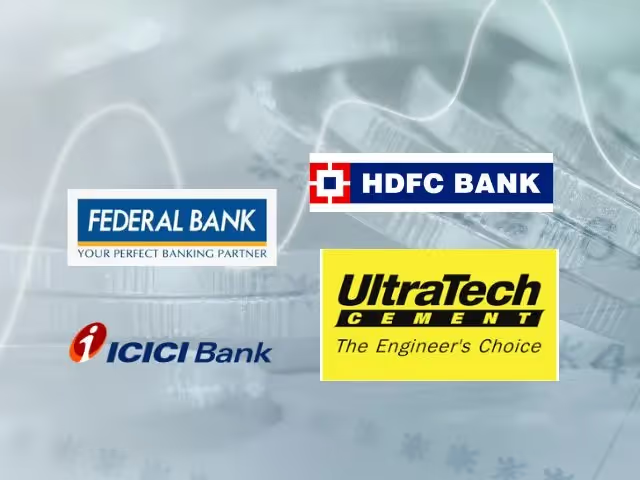
Q2 FY26 Results Analysis: How HDFC, ICICI, Federal Bank, and UltraTech Cement Reflect India’s Economic Momentum
Key Takeaways
- HDFC Bank reported solid profit growth with stable asset quality despite margin pressure.
- ICICI Bank delivered consistent numbers, showing strength in credit and cost management.
- Federal Bank posted robust core metrics even as profits dipped slightly YoY.
- UltraTech Cement’s 75% profit surge reflected strong infrastructure and housing demand.
- Together, these results showcase India’s broad-based economic growth across financial and industrial sectors.
India’s Q2 FY26 Earnings Season: A Mirror of Economic Momentum
The Q2 FY26 earnings season has been a clear indicator of India’s economic resilience. While the global economy continues to face inflationary pressures and geopolitical disruptions, India’s domestic demand, infrastructure push, and financial system stability have created a growth-supportive environment.
Leading financial institutions—HDFC Bank, ICICI Bank, and Federal Bank—have shown robust credit growth and sound asset quality. Meanwhile, UltraTech Cement, India’s largest cement producer, has reaffirmed the strength of India’s infrastructure and housing sectors with impressive profit growth.
Let’s break down how each of these companies performed and what their results reveal about the broader market trend.
Banking Sector: Stability Amid Cost Pressures
HDFC Bank: Strong Core, Steady Growth
HDFC Bank, India’s largest private sector lender, reported a 10.8% year-on-year rise in net profit to ₹18,641 crore, driven by healthy loan growth and improved asset quality. Its Net Interest Income (NII) grew 4.8% YoY to ₹31,551 crore, while Gross NPA declined to 1.24%, signaling strong credit discipline.
Despite these positives, HDFC faced mild margin compression due to a rise in deposit costs. The bank’s continued focus on retail loans and digital innovation, however, positions it well for future growth. Its diversified loan book across home, auto, and SME segments continues to drive stability in uncertain macro conditions.
ICICI Bank: Consistency with Structural Strength
ICICI Bank maintained its growth trajectory, reporting a 5% YoY rise in net profit to ₹12,359 crore. The NII expanded by 7.4%, backed by strong retail and corporate credit growth. Notably, the Gross NPA ratio improved to 1.58%, showing effective risk management.
With a strong CASA ratio and digital-first banking model, ICICI continues to strengthen its leadership in both retail and corporate lending. The bank’s prudent provisioning and focus on quality growth reflect a sustainable long-term strategy amid margin pressures.
Federal Bank: Solid Core, Modest Profit
Federal Bank’s Q2 FY26 results highlighted resilience in its core operations despite a 9.6% YoY decline in profit to ₹955 crore. The silver lining was its record NII of ₹2,495 crore (+5.4% YoY) and strong asset quality (GNPA at 1.83%, NNPA at 0.48%).
Sequential profit growth of 10.8% QoQ suggests the bank is recovering well. Federal’s expanding retail and SME portfolios, coupled with efficient cost management, indicate steady improvement in its operational fundamentals.
What This Means for the Banking Sector
The results from these three major banks underline a critical message—India’s banking sector remains robust, supported by stable credit demand, improving NPAs, and digital transformation. While margin pressure persists due to elevated deposit rates, loan growth momentum and credit quality offer comfort for investors.
Industrial Sector: UltraTech Cement’s Strong Foundation
UltraTech Cement: Cementing India’s Infrastructure Growth
UltraTech Cement, a bellwether for India’s infrastructure and construction sectors, reported a massive 75% YoY surge in net profit to ₹1,231.6 crore in Q2 FY26. This performance was primarily driven by strong demand from government-led infrastructure projects and resilient housing activity.
However, the company faced sequential revenue decline (~8%), mainly due to softer cement prices and elevated input costs. Despite that, UltraTech’s operational efficiency, capacity expansion, and cost optimization initiatives have enabled it to protect margins.
The management’s guidance on reducing fixed costs and maintaining a focus on green cement initiatives highlights UltraTech’s commitment to sustainability and long-term value creation.
Cross-Sector Analysis: A Broader Economic Pulse
Taken together, the results of HDFC Bank, ICICI Bank, Federal Bank, and UltraTech Cement provide a panoramic view of India’s macroeconomic landscape.
- Financial Sector: Credit demand remains strong, led by retail, housing, and MSME segments. Asset quality improvements across banks reflect robust underwriting standards.
- Industrial Sector: Infrastructure-led growth is driving cement demand, supported by government capex and real estate recovery.
- Macro Outlook: India continues to outperform major economies in GDP growth, supported by stable inflation, robust domestic consumption, and investment inflows.
These indicators underscore India’s transition from cyclical recovery to structural expansion.
Investor Perspective: Navigating Opportunities
For investors, these Q2 FY26 results highlight sectoral resilience and stock-specific opportunities:
CompanyPerformance SummaryInvestor ViewHDFC BankSteady profit growth, improved asset qualityLong-term buy on dipsICICI BankConsistent earnings, efficient capital useStrong hold; growth story intactFederal BankStable core metrics, improving sequential profitsAttractive for medium-term investorsUltraTech CementProfit surge, strong demand outlookBuy on corrections; long-term growth play
Investors should maintain a diversified approach across financial and industrial sectors, as both are crucial to India’s growth narrative.
FAQs
1. What is the main takeaway from the Q2 FY26 results?
The results show India’s economy is expanding steadily, with banks maintaining credit growth and industries like cement benefiting from infrastructure demand.
2. Why are bank margins under pressure despite higher profits?
Deposit costs have increased due to tighter liquidity, which compresses Net Interest Margins (NIMs) even as loan growth remains solid.
3. What does UltraTech Cement’s performance indicate about India’s economy?
It reflects strong infrastructure and housing activity, signaling robust capital expenditure and economic expansion.
4. Are these results a sign of long-term growth?
Yes, they indicate structural strength in banking and industrial segments, with sustainable growth potential over the next few years.
5. How can investors benefit from these trends?
By staying invested in quality financial and industrial stocks or through diversified portfolios with trusted research-backed brokers like Swastika Investmart.
Conclusion: India’s Growth Story Continues
The Q2 FY26 results from HDFC Bank, ICICI Bank, Federal Bank, and UltraTech Cement reaffirm India’s position as one of the world’s fastest-growing economies. With strong banking fundamentals, accelerating infrastructure activity, and sound corporate earnings, the Indian market remains an attractive destination for long-term investors.
At Swastika Investmart, we help investors make informed decisions through SEBI-registered research, advanced trading tools, and personalized support. Our tech-enabled platform ensures a seamless investing experience backed by deep market insights and investor education.
👉 Open your Swastika Investmart account today and start your journey towards smarter, data-driven investing.
%20(3)%20(1).avif)
Reliance Q2 Results 2025: What the Numbers Reveal About India’s Largest Conglomerate
Key Takeaways
- Reliance Industries Limited (RIL) posted a ~10–16 % year-on-year net profit growth in Q2 FY26, with revenue also up ~10 %. Moneycontrol+1
- Strong outperformance in the digital services and retail segments; legacy oil-to-chemicals (O2C) business remains profitable but facing margin pressure. mint+1
- Key milestones: Jio Platforms subscriber base crossed ~500 million; quick hyper-local retail delivery grew ~200 % YoY. The Economic Times+1
- For investors, this result reinforces RIL’s strategic pivot from commodity-cycles toward consumer & digital growth, though challenges in chemicals and global demand linger.
- With regulatory clarity, SEBI-registered broker partners like Swastika Investmart (equipped with strong research tools and tech-enabled investing) can help monitor these developments for long-term outcomes.
Introduction
When a company holds the title of India’s largest conglomerate by market capitalisation it naturally draws attention every earnings season. For Reliance Industries, the second quarter of FY26 (July-Sept 2025) did just that — delivering solid numbers across many fronts, while laying bare the shifting mix of its business model. In this blog, we walk through the Q2 results in a digestible way, highlight what’s working (and what isn’t), and explore what this means for the broader Indian market and for investors. As always, transparency, experience and thoughtful analysis are our guiding principles.
Performance Overview: What the Numbers Say
Revenue and Profit
RIL’s consolidated revenue climbed roughly 10 % YoY to around ₹2.59 lakh crore in Q2 FY26, up from ~₹2.35 lakh crore in the same quarter last year. The Times of India+1 The net profit attributable to owners rose to ~₹18,165 crore, a ~10 % increase YoY. The Financial Express+1 Some broker commentary and news reports mention even a ~14-16 % rise when including joint ventures and associates. Moneycontrol
These are respectable numbers for a company of this scale. Importantly, they reaffirm that Reliance’s core businesses are producing growth even as some global headwinds persist.
Business Segment Performance
Oil to Chemicals (O2C):
While the revenue growth here was modest (for example ~3.2 % YoY in some segment disclosures) the EBITDA expansion was stronger, thanks in part to improved fuel cracks and volumes. Moneycontrol+1 However, the downstream chemicals side reported margin pressure due to global oversupply of polyester chains. Moneycontrol
Retail (via Reliance Retail Ventures Ltd.):
The retail arm continues to shine, with reported ~18 % YoY revenue growth and EBITDA growth of ~16.5 %. Moneycontrol A big driver has been “quick hyper-local” delivery operations, which have seen explosive growth. Moneycontrol+1
Digital Services (via Jio Platforms):
Jio’s business reached a milestone of crossing ~500 million mobile subscribers. Its ARPU rose to around ₹211. The Economic Times+1 Its segment revenue grew ~14–15 % YoY, and management emphasised margin expansion. Moneycontrol
Strategic Implications: Why This Matters
- Shift in business mix – Every conglomerate reaches a point where legacy earnings flatten and growth comes from newer segments. For Reliance, consumer-facing (retail + digital) now appear to be driving value more than the cycle-sensitive O2C business. This matters for the long-term investor.
- India-centric growth story – With global demand weak and commodity cycles volatile, a company with deep India exposure (domestic retail, telecom, quick commerce) is better positioned to ride secular themes of consumption, connectivity and services.
- Margin and leverage watching – While growth is good, margin headwinds in chemicals and global volatility (raw materials, input costs) remain a risk. Investors should also monitor debt levels: though RIL has a strong balance sheet, keeping leverage in check is crucial, especially given large capex commitments (renewables, data centres).
- Regulatory & macro backdrop – From SEBI’s listing frameworks for telecom/consumer firms to India’s push in digital infrastructure and manufacturing, the landscape is favourable. Investors working through a SEBI-registered broker like Swastika Investmart gain access to research, regulatory updates, and tech-enabled tools to stay ahead.
Real-World Context: What does this mean for Indian Markets?
- A strong RIL result often lifts sentiment across sectors: energy, commodities, telecom, retail all get a boost because RIL’s operations touch them.
- For retail investors, rising ARPU in telecom and fast growth in quick-commerce point to structural shifts (e.g., higher data consumption, faster delivery). That creates opportunities across ancillary stocks: semiconductor, logistics, digital services.
- On the flip side, margin softness in petrochemicals signals caution for cyclical commodity-linked companies (both domestic and global).
What Investors Should Keep an Eye On
- Quarterly updates of Jio’s subscriber additions, ARPU trend and margins — the telecom sector is dynamic and can surprise.
- Retail format expansion and same-store-sales growth at Reliance Retail — as consumption recovers, these figures matter.
- Chemicals business margins on a global scale, given raw-material volatility and global oversupply.
- Capex commitments in new-energy, data-centres and manufacturing — these are longer-term, but they affect investor sentiment today.
- Regulatory developments in IPOs (e.g., Jio IPO plans), data-privacy laws, telecom policy — all important for valuation re-rating.
Frequently Asked Questions
Q1. Did Reliance beat market expectations in Q2 FY26?
The company delivered double-digit revenue and profit growth, though some analysts believe certain segments missed more optimistic estimates. mint+1
Q2. Which segment drove the most growth?
Retail and digital segments drove the bulk of the growth, thanks to strong volume uptick and expansion of quick-commerce. The O2C division grew revenue modestly, with margin pressure noted in chemicals.
Q3. Should I buy Reliance shares now?
This depends on your investment horizon. If you believe in India’s long-term growth story and the shift to digital/retail, Reliance presents a strong play. However, if you’re more focused on near-term cyclical gains from chemicals/petro, be cautious. Using a regulated broker like Swastika Investmart can help you access expert research and make informed decisions.
Q4. How does this result compare with peers?
While peers in telecom or retail may show sharper growth percentages, few have the scale and diversification of Reliance. That scale means both higher stability and higher complexity, which is why understanding segmental detail matters.
Q5. What are the key risks for Reliance going forward?
Key risks include commodity margin erosion (especially in chemicals), global demand slowdown, execution risk in new-energy capex, and regulatory changes in telecom/retail sectors.
Conclusion
Reliance’s Q2 FY26 numbers reflect a company in transition: still anchored in energy and petrochemicals, but rapidly tilting toward consumer-facing and digital businesses. For investors, this offers both a steady base and a growth extension. While some macro- and segment-specific risks remain, the overall snapshot is encouraging.
If you’re looking to track these developments with depth, use advanced tools, get timely research and trade safely, consider opening an account with Swastika Investmart — a SEBI-registered broker with robust investor education, responsive customer support and tech-enabled platforms built for today’s market.
Stay informed, assess per your strategy, and invest wisely.
%20(2)%20(1).avif)
Understanding Margin, Lot Size, and Leverage in Commodity Trading: A Complete Beginner’s Guide.
Key Takeaways
- Margin is the upfront amount you deposit to open a trade — not the full contract value.
- Lot size defines the minimum quantity of a commodity you can trade.
- Leverage allows you to control large positions with smaller capital.
- Together, they amplify both potential profits and losses.
- Learn how Swastika Investmart simplifies commodity trading with research-backed insights and user-friendly platforms.
Understanding Margin, Lot Size, and Leverage in Commodity Trading: A Complete Beginner’s Guide
Commodity trading in India has evolved into one of the most dynamic segments of the financial market. From gold and crude oil to agricultural products like soybeans and cotton, commodities offer investors an opportunity to diversify beyond equities and bonds. But before you dive in, it’s crucial to understand three fundamental concepts that govern this space — margin, lot size, and leverage.
These terms may sound technical, but they form the very foundation of how you trade and manage risk in commodities. Let’s break them down in the simplest way possible.
What Is Margin in Commodity Trading?
When you trade commodities on exchanges like MCX (Multi Commodity Exchange) or NCDEX (National Commodity & Derivatives Exchange), you don’t have to pay the full contract value upfront. Instead, you only pay a margin — a small percentage of the total value — to take a position.
This system enables traders to participate in large trades even with limited capital.
Example:
Let’s say gold futures are trading at ₹65,000 per 10 grams and the contract size is 1 kg (1000 grams).
- Total contract value = ₹65,000 × 100 = ₹65,00,000
- If the exchange requires a margin of 5%, you need to deposit ₹3,25,000 to open this position.
This ₹3,25,000 acts as a security deposit, allowing you to control a position worth ₹65 lakh. However, if the price moves against you, your losses could quickly eat into this margin — hence risk management becomes crucial.
Types of Margin
- Initial Margin: The minimum amount you need to initiate a trade.
- Maintenance Margin: The minimum balance that must remain in your account to keep the position open.
- Mark-to-Market (MTM) Margin: Adjusted daily to reflect gains or losses in your position.
Regulatory Note:
Margins in India are governed by SEBI to ensure fair play and adequate risk coverage for all participants.
What Is Lot Size in Commodity Trading?
Each commodity traded on an exchange has a standardized lot size, which ensures uniformity in contracts. The lot size represents the minimum quantity that can be traded for that specific commodity.
Example:
- Gold: 1 kg per lot
- Silver Mini: 5 kg per lot
- Crude Oil: 100 barrels per lot
- Natural Gas: 1,250 MMBtu per lot
So, if crude oil is trading at ₹7,000 per barrel, one lot equals ₹7,00,000 (₹7,000 × 100).
The lot size not only defines your trade volume but also directly impacts your margin requirement and risk exposure. Larger lot sizes mean bigger potential profits — but also greater potential losses.
Understanding Leverage in Commodity Trading
Leverage is the power of margin. It allows you to control large positions using smaller capital. Simply put, leverage magnifies your market exposure.
Formula:
Leverage = Total Contract Value ÷ Margin Requirement
Example:
If the total contract value is ₹65 lakh and your margin is ₹3.25 lakh, then:
Leverage = 65,00,000 ÷ 3,25,000 = 20x
This means every ₹1 you invest controls ₹20 worth of commodity exposure. While leverage can multiply your gains, it can also amplify losses if prices move in the opposite direction. Hence, understanding how to manage leverage is key to surviving in the volatile world of commodities.
Real-World Scenario:
In 2024, when global crude oil prices fluctuated due to OPEC decisions, highly leveraged traders on MCX faced both exceptional profits and heavy margin calls within hours. This highlights why risk management and discipline are essential in leveraged trading.
Margin, Lot Size, and Leverage — How They Work Together
Think of lot size as the scale of your trade, margin as the capital you commit, and leverage as the multiplier that connects them. Together, they determine how much exposure you have and how much risk you’re
A good trader balances all three — ensuring that leverage is used wisely, margins are maintained, and lot sizes match risk capacity.
Key Regulatory Insights
- SEBI (Securities and Exchange Board of India) and FMC (Forward Markets Commission) ensure margin systems are transparent and fair.
- MCX and NCDEX specify lot sizes and margin requirements per contract.
- Margin and leverage ratios can change based on volatility, market liquidity, and regulatory revisions.
Always check the latest margin circulars issued by your broker or the exchange before trading.
Why Choose Swastika Investmart for Commodity Trading
Swastika Investmart, a SEBI-registered full-service brokerage, provides a tech-enabled platform designed for both beginners and experienced traders.
Here’s what makes Swastika stand out:
- Advanced Research Tools: In-depth market insights, daily reports, and expert analysis.
- Investor Education: Regular webinars and learning modules to strengthen trading knowledge.
- Dedicated Support: 24×7 customer service with personalized guidance.
- User-Friendly Platform: Fast order execution and real-time market data.
Ready to explore commodities confidently?
👉 Open Your Commodity Account with Swastika Investmart
FAQs
1. Is commodity trading suitable for beginners?
Yes, with proper education and guidance. Start small, use minimal leverage, and trade through trusted brokers like Swastika Investmart.
2. What happens if I can’t maintain margin requirements?
Your broker may issue a margin call, and if unmet, your position could be squared off to limit risk.
3. How is margin decided in commodity trading?
It’s set by exchanges based on volatility, liquidity, and SEBI regulations.
4. Can I use leverage in all commodities?
Yes, but the leverage ratio varies across commodities and is subject to exchange and SEBI norms.
5. Are profits from commodity trading taxable?
Yes, profits are treated as business income under the Income Tax Act and must be reported accordingly.
Conclusion
Understanding margin, lot size, and leverage isn’t just about mastering formulas — it’s about mastering your risk and reward balance. These three elements form the backbone of every commodity trade and determine your long-term success in the markets.
With Swastika Investmart’s reliable research, advanced trading tools, and investor-first approach, you can make smarter, more confident trading decisions in the Indian commodity space.
👉 Start Your Commodity Trading Journey with Swastika Investmart Today
.avif)
Nestlé India Posts Mixed Q2: Revenue Rises, Profit Dips: Key Insights for Investors
Key Takeaways
- Nestlé India’s Q2 revenue grew, but net profit declined, reflecting margin pressures.
- Rising input costs and competitive pricing impacted profitability.
- Investors should track product mix, cost control measures, and market share trends.
- Swastika Investmart offers research-backed insights, SEBI-registered trading, and tech-enabled tools for informed investing.
- Careful portfolio planning is essential amid mixed FMCG results and market volatility.
Nestlé India Posts Mixed Q2: Revenue Rises, Profit Dips — Key Insights for Investors
Nestlé India, one of India’s leading FMCG players, recently announced its Q2 results, catching the attention of market watchers and retail investors alike. While the company reported a healthy increase in revenue, its net profit fell compared to the same quarter last year. This mixed performance raises key questions for investors: What factors are driving these results, and how should one navigate investment decisions in light of these trends?
Revenue Growth Amidst Market Challenges
Nestlé India’s revenue for Q2 increased, reflecting strong consumer demand for products like Maggi noodles, Nescafé coffee, and KitKat chocolates. This growth indicates resilience in the Indian FMCG sector, where brand loyalty and consistent demand help companies maintain top-line expansion even during cost pressures.
For instance, despite inflationary pressures on raw materials like milk, cocoa, and packaging, Nestlé India managed to post double-digit revenue growth in segments such as instant foods and beverages. This underscores the strength of its brand portfolio and distribution network.
Profit Decline: Causes and Context
Despite revenue growth, net profit fell due to:
- Rising input costs: Increased prices of raw materials and logistics added pressure on margins.
- Promotional activities and pricing strategies: To maintain market share, Nestlé India invested in marketing and offered promotional discounts, which impacted overall profitability.
- Currency fluctuations: Import costs for select ingredients increased due to INR volatility against the US dollar.
This trend is not unique to Nestlé India; several FMCG players are grappling with similar margin pressures as they balance growth with cost control.
Key Factors Investors Should Monitor
When analyzing Nestlé India’s stock or the FMCG sector in general, investors should keep an eye on:
1. Product Mix and Innovation
New product launches and portfolio diversification play a critical role in driving revenue and profitability. Products catering to health-conscious or convenience-seeking consumers have shown strong growth potential.
2. Cost Management Strategies
Effective management of input costs, supply chain efficiency, and pricing strategies will determine whether revenue growth translates into sustainable profit.
3. Competitive Landscape
With competitors like Hindustan Unilever, Britannia, and ITC investing in aggressive marketing and distribution, market share dynamics can impact long-term performance.
4. Regulatory and Market Environment
SEBI guidelines ensure transparent financial reporting, while FSSAI regulations influence product approvals and labeling standards. Investors should stay informed about regulatory updates that may impact operational costs or product portfolios.
Real-World Scenario
Consider an investor who tracks FMCG stocks closely. By leveraging Swastika Investmart’s research tools and advisory services, they were able to analyze Nestlé India’s Q2 performance, compare it with peers, and identify trends in raw material cost impacts. This enabled informed decisions, whether for long-term investment or tactical trading during quarterly earnings season.
Why Swastika Investmart Helps Investors
Navigating mixed earnings results requires reliable insights and seamless execution. Swastika Investmart offers:
- SEBI-registered trading platforms ensuring secure and compliant investments.
- Detailed research reports and analytical tools for market trends and stock comparisons.
- Tech-enabled platforms for efficient order placement and portfolio management.
- Investor education and customer support to guide both beginners and experienced traders.
With these features, investors can make timely and informed decisions even in volatile market scenarios.
FAQs
Q1: Why did Nestlé India’s profit decline despite revenue growth?
A: Rising input costs, promotional activities, and currency fluctuations pressured profit margins.
Q2: Should investors be concerned about Nestlé India’s Q2 results?
A: While profits dipped, revenue growth and strong brand positioning suggest resilience. Investors should consider long-term trends and sector context.
Q3: How does Nestlé India compare with other FMCG players?
A: Competitors like Hindustan Unilever and Britannia face similar margin pressures, making brand strength, innovation, and distribution key differentiators.
Q4: How can Swastika Investmart help in tracking FMCG stocks?
A: Swastika Investmart provides SEBI-registered trading, research-backed insights, and tech-enabled platforms for effective monitoring and informed decisions.
Q5: What should investors focus on post-Q2 results?
A: Key focus areas include product mix, cost management, market share trends, and regulatory developments affecting operations.
Conclusion
Nestlé India’s mixed Q2 performance reflects both the growth opportunities and cost challenges in the Indian FMCG sector. Investors should focus on long-term trends, margin management, and brand performance when making decisions. With Swastika Investmart, investors gain access to SEBI-compliant trading, expert research, and tech-enabled tools to navigate such market scenarios confidently.
Stay ahead in your investment journey — Open an Account with Swastika Investmart and trade with confidence.

Bank Nifty Hits Record Levels — Is This the Start of a New Banking Rally?
Key Takeaways
- Bank Nifty recently hit record highs, signaling bullish momentum in the banking sector.
- Strong quarterly results and macroeconomic stability are key drivers.
- Investors are analyzing sectoral trends, liquidity, and RBI policy impacts.
- Swastika Investmart offers research-backed insights, SEBI-registered trading, and tech-enabled tools.
- Market volatility remains, so informed trading and risk management are crucial.
Bank Nifty Hits Record Levels — Is a New Banking Rally on the Horizon?
The Indian stock market has witnessed a remarkable surge recently, with Bank Nifty hitting all-time highs. For investors, traders, and market enthusiasts, this is a development worth dissecting. But is this the beginning of a sustained banking rally, or are we seeing a short-term spike? Let’s dive into the market dynamics, sector fundamentals, and what this could mean for your portfolio.
Why Bank Nifty Is Making Headlines
Bank Nifty, comprising 12 major banking stocks listed on NSE, acts as a barometer of the Indian banking sector. Recently, the index surged past its previous records, driven by:
- Strong quarterly earnings: Leading private banks like HDFC Bank, ICICI Bank, and Kotak Mahindra Bank posted robust Q2 results, boosting investor confidence.
- RBI’s stable policy stance: With controlled inflation and manageable interest rate expectations, banks have better margins and credit growth potential.
- Liquidity in the market: Higher retail and institutional participation has pushed banking stocks upward.
For example, HDFC Bank’s net profit rose 16% YoY in Q2, while ICICI Bank reported a sharp reduction in non-performing assets. Such results create optimism among traders and long-term investors alike.
Key Drivers Behind the Rally
Several macroeconomic and sector-specific factors have contributed to Bank Nifty’s record levels:
1. Economic Growth & Credit Demand
India’s GDP growth remains resilient, and credit demand, especially in retail and corporate segments, is rising. Banks stand to benefit from increased lending activity, which directly impacts their profitability and stock performance.
2. Regulatory Confidence
The Reserve Bank of India’s (RBI) consistent regulatory framework and stress tests provide a stable environment for banks. SEBI regulations ensure transparency and protect investor interests, making banking stocks attractive for long-term investors.
3. Tech-Enabled Banking
Digital adoption, fintech collaborations, and AI-driven analytics are helping banks reduce costs and improve efficiency. For instance, ICICI Bank and Axis Bank’s online platforms have significantly increased customer engagement, reflecting in stock valuations.
4. Investor Sentiment
Domestic and foreign institutional investors have shown increased appetite for banking stocks, buoyed by a stable interest rate regime and improved asset quality.
Potential Risks to Consider
While the outlook seems optimistic, investors must remain cautious:
- Valuation concerns: With Bank Nifty at record highs, some stocks may be trading above intrinsic value.
- Global headwinds: Geopolitical risks, foreign rate changes, or oil price volatility can affect market sentiment.
- Sectoral concentration: Banking heavily influences Bank Nifty; a sectoral downturn can impact the index significantly.
How Swastika Investmart Supports Investors
Navigating the banking rally requires reliable research and seamless trading. Swastika Investmart stands out by offering:
- SEBI-registered trading and advisory services ensuring compliance and safety.
- Advanced research tools and market insights to make informed decisions.
- Tech-enabled platforms for seamless order execution.
- Strong customer support and educational resources for both new and experienced traders.
This combination allows investors to monitor the banking sector closely, execute timely trades, and manage risks efficiently.
Real-World Scenario
Consider an investor tracking Bank Nifty over the last six months. By leveraging Swastika Investmart’s research reports, they identified trends in PSU vs. private banks, RBI policy updates, and macroeconomic indicators. This insight allowed them to make calculated trades, optimizing their portfolio returns even amid market volatility.
FAQs
Q1: Why has Bank Nifty hit record levels recently?
A: Strong quarterly earnings, RBI stability, increased liquidity, and positive investor sentiment have driven Bank Nifty to new highs.
Q2: Is this a good time to invest in banking stocks?
A: While the sector shows potential, investors should analyze valuations, market trends, and their risk appetite before investing.
Q3: How does RBI policy impact Bank Nifty?
A: RBI’s interest rate decisions, credit policies, and regulatory measures directly affect banks’ profitability and lending activity, influencing the index.
Q4: How can Swastika Investmart help investors during a banking rally?
A: Swastika Investmart provides SEBI-registered advisory, research-backed insights, tech-enabled trading, and investor education for informed decision-making.
Q5: Are there risks in trading Bank Nifty at record levels?
A: Yes, market volatility, global factors, and overvaluation can impact returns. Diversification and risk management are essential.
Conclusion
Bank Nifty’s record-breaking performance indicates renewed optimism in the banking sector. While the rally presents opportunities, informed investing is key. With Swastika Investmart, investors gain access to SEBI-registered platforms, expert research, and cutting-edge tools to navigate the market efficiently.
Ready to explore the banking rally? Open an account with Swastika Investmart and trade confidently: Open Account

From Unicorn Hype to Public Scrutiny: How Lenskart, Swiggy, Groww, boAt, Raliance JIo, Ather Energy, Phone pe and OYO's IPOs are Redefining 'New-Age' Valuations.
Key Takeaways
- A Demat account holds your investments securely in digital form.
- AMC, brokerage, and transaction charges are governed by SEBI.
- Hidden costs often arise from inactivity or value-added services.
- Always verify your broker’s transparency before investing.
- Swastika Investmart ensures clarity, SEBI compliance, and strong regional support.
Understanding Demat Account Charges in India
A Demat Account—short for Dematerialized Account—is the foundation of modern investing in India. It allows investors to hold shares and securities electronically instead of physical certificates. This digital system, regulated by SEBI (Securities and Exchange Board of India), ensures safety, transparency, and ease of access for every investor.
However, investors—especially beginners—often get confused by different Demat account charges, such as AMC, brokerage, and hidden fees. Let’s break them down clearly so you can make informed decisions.
What is a Demat Account and Why is it Important?
A Demat account is essential for trading and investing in stocks, mutual funds, bonds, ETFs, and IPOs. It acts like a digital locker that securely stores your holdings under depositories such as NSDL (National Securities Depository Limited) and CDSL (Central Depository Services Limited).
Every investor must open a Demat account through a Depository Participant (DP), which could be a brokerage firm like Zerodha, Groww, Angel One, Upstox, ICICI Direct, or Swastika Investmart.
The key benefit of this system is investor protection — all holdings are regulated by SEBI, making the system safe and traceable.
1. Account Opening Charges
Most brokers charge a one-time account opening fee when you create your Demat account. Many platforms offer zero-cost onboarding, but sometimes a small fee ensures proper KYC verification, compliance, and documentation.
Swastika Investmart stands out here for offering personalized account setup support, ensuring investors—especially first-timers—complete their onboarding with full regulatory compliance and clarity.
2. Annual Maintenance Charges (AMC)
AMC, or Annual Maintenance Charge, is one of the most common Demat account costs. It’s levied yearly for maintaining your digital holdings with depositories like NSDL/CDSL.
This fee covers:
- Secure electronic storage
- Record maintenance
- SEBI compliance and investor communication
Some brokers waive AMC for the first year, while others adjust it based on your portfolio size.
At Swastika Investmart, the AMC structure is transparent—you know exactly what you’re paying for. The firm emphasizes no hidden deductions, coupled with strong customer support for resolving investor queries promptly.
3. Brokerage Charges Simplified
Brokerage is the fee brokers charge to execute trades on your behalf—whether buying or selling shares.
While discount brokers like Zerodha and Groww focus on minimal brokerage with DIY platforms, full-service firms like Swastika Investmart or ICICI Direct provide value-added services like research reports, market insights, and advisory—helpful for both beginners and serious investors.
Remember, brokerage is not just about the lowest cost—it’s about reliability and execution quality. A slightly higher brokerage may actually save you money by ensuring timely trades and better returns through expert research.
What differentiates Swastika Investmart is its open communication policy. Investors receive clear fee breakdowns, helping avoid confusion or mistrust—a strong sign of SEBI-aligned ethics.
4. How SEBI and Depositories Protect Investors
The SEBI framework ensures every investor’s money and securities are protected.
Through depositories like NSDL and CDSL, SEBI mandates:
- Daily reconciliation of securities
- Regular audits of brokers and DPs
- Mandatory e-verification (eDIS) for all trades
This ensures no unauthorized movement of securities, even if your broker faces operational challenges.
Swastika Investmart’s SEBI registration and long-standing reputation in the Indian financial market underline its commitment to these standards. Its combination of regulatory discipline and human advisory makes it a trusted partner for long-term investors.
5. Tips for Beginners Before Opening a Demat Account
If you’re new to investing, here’s a checklist to follow before opening your account:
- Check SEBI registration of your broker.
- Understand AMC and transaction fees beforehand.
- Review the mobile trading app’s security features.
- Prefer a broker with good research support—like Swastika Investmart—to guide your early investment journey.
By ensuring these points, you can start your investment journey confidently and safely.
FAQs
1. What is AMC in a Demat account?
AMC stands for Annual Maintenance Charge, a yearly fee brokers charge for maintaining your Demat account with NSDL/CDSL.
2. Can I hold multiple Demat accounts?
Yes, you can open multiple accounts with different brokers. However, managing them responsibly is crucial to avoid confusion or additional costs.
3. Which is the safest Demat account in India?
All SEBI-registered brokers linked to NSDL/CDSL are safe. Look for brokers like Swastika Investmart that emphasize compliance and transparent communication.
4. Do I need a Demat account for mutual funds?
It’s optional. Many platforms allow you to invest directly without a Demat account, but having one centralizes all your holdings efficiently.
Conclusion
A Demat account is your gateway to India’s growing capital markets—but understanding AMC, brokerage, and hidden charges is vital to a stress-free investing experience.
While platforms like Zerodha, Groww, and Upstox offer convenience, Swastika Investmart provides something deeper—trust, regional guidance, and transparent SEBI-compliant support.
As an investor, prioritize clarity, compliance, and confidence. Because in finance, knowing what you pay for is the first step to growing what you own.
.avif)
Demat Account Charges Explained: AMC, Brokerage & Hidden Fees Every Investor Should Know Copy
Key Takeaways
- A Demat account holds your investments securely in digital form.
- AMC, brokerage, and transaction charges are governed by SEBI.
- Hidden costs often arise from inactivity or value-added services.
- Always verify your broker’s transparency before investing.
- Swastika Investmart ensures clarity, SEBI compliance, and strong regional support.
Understanding Demat Account Charges in India
A Demat Account—short for Dematerialized Account—is the foundation of modern investing in India. It allows investors to hold shares and securities electronically instead of physical certificates. This digital system, regulated by SEBI (Securities and Exchange Board of India), ensures safety, transparency, and ease of access for every investor.
However, investors—especially beginners—often get confused by different Demat account charges, such as AMC, brokerage, and hidden fees. Let’s break them down clearly so you can make informed decisions.
What is a Demat Account and Why is it Important?
A Demat account is essential for trading and investing in stocks, mutual funds, bonds, ETFs, and IPOs. It acts like a digital locker that securely stores your holdings under depositories such as NSDL (National Securities Depository Limited) and CDSL (Central Depository Services Limited).
Every investor must open a Demat account through a Depository Participant (DP), which could be a brokerage firm like Zerodha, Groww, Angel One, Upstox, ICICI Direct, or Swastika Investmart.
The key benefit of this system is investor protection — all holdings are regulated by SEBI, making the system safe and traceable.
1. Account Opening Charges
Most brokers charge a one-time account opening fee when you create your Demat account. Many platforms offer zero-cost onboarding, but sometimes a small fee ensures proper KYC verification, compliance, and documentation.
Swastika Investmart stands out here for offering personalized account setup support, ensuring investors—especially first-timers—complete their onboarding with full regulatory compliance and clarity.
2. Annual Maintenance Charges (AMC)
AMC, or Annual Maintenance Charge, is one of the most common Demat account costs. It’s levied yearly for maintaining your digital holdings with depositories like NSDL/CDSL.
This fee covers:
- Secure electronic storage
- Record maintenance
- SEBI compliance and investor communication
Some brokers waive AMC for the first year, while others adjust it based on your portfolio size.
At Swastika Investmart, the AMC structure is transparent—you know exactly what you’re paying for. The firm emphasizes no hidden deductions, coupled with strong customer support for resolving investor queries promptly.
3. Brokerage Charges Simplified
Brokerage is the fee brokers charge to execute trades on your behalf—whether buying or selling shares.
While discount brokers like Zerodha and Groww focus on minimal brokerage with DIY platforms, full-service firms like Swastika Investmart or ICICI Direct provide value-added services like research reports, market insights, and advisory—helpful for both beginners and serious investors.
Remember, brokerage is not just about the lowest cost—it’s about reliability and execution quality. A slightly higher brokerage may actually save you money by ensuring timely trades and better returns through expert research.
What differentiates Swastika Investmart is its open communication policy. Investors receive clear fee breakdowns, helping avoid confusion or mistrust—a strong sign of SEBI-aligned ethics.
4. How SEBI and Depositories Protect Investors
The SEBI framework ensures every investor’s money and securities are protected.
Through depositories like NSDL and CDSL, SEBI mandates:
- Daily reconciliation of securities
- Regular audits of brokers and DPs
- Mandatory e-verification (eDIS) for all trades
This ensures no unauthorized movement of securities, even if your broker faces operational challenges.
Swastika Investmart’s SEBI registration and long-standing reputation in the Indian financial market underline its commitment to these standards. Its combination of regulatory discipline and human advisory makes it a trusted partner for long-term investors.
5. Tips for Beginners Before Opening a Demat Account
If you’re new to investing, here’s a checklist to follow before opening your account:
- Check SEBI registration of your broker.
- Understand AMC and transaction fees beforehand.
- Review the mobile trading app’s security features.
- Prefer a broker with good research support—like Swastika Investmart—to guide your early investment journey.
By ensuring these points, you can start your investment journey confidently and safely.
FAQs
1. What is AMC in a Demat account?
AMC stands for Annual Maintenance Charge, a yearly fee brokers charge for maintaining your Demat account with NSDL/CDSL.
2. Can I hold multiple Demat accounts?
Yes, you can open multiple accounts with different brokers. However, managing them responsibly is crucial to avoid confusion or additional costs.
3. Which is the safest Demat account in India?
All SEBI-registered brokers linked to NSDL/CDSL are safe. Look for brokers like Swastika Investmart that emphasize compliance and transparent communication.
4. Do I need a Demat account for mutual funds?
It’s optional. Many platforms allow you to invest directly without a Demat account, but having one centralizes all your holdings efficiently.
Conclusion
A Demat account is your gateway to India’s growing capital markets—but understanding AMC, brokerage, and hidden charges is vital to a stress-free investing experience.
While platforms like Zerodha, Groww, and Upstox offer convenience, Swastika Investmart provides something deeper—trust, regional guidance, and transparent SEBI-compliant support.
As an investor, prioritize clarity, compliance, and confidence. Because in finance, knowing what you pay for is the first step to growing what you own.

Dhanteras Investment Dilemma: Gold vs. Silver in the Current Market - Which is the Smarter Buy?
Key Takeaways
- Gold prices remain strong amid global uncertainty and central bank buying.
- Silver offers higher growth potential but comes with volatility.
- Experts suggest balancing both assets for portfolio stability.
- Gold ETFs and digital gold simplify investing for modern investors.
- Swastika Investmart helps you make smarter, research-backed investment decisions this festive season.
The Festive Gold Rush: Why Dhanteras Matters
Every Dhanteras, Indian households turn into mini investment hubs. It’s a day deeply rooted in tradition — symbolizing wealth, prosperity, and new beginnings. But this year, amid fluctuating global markets, rising inflation, and geopolitical tensions, one question stands out: “Should I invest in gold or silver this Dhanteras?”
Let’s decode this Dhanteras investment dilemma with a data-driven and research-backed approach.
Gold: The Timeless Guardian of Wealth
Gold has long been India’s favorite asset — not just for cultural reasons but for its proven ability to preserve value during uncertainty.
In 2025, gold prices have shown resilience, hovering around ₹71,000 per 10 grams (as of mid-October 2025), driven by:
- Central Bank Buying: Global central banks continue to accumulate gold to hedge against economic instability.
- Rupee Depreciation: The weaker rupee has further boosted domestic gold prices.
- Inflation Hedge: With inflation still a global concern, gold remains a safe haven.
Example: During 2020–2023, when equity markets were volatile, gold delivered an average annualized return of 10–12%, protecting investor portfolios.
However, the current trend indicates a consolidation phase — meaning that while gold remains a long-term wealth preserver, short-term upside could be limited.
Best Ways to Invest in Gold (2025):
- Gold ETFs (available on Swastika Investmart’s platform)
- Sovereign Gold Bonds (offered by RBI with 2.5% annual interest)
- Digital Gold via trusted platforms
- Physical gold (for traditional buyers)
Silver: The Underdog with Industrial Spark
Silver may not have the same emotional appeal as gold, but its dual nature — both as a precious and industrial metal — makes it extremely relevant in today’s green-tech economy.
In 2025, silver has been gaining traction due to:
- Industrial Demand: Silver is crucial for solar panels, EV batteries, and semiconductor production.
- Undervalued Pricing: At around ₹90,000 per kg, silver remains significantly cheaper than gold on a per-ounce basis.
- Volatility Advantage: While prices fluctuate more, they offer stronger returns during economic recovery phases.
Example: In FY24, silver outperformed gold globally, delivering ~20% returns amid the clean energy push.
However, investors must be prepared for price swings since silver’s demand is heavily tied to industrial growth cycles.
Ways to Invest in Silver (2025):
- Silver ETFs or ETPs
- Silver mini contracts on commodity exchanges
- Digital silver platforms
- Physical bars and coins
Comparing Gold vs. Silver: The 2025 Outlook
What Are Experts Saying This Dhanteras?
Market analysts believe that 2025 could be a pivotal year for precious metals. With the US Fed nearing rate cuts and global inflation cooling down, both gold and silver could shine — but in different ways.
- Short-Term (3–6 months): Silver may outperform gold due to industrial momentum.
- Long-Term (3–5 years): Gold remains the better hedge against systemic risks.
According to Swastika Investmart’s commodity research team, investors should consider a balanced allocation — 70% gold and 30% silver — to capture both stability and growth.
Real-World Scenario: How Investors Are Reacting
Let’s take an example — Meera, a 35-year-old professional from Mumbai. Last Dhanteras, she invested ₹1 lakh in gold ETFs and ₹50,000 in silver coins.
Today, her gold investment has grown moderately (~7%), while silver has delivered nearly double-digit gains, thanks to industrial demand. This diversified approach helped her balance returns and risk — a strategy that reflects modern investor sentiment.
How to Make Smarter Investments This Dhanteras
Dhanteras investments should not just be emotional but strategic.
Here’s how you can approach it smartly with Swastika Investmart:
- Use Research-Backed Insights: Get expert market research on gold and silver price trends.
- Invest Digitally: Access Gold and Silver ETFs directly through Swastika’s user-friendly platform.
- Diversify Smartly: Allocate based on your financial goals and risk appetite.
- Stay Educated: Learn through Swastika’s investor education resources and webinars.
👉 Open your investment account today:
Start Investing with Swastika Investmart
FAQs
1. Is gold still a good investment in 2025?
Yes. Gold remains a strong hedge against inflation and global uncertainty, especially with central banks increasing their gold reserves.
2. Why should I consider silver this Dhanteras?
Silver offers higher potential returns due to its growing industrial demand, particularly in renewable energy and electric vehicles.
3. Which is safer: Gold or Silver?
Gold is safer due to lower volatility, while silver offers better short-term growth potential. A mix of both can balance risk and reward.
4. Are Gold ETFs better than physical gold?
Yes, for investors seeking liquidity, safety, and no storage hassles, Gold ETFs are a practical alternative.
5. How can I invest in precious metals with Swastika Investmart?
You can open an account online and invest in gold/silver ETFs, sovereign bonds, or other digital options easily through Swastika’s platform.
Conclusion
Dhanteras 2025 is not just about tradition — it’s about making informed financial choices. Whether you choose gold for stability or silver for growth, remember that the smartest investment is one backed by research and discipline.
Swastika Investmart empowers investors with expert insights, reliable tools, and tech-enabled platforms — making your festive investments secure and future-ready.
🎉 Invest Smartly. Celebrate Prosperity.
Open Your Account with Swastika Investmart
.avif)
Supply Glut Fears Hit Crude Oil — How Should Investors Position Themselves Now?
Key Takeaways
- The International Energy Agency forecasts a record oil glut of 4 million barrels per day in 2026.
- Oil prices have slid nearly 17% in 2025, trading near multi-month lows.
- Supply growth outpaces demand as OPEC+ ramps up production and demand remains weak.
- Indian markets are influenced by both price falls and currency movement, impacting inflation and sectoral performance.
- Investors should focus on sector rotations, hedging, and informed portfolio moves in this volatile environment.
Crude Oil Supply Glut: What’s Happening?
Global crude oil markets are undergoing a significant shift. After years of supply cuts, OPEC+ (including Russia) has started rolling back production curbs sooner than expected. The International Energy Agency predicts that the world could face a surplus of up to 4 million barrels per day in 2026, roughly 4% of worldwide demand. This surplus is intensified by tepid demand, with economic growth forecasts being trimmed for major markets. As a result, oil prices dropped by 17% so far in 2025, with Brent trading near $62 and WTI below $59 per barrel — the lowest levels seen in five months.
Real-World Example:
In April 2025, OPEC+ announced faster output restoration. By September, global supply had already risen by more than 3 million barrels per day, outstripping demand growth. The result: traders now anticipate Brent staying below $60 for an extended period, with timespreads flipping into contango — signaling excess near-term supply and lower spot prices moving forward.
How Does This Impact Investors?
For Indian Market Participants:
Crude oil is central to India’s economy, with over 80% of consumption met via imports. Low prices can ease inflation pressures, improve trade deficits, and strengthen the rupee in the short term. However, sectors that rely on oil, such as upstream exploration and refining, may see profit margins squeezed, while downstream users (aviation, paints, adhesives, transport) could benefit from reduced costs.
Market Context:
- Oil exploration companies (ONGC, Oil India) typically suffer from low prices, whereas refiners and large consumers gain.
- Currency impacts: Cheaper oil can help stabilize the rupee, cushion inflation, and influence RBI policy.
- Equity flows: Lower oil prices may support equity valuations in affected sectors and help dampen overall inflation.
Regulatory Perspective:
India’s government and RBI closely monitor import bills, currency flows, and inflation data. Decisions on fiscal and monetary policy — such as interest rates or excise duties — are often calibrated with crude price movements.
Investor Strategies in an Oil Glut
With record supply likely to depress prices further, investors should consider these approaches:
- Sector Rotation: Focus on industries benefiting from lower input costs (aviation, paints, chemicals, transport), and remain cautious with oil producers.
- Hedging & Diversification: Use commodity-linked ETFs or futures, and diversify portfolios to mitigate sector-specific risk.
- Currency Watching: Track rupee-dollar movements to anticipate potential gains or risks for export-oriented and import-dependent sectors.
- Policy Signals: Watch for RBI and government interventions that may impact interest rates, excise duties, or sectoral support.
Relatable Scenario:
An investor exposed to ONGC shares may consider trimming positions or switching to airline stocks or FMCG firms that gain from cheaper energy costs. Portfolio balance is critical, and commodities can be used for hedging when markets are volatile.
Frequently Asked Questions
Q: Why are oil prices falling despite OPEC+ supply actions?
A: OPEC+ is increasing output faster than demand growth, resulting in oversupply and downward price pressure.
Q: What does a supply glut mean for Indian investors?
A: It can support sectors consuming oil, reduce inflation, and influence government monetary policy — but could hurt oil producers and exporters.
Q: Should I buy or avoid energy stocks now?
A: Consider sector trends; downstream users often benefit when oil is cheap, while upstream producers risk margin contraction. Diversification is key.
Q: How does the rupee respond to falling oil prices?
A: Lower oil import bills strengthen the rupee and dampen inflation, but global currency trends can still introduce volatility.
Q: Where can I learn to position my portfolio more effectively?
A: Leverage platforms like Swastika Investmart for comprehensive research, strategy tools, and investor education on commodity market trends.
Conclusion
The record oil surplus reshaping markets in 2025–26 means investors must adapt. Focusing on sector rotation, hedging, and attention to macro trends will help navigate volatility and identify new opportunities. With Swastika Investmart’s SEBI registration, advanced research, and pro investor support, you can position your portfolio smartly for evolving market conditions.
.avif)
Persistent Systems Q2 2025 Performance Analysis: Revenue, Profit & Outlook
Key Takeaways
- Q2 2025 revenue jumped 23.6% YoY to ₹3,580 crore; profit rose 45% YoY to ₹471 crore.
- EBIT margin expanded to 16.3% and operational efficiency improved significantly.
- Order bookings remained strong with $609.2 million TCV.
- Share price jumped 7% post-results, reflecting investor confidence.
- Swastika Investmart offers robust research tools and support for tech sector investing.
Persistent Systems Q2 2025: Revenue, Profit & Outlook
India’s mid-cap IT giant Persistent Systems continues to deliver robust results despite global and domestic market challenges. The Q2 2025 earnings not only surpassed analyst expectations but also highlighted Persistent’s operational agility, AI strategy, and broad-based demand.
Persistent’s Q2 FY26 Financial Performance: By the Numbers
For the quarter ended September 30, 2025, Persistent Systems reported consolidated revenue of ₹3,580 crore — a 23.6% year-on-year surge, and an impressive 7.5% sequential growth over Q1. Dollar revenue rose to $406.2 million, up 17.6% YoY.
Bottom line performance was even stronger:
- Net profit (PAT) soared 45.1% YoY to ₹471.4 crore, beating estimates handsomely.
- EBIT (operating profit) rose 43.7% YoY to ₹583 crore, giving an expanded margin of 16.3%, up 71 basis points QoQ.
The EBIT margin expansion signals a sharp improvement in operational efficiency, even as global IT spending showed signs of volatility during the period.
Order Wins, Business Momentum & AI Edge
Persistent’s order book momentum remained strong with Total Contract Value (TCV) for the quarter at $609.2 million and Annual Contract Value (ACV) at $447.9 million. Growth was broad-based across BFSI, healthcare, and product engineering services, with the company leveraging its domain strengths and proprietary AI solutions for digital transformation.
Leadership cited their platform-led AI strategy as a key differentiator, helping global clients modernize operations and drive measurable business value. The company’s ongoing partnerships with hyperscalers and strategic enterprise customers continue to drive annuity revenues.
Market Impact & Share Price Response
Persistent’s strong results led to a 6–8% rally in its stock price, touching new highs as investors and brokers upgraded their outlook for the stock and sector. The company’s consistency, marked by its 22nd consecutive quarter of revenue growth, has bolstered market confidence even as some peers struggle with margin compression.
Examples from the recent analyst calls include enthusiastic responses to Persistent’s ability to manage wage hikes and cost pressures, with management sharing a clear roadmap to sustain margins even as wage costs rise in Q3.
Indian Market Context & Regulatory Notes
Persistent’s performance comes amid a broader wave of resilience among India’s leading IT and digital engineering firms. The company operates in full compliance with SEBI and Indian IT regulatory frameworks, maintaining best-in-class transparency in reporting and IR practices. As India’s digital transformation deepens — supported by government initiatives and Digital India policy — Persistent’s services remain well-placed to benefit from expanding technology adoption.
Swastika Investmart: Smart Investing in the Indian Tech Sector
For investors aiming to participate in the tech sector’s growth, Swastika Investmart offers a SEBI-registered platform with excellent research, tech-powered tools, and customer support. Its ongoing commitment to investor education ensures smarter decisions and a seamless investing experience in Indian and global IT stocks.
FAQs
Q: What was Persistent Systems’ Q2 2025 revenue and profit?
A: Revenue was ₹3,580 crore (up 23.6% YoY), and net profit was ₹471.4 crore (up 45% YoY).
Q: Why did margins improve this quarter?
A: Expanded EBIT margin (16.3%) was due to operational efficiency, higher-value order wins, and cost management.
Q: How did the market respond to Persistent’s Q2 results?
A: The stock rallied 6–8% post-results, reflecting investor optimism and positive broker upgrades.
Q: What is the outlook for upcoming quarters?
A: Persistent targets continued growth, with a focus on AI, digital platforms, and managing wage-cost impacts in Q3.
Q: Why should investors consider Swastika Investmart?
A: For research-backed IT stock investing, SEBI compliance, and investor support, Swastika Investmart stands out in the market.
Conclusion
Persistent Systems’ Q2 2025 performance underscores its operational excellence, tech-forward growth strategy, and resilience in a competitive sector. As digital acceleration in India creates new investment opportunities, aligning with a trusted platform like Swastika Investmart can help investors make informed, confident choices.
.avif)
ICICI Lombard Q2 Earnings Breakdown: What the Numbers Mean for Investors
Key Takeaways
- ICICI Lombard’s Q2 FY26 net profit surged 18% YoY to ₹820 crore.
- Gross Direct Premium Income (GDPI) declined 1.9% YoY, but core business showed resilience.
- Board declared interim dividend of ₹6.50/share, up from ₹5.50 last year.
- Retail health and fire segments led growth; motor insurance faced moderate challenges.
- Swastika Investmart empowers investors with research, tech tools, and education.
ICICI Lombard Q2 Earnings 2025: What the Numbers Mean for Investors
India’s non-life insurance sector continues to show dynamism, and ICICI Lombard’s Q2 FY26 results are an eye-opener for investors tracking the industry’s future trajectory. As the second largest private insurer, ICICI Lombard’s latest financial disclosures highlight resilience in a mixed market environment.
Understanding ICICI Lombard’s Q2 FY26 Performance
ICICI Lombard reported an 18% year-on-year rise in net profit for the second quarter, reaching ₹820 crore compared to ₹694 crore last year. This growth came despite a small dip in its Gross Direct Premium Income (GDPI), which stood at ₹6,596 crore—a decline of 1.9% YoY. Excluding crop and mass health business, core GDPI rose 3.5%, showing strength across retail health and fire segments.
Key Financial Metrics
Investors and industry watchers closely monitor the combined ratio—a measure of underwriting profitability. ICICI Lombard’s combined ratio in Q2 was 105.1%, slightly up from 104.5% a year ago but competitive for the sector. The company maintained a healthy solvency ratio of 2.73x, well above the regulatory minimum of 1.5x.
- Net Profit: ₹820 crore (+18% YoY)
- GDPI: ₹6,596 crore (-1.9% YoY; +3.5% ex-crop & mass health)
- Combined Ratio: 105.1%
- Interim Dividend: ₹6.50/share
- Solvency Ratio: 2.73x
Real-world Market Impact
ICICI Lombard shares responded positively to earnings, rallying by 7–8% after the release, reaching multi-month highs and drawing robust volumes on NSE. Investors noted strong momentum in retail health and fire insurance, with revenue from retail health premiums up over 12% YoY. The motor insurance segment underperformed due to subdued vehicle sales and competitive pricing pressures, but sector analysts maintain optimism for recovery as government and GST-led vehicle sales rebound.
Regulatory Landscape and Accounting Adjustments
This quarter’s GDPI numbers are not directly comparable with last year, as India’s insurance regulator introduced the “1/N accounting method” for long-term products, impacting premium recognition timing. The solvency ratio, however, remained sturdy and comfortably above regulatory requirements by IRDAI (Insurance Regulatory and Development Authority of India).
What It Means for Investors
Strong net profit, interim dividend, and robust solvency metrics highlight ICICI Lombard’s ability to navigate sector headwinds and regulatory changes. Leadership set an ambitious ROE target of 18–20% for the full year, signaling continued focus on shareholder value. Retail health and fire insurance are clear growth drivers, while the motor insurance segment remains a watchpoint for Q3 and Q4.
Swastika Investmart: Your Trusted Partner for Informed Investing
For those seeking to invest in India’s financial markets, Swastika Investmart offers SEBI-registered reliability, comprehensive research, customer support, and technology-enabled execution—integral for making informed insurance sector investments. The platform’s ongoing investor education ensures you stay ahead in a rapidly evolving landscape.
FAQ Section
Q: What was ICICI Lombard’s net profit in Q2 FY26?
A: The company posted a net profit of ₹820 crore, an 18% increase YoY.
Q: Why did GDPI decline this quarter?
A: GDPI dipped 1.9% YoY due to new accounting standards and a drop in crop and mass health segments, but core business showed growth.
Q: What is ICICI Lombard’s combined ratio for Q2 FY26?
A: The combined ratio stood at 105.1%, reflecting underwriting pressure but operational resilience.
Q: Was a dividend declared?
A: Yes, an interim dividend of ₹6.50 per share was announced, up from the previous year.
Q: What segments are driving growth?
A: Retail health and fire insurance outperformed this quarter, while motor insurance faced challenges.
Conclusion
ICICI Lombard’s Q2 results offer important signals for investors—core profitability remains robust despite market and regulatory pressures. With leadership targeting further ROE growth and new insurance regulations in play, now is a strong time to evaluate opportunities in Indian insurance stocks. Swastika Investmart’s research, tech tools, and investor education can help you make smarter decisions in this dynamic sector. Take the next step in your investing journey today.

.avif)
.avif)
.avif)