Information
%20(3).avif)

FII FPI & DII Trading Activity on 2 April 2026 : Key Insights from April 2, 2026
.webp)

 Add Swastika as preferred source
Foreign and domestic institutional flows play a major role in shaping Indian stock market trends. The latest FII, FPI & DII trading activity on 2 April 2026 highlights a sharp divergence between foreign and domestic investors, offering key signals for traders and long-term investors alike.
Key Highlights
- DIIs remained strong net buyers, supporting market stability
- FIIs continued aggressive selling, creating downside pressure
- Domestic liquidity helped cushion broader market volatility
- Institutional flows indicate cautious global sentiment
Understanding FII, FPI & DII Activity in Today’s Market
On 2 April 2026, the Indian capital market witnessed contrasting institutional behavior:
DII Activity Shows Strong Buying Interest
Domestic Institutional Investors recorded significant net buying:
- NSE Net Buy: ₹6,709.74 crore
- Combined (NSE, BSE, MSEI): ₹7,208.41 crore
This consistent inflow from DIIs reflects strong domestic confidence, driven by mutual funds, insurance companies, and pension funds. These institutions often act as stabilizers during volatile periods, especially when foreign investors pull out funds.
FII/FPI Selling Continues
Foreign Institutional Investors and Foreign Portfolio Investors remained net sellers:
- NSE Net Sell: ₹9,229.52 crore
- Combined Net Sell: ₹9,931.13 crore
This indicates sustained outflows, likely influenced by global macroeconomic factors such as interest rate concerns, currency fluctuations, and geopolitical uncertainty.
Why Are FIIs Selling While DIIs Are Buying?
The divergence between FII and DII activity is not uncommon in Indian markets. Here’s what could be driving the trend:
Global Headwinds Impacting FIIs
Foreign investors are sensitive to global developments. Factors like:
- US Federal Reserve policy outlook
- Strengthening US dollar
- Global risk-off sentiment
These can lead to capital outflows from emerging markets like India.
Strong Domestic Participation
On the other hand, DIIs benefit from steady inflows through SIPs and retail participation. Thanks to regulatory frameworks by SEBI and monetary stability supported by RBI, domestic institutions are increasingly becoming the backbone of Indian markets.
Market Impact of Today’s Institutional Flows
Short-Term Volatility
Heavy FII selling often leads to immediate market pressure, especially in large-cap stocks where foreign investors have higher exposure.
Long-Term Stability
DII buying acts as a cushion, preventing sharp market corrections. This balance has been a defining feature of Indian markets in recent years.
Sectoral Influence
FIIs typically invest in sectors like banking, IT, and FMCG. Their selling can impact these sectors disproportionately, while DII buying is often more diversified.
What Should Investors Do Now?
Stay Focused on Fundamentals
Institutional flows can influence short-term trends, but long-term investors should focus on company fundamentals and earnings growth.
Watch Flow Trends Closely
Consistent FII selling over multiple sessions can signal broader market weakness, while strong DII support may limit downside risks.
Diversify Your Portfolio
Balancing exposure across sectors and asset classes helps reduce risk during volatile periods.
Platforms like Swastika Investmart provide research-backed insights, helping investors interpret such institutional trends effectively. As a SEBI-registered broker, it offers advanced tools, reliable support, and a strong focus on investor education, making it easier to navigate complex market movements.
FAQs
What is the difference between FII and FPI?
FII refers to institutional investors investing from abroad, while FPI is a broader category that includes FIIs and other foreign investors under a unified regulatory framework.
Why do DII flows matter in the Indian market?
DII flows provide stability as they are driven by domestic savings and are less volatile compared to foreign investments.
Can FII selling crash the market?
While heavy FII selling can create short-term pressure, strong DII inflows often prevent major crashes.
How can retail investors track institutional activity?
Investors can monitor daily data released by stock exchanges and use brokerage platforms offering real-time insights.
Final Thoughts
The FII, FPI & DII trading activity on 2 April 2026 clearly shows a tug-of-war between global caution and domestic confidence. While foreign investors continue to pull back, strong domestic inflows are keeping the market resilient.
For investors, this is a reminder to stay disciplined, focus on long-term goals, and avoid reacting to short-term noise.
If you want to make smarter investment decisions backed by expert research and technology, explore Swastika Investmart’s platform here:
Good Friday 2026: Stock Market, Banks, Currency & Commodity Markets Closed on April 2
Add Swastika as preferred source
Good Friday 2026 brings an important update for investors and traders across India. On April 2, 2026, financial markets including equity, currency, and commodity segments will remain closed in observance of this significant Christian holiday.
If you actively trade or invest, it is essential to plan your positions and transactions in advance to avoid last-minute surprises.
Quick Highlights
- NSE and BSE will remain closed on April 2, 2026
- Equity, derivatives, currency, and commodity segments will not operate
- Banks will be closed in most regions across India
- Markets will reopen on Monday, April 6, 2026
Why Markets Are Closed on Good Friday
Good Friday is a widely observed public holiday in India, marking the crucifixion of Jesus Christ. As per official exchange holiday calendars, major financial institutions pause operations on this day.
Stock exchanges like NSE and BSE, regulated by SEBI, follow a predefined list of trading holidays each year. Good Friday is one of the key non-trading days, ensuring uniform closure across all segments.
What Exactly Is Closed on April 2, 2026
Equity Market
No trading activity will take place in equities. Investors cannot buy or sell shares on this day.
Derivatives Segment
Futures and options trading will remain suspended across all indices and stocks.
Currency Market
Currency trading, including USD-INR and other pairs, will be closed.
Commodity Market
Commodity exchanges like MCX will remain shut for the entire day, impacting traders dealing in gold, silver, crude oil, and other commodities.
Bank Holiday on Good Friday
Banks across most states in India observe Good Friday as a holiday. However, the exact status may vary slightly depending on regional guidelines issued by the Reserve Bank of India.
While physical branches remain closed, digital banking services like UPI, net banking, and mobile apps will continue to function normally.
What Should Investors Do
Plan Trades in Advance
Since markets will be closed, ensure that all urgent trades or portfolio adjustments are completed before April 2.
Avoid Last-Minute Decisions
Liquidity remains unaffected before and after holidays, but sudden global developments during market closure can impact opening trends.
Stay Updated with Global Cues
Even though Indian markets are closed, global markets may remain open. Keep an eye on international developments that could influence market movement when trading resumes.
How Swastika Investmart Helps You Stay Prepared
During market holidays like Good Friday, having access to reliable insights becomes crucial. Swastika Investmart, a SEBI-registered broker, empowers investors with:
- Advanced research and advisory tools
- A robust, tech-driven trading platform
- Dedicated customer support
- Continuous investor education
These features help you stay informed and ready for the next trading session.
When Will Markets Reopen
After the Good Friday holiday on April 2, 2026, markets will remain closed over the weekend. Trading will resume on Monday, April 6, 2026, following regular market hours.
Conclusion
Good Friday 2026 serves as an important non-trading day for Indian financial markets. Whether you are an active trader or a long-term investor, understanding market holidays helps you manage your investments better.
Stay prepared, stay informed, and use this time to review your portfolio strategy.
To plan your next move with confidence, explore Swastika Investmart’s platform here:
Stock Market Currency Equity & Commodity Closed Tomorrow 2 April 2026
Add Swastika as preferred source
If you’re planning a bank visit, this is important. The phrase “banks closed tomorrow” has been trending across India, leaving many customers confused about whether they can access essential services. Bank holidays can impact everything from cheque clearances to cash withdrawals, so staying informed is key.
In this guide, we break down why banks may be closed, what services remain available, and how you can plan your finances smartly.
Quick Summary
- Banks in India close based on RBI holiday schedules and regional observances
- Digital banking services like UPI, net banking, and ATMs usually remain active
- Physical branch services such as cash deposits and cheque processing may be unavailable
- Plan transactions in advance to avoid delays or penalties
Why Are Banks Closed Tomorrow?
Bank holidays in India are governed by the Reserve Bank of India and vary by state. Banks may be closed due to national holidays, regional festivals, or weekly offs like Sundays and second or fourth Saturdays.
For example, if tomorrow falls on a regional festival like Ram Navami or a state-specific holiday, banks in certain regions may remain closed while others operate normally.
It’s always advisable to check the official RBI holiday calendar or your bank’s notification before visiting a branch.
What Services Are Affected?
Branch-Based Services
When banks are closed, the following services are usually unavailable:
- Cash deposits and withdrawals at branches
- Cheque clearance and processing
- Demand draft issuance
- In-person customer support
Services That Still Work
Even if banks are closed, digital banking ensures continuity. You can still use:
- UPI apps like PhonePe, Google Pay, Paytm
- Internet banking for fund transfers
- Mobile banking apps
- ATM withdrawals and deposits
This digital infrastructure has significantly reduced dependency on physical branches, especially in urban India.
How Bank Holidays Impact Financial Planning
Bank closures can disrupt important financial activities if not planned properly. For instance, if you have a loan EMI due date or need to transfer funds for a business transaction, a holiday can cause delays.
Here are a few practical tips:
Plan Ahead
Always complete critical transactions at least one working day before a holiday.
Use Digital Channels
Leverage UPI and net banking for seamless transfers even during holidays.
Monitor Settlement Timelines
Some transactions, like NEFT or RTGS, may have slight delays depending on timing and bank policies.
RBI Guidelines on Bank Holidays
The Reserve Bank of India categorizes bank holidays into three types:
- Holidays under the Negotiable Instruments Act
- Real Time Gross Settlement holidays
- Banks’ Closing of Accounts
These categories determine which services are affected. For example, RTGS holidays may impact large-value transactions, while others may only affect physical branch operations.
Understanding these classifications helps avoid confusion and ensures smoother financial planning.
Smart Investing Never Takes a Holiday
While banks may close, financial markets and investment platforms often remain accessible. This is where having a reliable broker becomes important.
Platforms like Swastika Investmart provide a seamless investing experience with:
- SEBI-registered credibility
- Advanced research and advisory tools
- User-friendly tech-enabled platform
- Strong focus on investor education
- Responsive customer support
Even during bank holidays, you can track markets, analyze stocks, and make informed decisions without interruption.
Frequently Asked Questions
Are all banks closed tomorrow across India?
No, bank holidays can be region-specific. Some states may observe holidays while others operate normally.
Can I still transfer money if banks are closed?
Yes, digital payment systems like UPI, IMPS, and net banking usually remain functional.
Will ATM services be affected?
ATMs generally remain operational, but cash availability may vary depending on location.
Do bank holidays affect stock market trading?
Not necessarily. Stock market holidays are separate and defined by exchanges like NSE and BSE.
Conclusion
Bank holidays are a routine part of India’s financial system, but they don’t have to disrupt your plans. By staying informed and using digital tools, you can manage your finances efficiently even when branches are closed.
If you’re looking to stay financially active regardless of bank schedules, consider exploring smart investing options with a trusted platform.
Stay prepared, stay informed, and make smarter financial decisions every day.
.avif)
Market Closing Summary Today 2 April 2026: benchmark indices like Nifty 50 and Sensex saw sharp intraday declines
Add Swastika as preferred source
The India stock market crash April 2026 caught investors off guard as benchmark indices like Nifty 50 and Sensex saw sharp intraday declines. While markets recovered partially later in the session, the sudden volatility raised concerns among retail and institutional investors alike.
In this blog, we break down the real reasons behind the fall, sector-wise impact, and practical strategies to navigate such uncertain times.
Key Takeaways
- Indian markets dropped sharply due to rising geopolitical tensions and crude oil spikes
- Sectors like pharma and auto underperformed, while IT showed resilience
- Global cues played a major role in triggering panic selling
- Long-term investors should focus on fundamentals, not short-term noise
What Triggered the India Stock Market Crash in April 2026
Geopolitical Tensions in West Asia
The primary reason behind the India stock market crash April 2026 was escalating geopolitical tensions in West Asia. Reports of potential military action involving Iran created uncertainty in global markets. Such developments often lead to risk-off sentiment, prompting investors to move away from equities.
Surge in Crude Oil Prices
India is a major importer of crude oil. When Brent crude prices surged close to $105 per barrel, it raised concerns about inflation and fiscal stability. Higher oil prices increase input costs for companies and reduce consumer spending power, negatively impacting corporate earnings.
Weak Global Market Cues
Global markets reacted negatively to geopolitical developments, and Indian markets followed suit. Foreign Institutional Investors, regulated under SEBI guidelines, often rebalance portfolios based on global risk factors. This led to increased selling pressure in Indian equities.
Profit Booking After Recent Rally
Before the correction, markets had seen a steady upward trend. Many traders used the opportunity to book profits, adding to the downward momentum.
Sector-Wise Impact of the Market Fall
Auto and Pharma Sectors Under Pressure
Auto stocks declined due to concerns over rising fuel costs affecting demand. Pharma stocks also corrected as investors shifted focus to safer assets.
Financials Show Mixed Trends
Banking and financial services showed resilience, supported by stable domestic fundamentals and regulatory oversight by the RBI. However, some profit booking was visible.
IT Sector Outperformed
Interestingly, IT stocks gained traction. Since they earn revenue in foreign currencies, a weaker rupee and global uncertainty often benefit export-oriented companies.
How Investors Should Respond
Avoid Panic Selling
Market corrections are a natural part of investing. Selling in panic often leads to losses. Instead, investors should evaluate whether the fundamentals of their investments have changed.
Focus on Diversification
A well-diversified portfolio across sectors can help reduce risk. Including defensive sectors like IT and FMCG can provide stability during volatile periods.
Monitor Key Indicators
Keep an eye on crude oil prices, inflation data, and global geopolitical developments. These factors significantly influence market direction.
Invest with a Long-Term Perspective
Historically, Indian markets have shown resilience despite short-term shocks. Staying invested with a long-term view often yields better returns.
The Role of SEBI and RBI During Market Volatility
The Securities and Exchange Board of India ensures transparency and protects investor interests during volatile periods. Meanwhile, the Reserve Bank of India monitors liquidity and inflation to maintain economic stability.
These institutions play a crucial role in maintaining confidence in the financial system.
How Swastika Investmart Supports Investors
During uncertain times like the India stock market crash April 2026, having the right guidance matters. Swastika Investmart, a SEBI-registered broker, offers:
- Strong research and advisory tools for informed decision-making
- A tech-enabled platform for seamless trading
- Reliable customer support for quick assistance
- Educational resources to help investors understand market trends
This combination helps investors stay confident even during market downturns.
Frequently Asked Questions
Why did the Indian stock market fall in April 2026?
The fall was mainly due to geopolitical tensions in West Asia, rising crude oil prices, and weak global market cues.
Which sectors were most affected?
Auto and pharma sectors saw declines, while IT stocks performed relatively well.
Is this a good time to invest?
Market corrections can offer buying opportunities, but investors should focus on fundamentally strong stocks.
How can I protect my portfolio during volatility?
Diversification, long-term investing, and avoiding panic selling are key strategies.
Conclusion
The India stock market crash April 2026 highlights how global events can quickly impact domestic markets. While short-term volatility can be unsettling, it also presents opportunities for disciplined investors.
Staying informed, maintaining a diversified portfolio, and focusing on long-term goals are essential strategies for navigating such phases.
If you’re looking to invest smarter and stay ahead in changing market conditions, explore Swastika Investmart’s platform and tools here:

Auto Sector on Fire: TVS Motor & Eicher Motors Deliver Strong March Sales Growth
Add Swastika as preferred source
At a Glance
- TVS Motor Company recorded monthly sales of 5,19,358 units in March 2026, a 25% jump year-on-year over 4,14,687 units in March 2025
- TVS EV sales surged 44%, reaching 38,877 units in March 2026, reflecting the company's growing dominance in the electric two-wheeler space
- Royal Enfield registered its highest-ever annual sales in FY26, crossing 1.2 million units — the second consecutive year above the one-million milestone
- In March 2026 alone, Royal Enfield sold 1,12,334 units, up 11% over March 2025
- Both companies signal strong rural demand recovery, premiumisation trends, and accelerating EV adoption — themes every Indian investor should understand going into FY27
There is a moment every April when India's auto industry holds its collective breath. Monthly sales figures pour in from every corner of the sector — passenger cars, two-wheelers, commercial vehicles — and within minutes, trading screens light up. April 1, 2026 was one of those days. And if you were watching TVS Motor Company and Eicher Motors, what you saw was not just a good month. It was a statement.
Both companies closed out FY26 with numbers that rewrote their own records. For investors tracking the Nifty Auto index, or anyone with exposure to the broader consumption story in India, what happened in March 2026 deserves a closer look.
TVS Motor: When 25% Growth Becomes the New Normal
TVS Motor has been quietly building one of the most consistent growth stories in Indian two-wheelers. But March 2026 was anything but quiet.
Total two-wheeler sales rose 25% to 4,98,134 units, with domestic volumes growing at the same pace. Motorcycle sales climbed 18% to 2,32,788 units, while scooters outpaced that with a sharp 31% rise to 2,17,624 units.
That scooter number is worth pausing on. The scooter segment has been a battleground in urban and semi-urban India — and TVS is clearly winning market share there. Whether it is the Jupiter dominating the family scooter space or the NTorq holding ground among younger urban riders, the portfolio is firing on multiple fronts simultaneously.
The EV Play That Is Turning Heads
If the overall sales were impressive, the electric vehicle numbers were stunning.
EV sales grew 44% year-on-year, rising from 26,935 units in March 2025 to 38,877 units in March 2026. Part of this was driven by the deadline for the government's PM E-DRIVE subsidy on March 31, which pushed many buyers to make their purchase decisions ahead of schedule. But the underlying demand for TVS's iQube electric scooter has been building steadily across both metro and non-metro markets.
For the full year FY26, TVS Motor recorded 3,41,647 EV units — a 44% year-on-year increase — making it the top-selling electric two-wheeler company in India for the financial year, surpassing players who once dominated that space.
That is a significant shift in the competitive landscape. A year ago, TVS was an aggressive challenger in EVs. Today, it is the segment leader.
Global Ambitions Backing Domestic Strength
International business also delivered, with total exports growing 25% to 1,41,443 units. Two-wheeler exports specifically grew 23% to 1,25,751 units.
Looking at the full financial year, TVS registered a 24% growth in total sales, clocking 58.89 lakh units compared to 47.44 lakh units in FY25. Three-wheeler sales surged 63% for the full year, and total exports rose 33%.
For a company that started as a regional two-wheeler manufacturer in Tamil Nadu, these are global-scale numbers.
Eicher Motors and Royal Enfield: Pure Motorcycling, Record Numbers
If TVS Motor told the story of volume and breadth, Eicher Motors told the story of brand power and premium positioning.
Royal Enfield registered its highest-ever annual sales in FY26, with total volumes reaching 12,38,659 motorcycles — a 23% increase over FY25. This marks the second consecutive year that the brand has crossed the one-million unit milestone.
Think about what that means in context. Royal Enfield was a niche brand with cult following not too long ago. Today, it is sustaining over one lakh units every single month and setting new records year after year.
March 2026: Steady, Solid, Significant
In March 2026, Royal Enfield sold 1,12,334 units, an 11% growth over 1,01,021 units sold in March 2025. The core up-to-350cc segment grew 12%, reaching 97,933 units — a clear sign that the volume engine of the business remains robust.
Domestic retail in March stood at 1,00,406 units — a solid 14% year-on-year growth in the home market. Export volumes were slightly softer at 11,928 units, down 8% from March 2025, likely reflecting some disruption in global shipping routes tied to the ongoing Middle East situation.
The domestic engine is firing on all cylinders. Royal Enfield has built a remarkably loyal customer base across age groups and geographies — from college students buying their first Bullet 350 in small-town India to working professionals upgrading to a Himalayan or Interceptor 650 on the weekend.
The Road Ahead: Capacity Expansion and Electric Entry
Eicher Motors has announced a Rs 958 crore investment to expand Royal Enfield's manufacturing capacity at its Cheyyar facility in Tamil Nadu, taking annual production capacity from 14.6 lakh units to 20 lakh units.
That kind of capital commitment signals something important — the company genuinely believes this growth trajectory is not a blip. It is building for sustained, multi-year demand.
The Flying Flea C6, Royal Enfield's first electric motorcycle, is expected to roll out in the coming months across global markets including India. For a brand built entirely on the thrum of combustion engines, this is a pivotal moment. If the Flying Flea resonates with existing Royal Enfield loyalists — and early signs suggest it might — it could open a new chapter entirely for the brand and its parent company.
VE Commercial Vehicles, Eicher's joint venture with AB Volvo, also posted healthy numbers with total FY26 sales rising 14.8% to 1,03,495 units. The light-to-medium duty truck segment led domestic gains, growing 24% — a reflection of the continued infrastructure and logistics activity across India.
What This Means for the Indian Stock Market and Investors
Auto sector monthly sales data is not just a number on a press release. For investors, it is a leading indicator of consumer sentiment, rural income trends, credit availability, and corporate earnings potential.
The March 2026 data from TVS and Eicher paints a picture of an Indian consumer who is spending, upgrading, and increasingly willing to embrace new technology. This has direct implications for the Nifty Auto index and the broader mid and large-cap auto space.
A few specific angles worth tracking as an investor:
The rural recovery story is real. A significant portion of two-wheeler demand, particularly for motorcycles, comes from semi-urban and rural India. Strong motorcycle sales at both TVS and Royal Enfield suggest rural incomes are holding up despite global headwinds — including crude oil pressure following geopolitical tensions in the Middle East. When rural India buys a motorcycle, it usually means farm income is healthy and credit flow is smooth.
The EV transition is accelerating, but established players are winning. The narrative a year ago was that pure-play EV startups would disrupt the traditional two-wheeler market. March 2026 data tells a different story. TVS — a traditional OEM — is now India's top EV two-wheeler brand. Bajaj Auto sits at number two. These are companies with decades of manufacturing experience, dealer networks across every district in India, and the balance sheet strength to absorb the EV transition without betting the company. That is a fundamentally different risk profile compared to EV-only players.
Premiumisation is not slowing down. Royal Enfield's consistent 20%-plus growth over two consecutive years reflects something deeper than just volume. Younger Indians with rising disposable incomes are increasingly choosing motorcycles as lifestyle products, not just utility vehicles. The average selling price of motorcycles is moving up, which means better margins for manufacturers and a more sustainable earnings trajectory.
SEBI, Disclosures, and Why Monthly Data Matters
It is worth noting that monthly sales disclosures by listed auto companies are made through regulatory filings on the NSE and BSE as per SEBI guidelines on material information and continuous disclosure requirements. This means the data is verified, audited at the company level, and publicly accessible — giving retail investors the same factual foundation that institutional analysts use for their models.
When you see a 25% growth number from TVS Motor or a record annual sales figure from Eicher Motors, that is not a marketing claim. It is a SEBI-regulated disclosure. For investors trying to assess the quality and sustainability of a business, this kind of recurring data is invaluable.
What Should You Watch in FY27?
Going into the new financial year, several factors will shape how these companies perform:
The expiry of the PM E-DRIVE subsidy on March 31, 2026 may create a brief slowdown in EV registrations in April as buyers who front-loaded purchases step back. This could create a short-term dip in numbers that should not be mistaken for a structural slowdown. Patient investors who understand this cyclicality will be better positioned.
Input cost pressures, particularly from crude oil-linked raw materials like rubber and plastics, remain a watch item. A prolonged period of elevated oil prices would pressure margins across the auto sector, even as volumes remain healthy.
New model launches — particularly Royal Enfield's Flying Flea electric motorcycle and TVS's ongoing iQube expansion — will be closely tracked for their contribution to the top line in the second half of FY27.
Frequently Asked Questions
Why did TVS Motor's EV sales spike in March 2026?A combination of factors drove the March EV surge. The PM E-DRIVE subsidy scheme was set to expire on March 31, 2026, which pushed many buyers to complete purchases before prices were expected to rise post-subsidy. Additionally, TVS expanded its iQube distribution into smaller cities and improved financing options, broadening the addressable customer base significantly.
Is Royal Enfield's 1.2 million annual sales number sustainable?The numbers suggest it is. Royal Enfield is investing Rs 958 crore to expand production capacity from 14.6 lakh to 20 lakh units annually — a clear signal that management expects demand to remain elevated. The premiumisation trend in Indian motorcycles, combined with growing international sales across 80-plus countries, provides multiple growth levers.
How do TVS Motor and Eicher Motors monthly sales affect their stock prices?Monthly sales data is a key input for quarterly earnings forecasts. Strong volume data typically leads to upward revisions in revenue and profit estimates, which tends to be positive for stock prices. Both stocks saw buying interest in the days following March 2026 data releases. That said, stock prices are also influenced by valuation, global sentiment, and sector rotation — monthly sales are one piece of the picture.
What is the Nifty Auto index and why does it matter?The Nifty Auto index tracks the performance of major automobile and auto component companies listed on the NSE. It serves as a benchmark for the sector and gives investors a way to take a view on the overall auto industry without picking individual stocks. Strong monthly sales data from marquee names like TVS and Eicher typically supports positive momentum in this index.
Should retail investors buy auto stocks based on strong monthly sales data?Monthly sales data is a useful input but should not be the only factor in an investment decision. Investors should also evaluate valuations, management quality, debt levels, margin trends, competitive positioning, and broader market conditions. A SEBI-registered investment advisor can help contextualise this data within a complete portfolio framework.
The Bottom Line
India's two-wheeler sector entered FY27 with considerable momentum. TVS Motor and Eicher Motors did not just have a good month in March 2026 — they delivered full-year performances that set new benchmarks for their respective businesses.
For investors, the message is straightforward. The Indian consumption story is intact. Rural demand is recovering. The EV transition is accelerating in favour of established players with scale and distribution muscle. And companies that combine strong brands with operational discipline are creating real, compounding value over time.
If you want to participate in this story — whether through direct equity investments, mutual funds with auto sector exposure, or structured research-backed strategies — having the right partner matters enormously.
Swastika Investmart, a SEBI-registered investment platform, provides investors with real-time research, powerful stock analysis tools, and personalised guidance from experienced advisors. Whether you are tracking auto sector developments or building a long-term portfolio, Swastika's technology-driven approach and dedicated support team can help you make informed decisions with confidence.

Astral Limited Fundamental Analysis: Revenue Growth, Margins & ROCE Breakdown
Key Takeaways
- Astral Limited has delivered strong long-term revenue growth driven by pipes and adhesives
- Margins have seen pressure in recent years due to raw material volatility
- ROCE remains healthy, reflecting efficient capital allocation
- Business diversification and brand strength support future growth
- Suitable for long-term investors but valuation comfort is important
Understanding Astral Limited’s Business Model
Astral Limited is one of India’s leading players in the piping and adhesives industry. Over the years, the company has expanded beyond CPVC pipes into adhesives, sealants, and infrastructure solutions. This diversification has helped Astral build a strong brand presence across both retail and industrial segments.
The company’s success is largely driven by its extensive distribution network and strong partnerships. Its association with global players and focus on innovation have enabled it to maintain a competitive edge in a crowded market.
Revenue Growth: A Consistent Performer
One of the most attractive aspects of Astral Limited fundamental analysis is its consistent revenue growth. Over the past decade, the company has reported steady expansion in sales, supported by increasing demand in housing, plumbing, and infrastructure sectors.
Key Growth Drivers
- Rising urbanization and real estate demand in India
- Expansion into adhesives through acquisitions like Resinova
- Strong dealer and distributor network across the country
For example, as India continues to invest in housing and sanitation projects, the demand for high-quality piping systems naturally increases. Astral has positioned itself well to capture this demand.
However, like most building material companies, Astral’s revenue growth is also linked to economic cycles. Slowdowns in construction activity can temporarily impact sales.
Margin Analysis: Pressure and Recovery Cycles
Margins are a critical part of Astral Limited fundamental analysis. While the company has historically enjoyed healthy operating margins, recent years have seen some pressure.
Why Margins Fluctuate
- Raw material costs, especially PVC and crude-linked inputs
- Competitive pricing in the pipes and adhesives segment
- Expansion-related costs
When crude oil prices rise, input costs increase, which can compress margins if the company is unable to pass on the costs immediately to customers. This was visible during periods of high commodity inflation.
That said, Astral has shown an ability to recover margins over time through pricing power and operational efficiency. Its premium brand positioning allows it to pass on cost increases better than smaller players.
ROCE Breakdown: Measuring Capital Efficiency
Return on Capital Employed is one of the most important metrics for evaluating a company’s efficiency. In the case of Astral Limited, ROCE has remained relatively strong compared to industry peers.
A healthy ROCE indicates that the company is effectively using its capital to generate profits. This is particularly important for manufacturing businesses, where capital investment is significant.
Astral’s consistent ROCE performance reflects:
- Efficient asset utilization
- Strong demand for its products
- Disciplined capital allocation
For investors, a stable or improving ROCE is often a sign of a high-quality business.
Industry Position and Competitive Landscape
Astral operates in a highly competitive market alongside players like Supreme Industries and Finolex Industries. While competition remains intense, Astral’s brand recall and product quality give it a distinct advantage.
The company’s expansion into adhesives has also opened up new revenue streams, reducing dependence on a single segment. This diversification strategy adds resilience to its business model.
Impact on Indian Markets and Investor Sentiment
Stocks like Astral Limited are often seen as proxies for India’s infrastructure and housing growth story. When the economy is expanding, these companies tend to perform well.
From a regulatory standpoint, investors should ensure that they invest through platforms compliant with Securities and Exchange Board of India guidelines. Transparency and governance play a key role in long-term wealth creation.
Astral’s consistent performance and strong fundamentals have made it a popular choice among long-term investors, especially those looking to benefit from India’s structural growth.
Investment View: Should You Consider Astral Limited?
Astral Limited stands out as a fundamentally strong company with a proven track record. However, like any quality stock, it often trades at premium valuations.
What to Watch
- Raw material price trends
- Margin recovery in upcoming quarters
- Growth in adhesives segment
- Overall demand in construction and infrastructure
Investors should avoid chasing the stock at high valuations and instead look for opportunities during market corrections.
Conclusion
Astral Limited’s fundamental analysis highlights a company with strong revenue growth, resilient margins, and efficient capital usage. Its diversified business model and leadership position in the industry make it a compelling long-term story.
However, valuation discipline remains key. Markets often reward quality, but overpaying can impact returns.
If you are looking to invest in fundamentally strong companies like Astral, having access to reliable research and advanced tools can make a big difference. Swastika Investmart, a SEBI-registered broker, offers robust research insights, tech-enabled platforms, and strong customer support to help investors make informed decisions.
Frequently Asked Questions
1. What does Astral Limited do?
Astral Limited is engaged in manufacturing piping systems, adhesives, and related infrastructure products.
2. Is Astral Limited a good long-term investment?
It is considered a strong long-term candidate due to consistent growth and strong fundamentals, but valuation should be considered.
3. Why do Astral’s margins fluctuate?
Margins are impacted by raw material costs, especially those linked to crude oil prices.
4. What is ROCE and why is it important?
ROCE measures how efficiently a company uses its capital to generate profits, indicating overall business quality.
5. What are the risks in investing in Astral Limited?
Key risks include raw material price volatility, competition, and slowdown in construction demand.
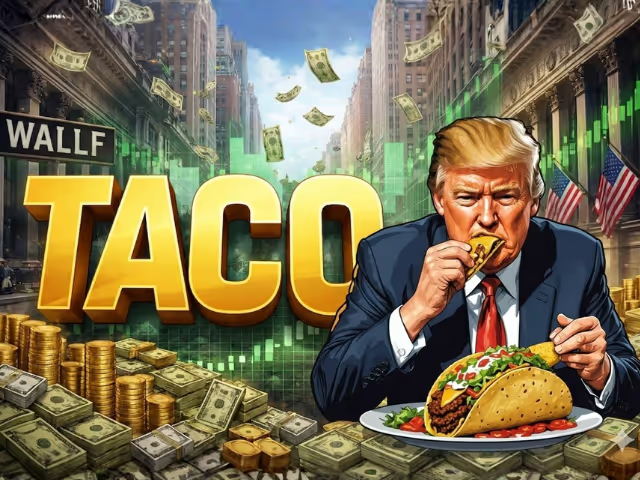
No, It's Not Mexican Food - Why Wall Street Calls Trump 'TACO' & How Trump Earned the TACO Label
Add Swastika as preferred source
No, It's Not Mexican Food — Why Wall Street Started Calling Trump "TACO" and Why It Matters for Your Portfolio
At a Glance
- TACO stands for "Trump Always Chickens Out" — a term coined by a Financial Times journalist in May 2025
- It describes Trump's pattern of making big threats on tariffs or policy, then quietly backing down
- Wall Street traders built a profitable strategy around this pattern — buy the dip, sell the bounce
- The TACO trade has now moved beyond tariffs and is influencing the US-Iran war narrative
- Indian markets — Sensex and Nifty — are directly feeling the heat every time Trump speaks
No, It's Not Mexican Food — Why Wall Street Started Calling Trump "TACO"
Picture this. It's May 2025. A journalist at the Financial Times is watching US markets go through yet another wild swing — crashing on a Trump tariff announcement, then roaring back two days later when Trump quietly walked it back. Frustrated and a little amused, the journalist coins a term that will echo across trading floors from New York to Mumbai.
He calls it the TACO trade.
And no — nobody is ordering guacamole.
TACO stands for Trump Always Chickens Out. Four words that managed to irritate the most powerful man in the world, make traders millions of dollars, and now — in 2026 — find themselves at the center of a live war situation in the Middle East.
Let's break it all down.
The Man, The Myth, The Pattern
When Donald Trump returned to the White House in January 2025, he came with a very specific economic vision — aggressive tariffs on imports to protect American manufacturing. He called it "Liberation Day" when he announced sweeping tariff rates against virtually every country on earth in April 2025.
Markets panicked. The S&P 500 tanked. Investors scrambled.
Then, exactly one week later, Trump paused most of those tariffs, dropping them to 10% for 90 days. Markets exploded upward in one of the biggest single-day rallies in history.
Traders who had bought the dip made a fortune.
This happened again. And again. China tariffs went to 145% — then got frozen. EU tariffs threatened at 50% — then delayed. Federal Reserve chair Jerome Powell threatened with removal — then Trump backed off.
Robert Armstrong of the Financial Times noticed the pattern and gave it a name: the TACO trade — Trump Always Chickens Out. The strategy was simple. When Trump makes a scary announcement and markets fall, buy. When he inevitably walks it back, sell. Profit.
When a reporter asked Trump about the term at a White House press conference, his reaction was telling. He called it a "nasty question" and said, "Don't ever say what you said." He insisted it was all just negotiation.
Wall Street disagreed — and kept buying the dips.
How TACO Works as a Trading Strategy
The mechanics are straightforward once you understand the pattern.
Trump announces something extreme. Tariffs, sanctions, threats — whatever it is, it sounds catastrophic. Markets sell off sharply because uncertainty is the enemy of equity prices. Volatility spikes. Fear dominates the headlines.
Then, within days or sometimes hours, Trump softens the stance. Maybe he says talks are going well. Maybe he announces a pause. Maybe he just posts something vague but hopeful on Truth Social. Markets interpret this as de-escalation and rally hard.
Traders who stayed calm and bought during the fear phase walked away with solid gains — repeatedly.
One Wall Street analyst described the approach simply: "He steers us toward disaster and then, at the last minute, steers us away from disaster and says, look, I saved us."
For most of 2025, this worked like clockwork. So well, in fact, that the term entered mainstream financial vocabulary and analysts began pricing TACO expectations directly into their models.
TACO Crosses Into Foreign Policy — And Hits a Wall
By early 2026, something shifted. The TACO trade moved beyond trade policy into actual military conflict.
On February 28, 2026, the US and Israel launched coordinated strikes on Iran — an operation called Epic Fury. Oil prices surged. The Strait of Hormuz, through which roughly one-fifth of the world's oil supply flows, came under Iranian pressure. Global markets went into shock.
And then the TACO pattern started repeating — except this time with much higher stakes.
In March 2026, Trump posted on Truth Social that the US and Iran were having "good and productive conversations" toward a complete resolution. GIFT Nifty surged over 700 points in a single evening. Brent crude fell from $113 to $98 per barrel almost instantly.
Hours later, Iran denied any such conversations were taking place.
Markets whipsawed violently. Traders who had bought the TACO bounce got burned.
Then on April 1, 2026, Trump again signalled the war might wrap up in two to three weeks, sending Sensex surging over 1,800 points in early trade. By evening, in a prime-time national address, he threatened to strike Iranian power plants simultaneously if no deal was reached and promised to bring Iran "back to the stone age."
Oil jumped back above $102 per barrel. Asian markets reversed.
The TACO pattern was trying to play out — but Iran was not cooperating the way the EU or China had during the tariff wars.
As one Fortune analysis put it sharply: tariffs are a toggle. You flip them on with a post, you flip them off with another. A war, once started, has its own momentum. It does not toggle.
Why India Cannot Ignore the TACO Trade
Indian investors might wonder what Trump's statements have to do with their portfolio. The answer is — quite a lot, actually.
India imports over 85% of its crude oil requirements. When Brent crude surges past $100 per barrel, the effects cascade through the entire economy. Petrol and diesel prices climb. Logistics costs go up. Inflation rises. The rupee weakens against the dollar. Corporate margins — especially in sectors like aviation, paints, chemicals, and FMCG — get squeezed.
Foreign institutional investors, who hold significant positions in Indian equities, also become risk-averse when global uncertainty rises, pulling money out of emerging markets including India. In March 2026 alone, FIIs sold shares worth over Rs 1.17 lakh crore in Indian markets.
Every TACO signal from Trump — every hint that the Iran conflict might wind down — triggers a brief FII reversal and a rally in Sensex and Nifty. Every escalation does the opposite.
This is why Indian retail investors need to understand the TACO trade. Not to blindly copy Wall Street's strategy, but to understand what is moving markets on any given morning and why your portfolio is behaving the way it is.
The Limits of TACO — When Chickening Out Is Not an Option
Here is where things get genuinely complicated in 2026.
The TACO trade worked brilliantly through 2025 because Trump's counterparties — the EU, China, Canada — were rational economic actors who wanted stability. They were willing to take a face-saving deal and move on. The back-and-forth was uncomfortable, but ultimately everyone wanted off the roller coaster.
Iran in 2026 is a fundamentally different situation. Its supreme leader is dead. Its military infrastructure has absorbed significant damage. And yet it has not behaved like a party looking for an exit. It has continued pressuring the Strait of Hormuz, denied negotiations that Trump claims are happening, and shown no clear signal of wanting the same kind of off-ramp that China eventually took.
JPMorgan's former chief quant Marko Kolanovic said it plainly: Trump can fix very little in this scenario. You cannot undo physical damage to oil infrastructure with a Truth Social post. You cannot reopen a maritime chokepoint by announcing a pause.
The TACO trade has a hidden assumption — that both sides want out. When only one side does, the strategy becomes far more dangerous.
What Should Indian Investors Actually Do?
This is not a moment for panic, but it is absolutely a moment for clarity.
If you are a short-term trader, understanding the TACO pattern gives you a framework for reading market moves. A Trump de-escalation signal will likely produce a short rally. An escalation statement will likely trigger a selloff. But the reversals are becoming faster and more unpredictable.
If you are a long-term investor, the underlying message is simpler. Geopolitical events — even severe ones — tend to be temporary market movers. India's domestic growth story, its consumption-led economy, and the steady support from domestic institutional investors have provided a cushion even through March 2026's steep fall.
What matters most right now is having a well-diversified portfolio, avoiding panic selling on Trump tweets, and staying informed about how global events translate into market movements.
Working with a SEBI-registered investment platform gives you access to structured research, real-time market tools, and guidance from professionals who track these global developments closely so you are not making decisions based on morning headlines alone.
Frequently Asked Questions
What exactly is the TACO trade?
TACO stands for Trump Always Chickens Out. It is a term coined by Financial Times journalist Robert Armstrong in May 2025 to describe how Trump repeatedly makes aggressive policy announcements and then walks them back, causing markets to first fall and then rally sharply.
How does the TACO trade affect Indian markets?
Indian markets are sensitive to global sentiment, crude oil prices, and FII flows — all of which react to Trump's statements. A TACO signal, meaning a de-escalation hint, tends to push Nifty and Sensex higher temporarily. An escalation does the opposite.
Does the TACO trade still work during the US-Iran war?
It is far less reliable. Unlike tariff disputes, military conflicts cannot be easily reversed with a statement. Iran has not responded to de-escalation signals the way trade partners like China or the EU did in 2025, making the TACO pattern less predictable.
Should I buy the dip every time Trump makes a scary announcement?
Not blindly. The TACO trade carried clear risk even during the tariff era. In a military conflict scenario, the downside if escalation continues is significantly larger. Always assess your risk tolerance and time horizon before acting on short-term geopolitical moves.
What does the Strait of Hormuz have to do with my Indian portfolio?
India imports over 85% of its crude oil. The Strait of Hormuz carries a significant portion of global oil supply. Any disruption there pushes oil prices higher, which raises inflation, weakens the rupee, hurts corporate margins, and makes FIIs more likely to sell Indian equities.
The Bottom Line
The TACO trade is one of the most fascinating phenomena in modern financial markets — a nickname born out of frustration with political unpredictability that accidentally became a profitable strategy for millions of traders.
But as 2026 has shown, even the most reliable patterns have limits. When the stakes move from tariffs to bombs, chickening out is not always an option. And when it is not, markets do not bounce back as predictably.
For Indian investors, the takeaway is this: understand the forces moving your market, stay informed, keep a long-term perspective, and make sure you have the right tools and guidance to navigate volatility without making emotional decisions.
If you are looking to invest smarter through all this noise, Swastika Investmart offers SEBI-registered advisory, powerful research tools, and a platform built for investors who want clarity in uncertain times.

From Trump's Speech to Shockwaves: “The Iran War Will Continue for Weeks – Markets Must Prepare for Impact”
Key takeaways
- Trump’s warning on Iran has triggered global market volatility and oil surge above $100
- Geopolitical uncertainty is driving risk-off sentiment across equities
- Indian markets may face short-term pressure due to rising crude prices
- Defensive sectors and commodities like gold could outperform
- Investors should stay cautious and focus on risk management
Trump’s Warning and the Global Market Reaction
When Donald Trump addressed the nation and warned that the Iran war could continue for the next two to three weeks, global markets reacted instantly. His aggressive stance, including potential strikes on key infrastructure in Iran, sent a clear signal that geopolitical tensions are far from over.
The immediate impact was visible in crude oil prices, which surged above $100 per barrel. Historically, such spikes indicate supply disruption fears, especially when tensions rise near critical oil routes like the Strait of Hormuz. Equity markets across Asia and Europe turned volatile, reflecting a classic risk-off sentiment where investors move away from equities toward safer assets.
Why Oil Prices Are Surging Again
Crude oil is often the first asset to react to geopolitical stress. The Middle East accounts for a significant portion of global oil supply, and any escalation in the region directly impacts pricing.
In this case, the concerns are twofold. First, potential military action could disrupt supply chains. Second, Trump’s statement about reducing reliance on oil from strategic routes signals a structural shift in global energy dynamics.
For India, this is a critical development. As one of the largest oil importers, rising crude prices can widen the current account deficit and increase inflationary pressures.
Impact on Indian Stock Markets
The ripple effects of the Iran conflict are already being felt in Indian markets. Benchmark indices like Nifty and Sensex have shown increased volatility in recent sessions.
Key impacts include:
- Pressure on Oil-Sensitive Sectors: Aviation, paints, and FMCG companies face margin pressure due to rising input costs
- Positive for Energy Stocks: Companies like ONGC and Oil India tend to benefit from higher crude prices
- Currency Weakness: Rising oil imports can weaken the rupee, adding to market uncertainty
A similar pattern was observed during past geopolitical crises, where markets initially reacted negatively before stabilizing once clarity emerged.
Safe Haven Assets in Focus
Whenever uncertainty rises, investors look for safety. This leads to increased demand for assets like gold, US dollar, and government bonds.
Gold, in particular, tends to perform well during geopolitical tensions. Indian investors often use gold as a hedge, and this trend is likely to strengthen if the conflict escalates further.
Investor Strategy in Times of War Uncertainty
Market volatility during geopolitical events can be unsettling, but it also presents opportunities for disciplined investors.
What should investors do?
- Avoid panic selling: Knee-jerk reactions often lead to losses
- Focus on asset allocation: Diversification helps manage risk
- Prefer defensive sectors: Pharma, IT, and FMCG tend to be more resilient
- Keep cash ready: Volatility can create attractive buying opportunities
It is also important to stay aligned with regulatory frameworks set by Securities and Exchange Board of India, ensuring that investments are made through trusted and compliant platforms.
Lessons from Past Market Events
History shows that markets eventually stabilize after geopolitical shocks. For instance, during previous Middle East conflicts, markets initially corrected but later recovered as uncertainties reduced.
The key takeaway is that while short-term volatility is inevitable, long-term investors who stay disciplined often benefit the most.
Conclusion
Trump’s statement has once again reminded global markets how sensitive they are to geopolitical developments. The Iran conflict is not just a political issue but a major economic trigger that can influence oil prices, inflation, and stock market direction.
For Indian investors, the focus should remain on risk management, sectoral allocation, and staying informed. Volatility may persist in the near term, but it also creates opportunities for those who approach the market with clarity and discipline.
If you are looking for expert research, advanced trading tools, and a reliable platform backed by strong customer support, consider starting your investment journey with Swastika Investmart.
Frequently Asked Questions
1. Why did markets react strongly to Trump’s speech?
Markets reacted due to increased uncertainty and the possibility of escalation in the Iran conflict, which impacts global trade and oil supply.
2. How does rising crude oil affect Indian markets?
Higher crude prices increase import costs, impact inflation, and reduce corporate margins, leading to market pressure.
3. Which sectors benefit during geopolitical tensions?
Energy, defense, and commodities like gold usually perform better during such periods.
4. Should investors exit the market during such events?
Not necessarily. Long-term investors should stay invested and avoid panic decisions.
5. Is this a good time to invest?
Volatility can create opportunities, but investments should be made cautiously with proper research and risk management.
.avif)
Stock Market Midday Live Updates 2 April 2026: India Market Crash Today & Why Nifty 50 and Sensex Fell Sharply
Add Swastika as preferred source
The India market crash today has caught investors off guard, with benchmark indices witnessing a steep decline. The Nifty 50 slipped below key levels while the Sensex saw a sharp drop, reflecting panic across sectors. This sudden sell-off has raised concerns about market stability and near-term outlook.
Let’s break down what triggered this fall and what it means for investors.
Key Highlights
- Nifty 50 and Sensex fell over 1.5 percent amid global uncertainty
- Banking and financial stocks led the decline
- Geopolitical tensions triggered risk-off sentiment
- IT stocks showed relative strength against broader weakness
What Caused the India Market Crash Today
Global Geopolitical Tensions
The primary trigger behind the India market crash today is rising geopolitical uncertainty. Escalating tensions in the Middle East have shaken global markets, leading to a risk-off environment. Investors typically move funds away from equities during such periods, impacting emerging markets like India.
Weak Global Cues
Asian and European markets also traded lower, influencing Indian benchmarks. Foreign Institutional Investors tend to reduce exposure during global uncertainty, leading to heavy selling pressure in frontline stocks.
Sharp Selling in Banking Stocks
Banking stocks, especially those in the Nifty Bank index, faced intense selling. Financial stocks often react quickly to macroeconomic uncertainty due to their exposure to credit cycles and liquidity conditions.
Profit Booking After Recent Rally
Markets had rallied strongly in recent sessions. The sudden fall also reflects profit booking by traders and institutional investors who locked in gains.
Sector-Wise Impact
Banking and Financial Services
This sector was the biggest loser. Stocks in NBFCs and private banks declined sharply as investors turned cautious.
FMCG and Pharma
Defensive sectors like FMCG and pharmaceuticals showed relatively smaller losses. These sectors usually perform better during market volatility due to stable demand.
IT Sector Resilience
Interestingly, IT stocks managed to stay in the green. A weaker rupee and strong global demand outlook supported the sector.
Regulatory Perspective and Market Stability
The Securities and Exchange Board of India plays a crucial role in maintaining market integrity during volatile periods. Circuit filters, surveillance mechanisms, and margin requirements help prevent extreme panic selling.
Additionally, the Reserve Bank of India monitors liquidity and ensures stability in the financial system. Both institutions act as safeguards during periods of heightened volatility.
What Should Investors Do Now
Stay Calm and Avoid Panic Selling
Market corrections are a normal part of investing. Panic selling often leads to losses and missed recovery opportunities.
Focus on Fundamentals
Invest in fundamentally strong companies with stable earnings and good governance. Long-term investors should view corrections as buying opportunities.
Diversify Your Portfolio
Diversification across sectors like IT, pharma, and FMCG can reduce risk during volatile phases.
Use Reliable Platforms
Choosing a trusted broker is critical during such times. Platforms like Swastika Investmart offer strong research tools, real-time insights, and a tech-driven interface to help investors make informed decisions. Being a SEBI-registered broker, it ensures compliance and transparency, while also focusing on investor education.
FAQs
Why did the Indian stock market fall today
The market fell due to global geopolitical tensions, weak international cues, and heavy selling in banking stocks.
Is this a good time to invest in stocks
Yes, long-term investors can consider buying quality stocks at lower valuations during market corrections.
Which sectors performed better during the crash
Defensive sectors like IT, FMCG, and pharma showed relative strength compared to banking and financial stocks.
How do regulators control market crashes
SEBI uses mechanisms like circuit breakers and surveillance systems, while RBI ensures liquidity stability in the financial system.
Conclusion
The India market crash today highlights how global events can quickly impact domestic markets. While the fall may seem alarming, it also presents opportunities for disciplined investors. Staying informed, focusing on fundamentals, and avoiding emotional decisions are key to navigating such volatility.
If you’re looking to make smarter investment decisions with expert-backed insights, explore a reliable platform like Swastika Investmart and take your investing journey forward
Banks Closed Tomorrow 2 April 2026 Not Today 1 April 2026 ! Don’t Miss This Important Update
Add Swastika as preferred source
If you’re planning a bank visit, this is important. The phrase “banks closed tomorrow” has been trending across India, leaving many customers confused about whether they can access essential services. Bank holidays can impact everything from cheque clearances to cash withdrawals, so staying informed is key.
In this guide, we break down why banks may be closed, what services remain available, and how you can plan your finances smartly.
Quick Summary
- Banks in India close based on RBI holiday schedules and regional observances
- Digital banking services like UPI, net banking, and ATMs usually remain active
- Physical branch services such as cash deposits and cheque processing may be unavailable
- Plan transactions in advance to avoid delays or penalties
Why Are Banks Closed Tomorrow?
Bank holidays in India are governed by the Reserve Bank of India and vary by state. Banks may be closed due to national holidays, regional festivals, or weekly offs like Sundays and second or fourth Saturdays.
For example, if tomorrow falls on a regional festival like Ram Navami or a state-specific holiday, banks in certain regions may remain closed while others operate normally.
It’s always advisable to check the official RBI holiday calendar or your bank’s notification before visiting a branch.
What Services Are Affected?
Branch-Based Services
When banks are closed, the following services are usually unavailable:
- Cash deposits and withdrawals at branches
- Cheque clearance and processing
- Demand draft issuance
- In-person customer support
Services That Still Work
Even if banks are closed, digital banking ensures continuity. You can still use:
- UPI apps like PhonePe, Google Pay, Paytm
- Internet banking for fund transfers
- Mobile banking apps
- ATM withdrawals and deposits
This digital infrastructure has significantly reduced dependency on physical branches, especially in urban India.
How Bank Holidays Impact Financial Planning
Bank closures can disrupt important financial activities if not planned properly. For instance, if you have a loan EMI due date or need to transfer funds for a business transaction, a holiday can cause delays.
Here are a few practical tips:
Plan Ahead
Always complete critical transactions at least one working day before a holiday.
Use Digital Channels
Leverage UPI and net banking for seamless transfers even during holidays.
Monitor Settlement Timelines
Some transactions, like NEFT or RTGS, may have slight delays depending on timing and bank policies.
RBI Guidelines on Bank Holidays
The Reserve Bank of India categorizes bank holidays into three types:
- Holidays under the Negotiable Instruments Act
- Real Time Gross Settlement holidays
- Banks’ Closing of Accounts
These categories determine which services are affected. For example, RTGS holidays may impact large-value transactions, while others may only affect physical branch operations.
Understanding these classifications helps avoid confusion and ensures smoother financial planning.
Smart Investing Never Takes a Holiday
While banks may close, financial markets and investment platforms often remain accessible. This is where having a reliable broker becomes important.
Platforms like Swastika Investmart provide a seamless investing experience with:
- SEBI-registered credibility
- Advanced research and advisory tools
- User-friendly tech-enabled platform
- Strong focus on investor education
- Responsive customer support
Even during bank holidays, you can track markets, analyze stocks, and make informed decisions without interruption.
Frequently Asked Questions
Are all banks closed tomorrow across India?
No, bank holidays can be region-specific. Some states may observe holidays while others operate normally.
Can I still transfer money if banks are closed?
Yes, digital payment systems like UPI, IMPS, and net banking usually remain functional.
Will ATM services be affected?
ATMs generally remain operational, but cash availability may vary depending on location.
Do bank holidays affect stock market trading?
Not necessarily. Stock market holidays are separate and defined by exchanges like NSE and BSE.
Conclusion
Bank holidays are a routine part of India’s financial system, but they don’t have to disrupt your plans. By staying informed and using digital tools, you can manage your finances efficiently even when branches are closed.
If you’re looking to stay financially active regardless of bank schedules, consider exploring smart investing options with a trusted platform.
Stay prepared, stay informed, and make smarter financial decisions every day.
.avif)
Form 121 Income Tax: Complete Guide for Indian Taxpayers
Add Swastika as preferred source
Understanding income tax forms is essential for smooth compliance and avoiding penalties. One such lesser-known document is Form 121 income tax, which plays a role in specific tax-related procedures in India. Whether you are an individual taxpayer, investor, or business owner, knowing how this form works can help you stay compliant and organized.
In this guide, we break down everything you need to know about Form 121 in a simple and practical way.
Key Highlights
- Form 121 is used in specific income tax proceedings and compliance requirements
- It is not a commonly used form like ITR forms but still important in certain cases
- Proper documentation and accuracy are essential while filing
- Non-compliance can lead to delays or penalties
What is Form 121 in Income Tax
Form 121 is typically associated with procedural or administrative aspects of the Indian income tax system. Unlike Income Tax Return forms such as ITR-1 or ITR-3, Form 121 is not used for filing your annual income return. Instead, it may be required for specific declarations, submissions, or responses during tax assessments or notices.
Taxpayers may come across this form when dealing with income tax authorities in cases involving clarifications, documentation, or compliance follow-ups.
When is Form 121 Required
Form 121 is not mandatory for every taxpayer. It is usually required in situations such as:
Response to Income Tax Notices
If the Income Tax Department issues a notice seeking clarification or additional documents, Form 121 may be used as part of the response process.
Verification or Declaration
In certain cases, taxpayers may need to submit declarations or confirmations related to income, investments, or deductions.
Special Compliance Cases
Businesses or individuals under scrutiny or detailed assessment may be asked to submit Form 121 along with supporting documents.
How to Fill Form 121 Correctly
Filling Form 121 requires attention to detail and proper documentation. Here is a simplified approach:
Step 1: Understand the Requirement
Before filling the form, carefully read the notice or instruction from the tax department. This ensures you provide the correct information.
Step 2: Gather Documents
Collect all relevant documents such as PAN details, income proofs, investment records, and any supporting evidence required.
Step 3: Provide Accurate Information
Ensure all entries are accurate and match your official records. Even minor errors can lead to delays or further queries.
Step 4: Submit Within Deadline
Timely submission is critical. Missing deadlines can attract penalties under Income Tax Act provisions governed by authorities like SEBI and RBI for financial compliance.
Common Mistakes to Avoid
Many taxpayers make simple mistakes that can complicate the process. Avoid these:
- Providing incomplete or incorrect details
- Ignoring deadlines mentioned in notices
- Not attaching supporting documents
- Failing to keep copies for records
Practical Example
Suppose an investor receives a notice regarding discrepancies in capital gains reporting. In such a case, Form 121 may be used to submit clarification along with transaction statements and broker reports.
Platforms like Swastika Investmart can help investors maintain accurate transaction records and generate detailed reports, making such compliance much easier. With its strong research tools, reliable support, and investor education focus, it ensures users are better prepared for tax-related requirements.
Role of Regulations in Tax Compliance
Indian financial compliance is governed by strict regulatory frameworks. Authorities like SEBI and RBI ensure transparency and accountability in financial transactions. Proper filing of forms like Form 121 aligns with these regulations and helps maintain a clean financial record.
FAQs
What is Form 121 used for in income tax
Form 121 is generally used for specific procedural submissions or responses to income tax notices rather than regular tax return filing.
Is Form 121 mandatory for all taxpayers
No, it is only required in special cases where the Income Tax Department requests it.
Can I file Form 121 online
Depending on the case, it may be submitted online through the income tax portal or physically as instructed by authorities.
What happens if I do not submit Form 121
Failure to submit the form when required may result in penalties, additional scrutiny, or legal complications.
Conclusion
Form 121 income tax may not be widely discussed, but it plays an important role in ensuring compliance during specific tax situations. Understanding when and how to use it can save you time, reduce stress, and prevent penalties.
Staying organized with your financial records is key. If you are an investor, using a reliable platform can make a big difference. Swastika Investmart offers a tech-driven investing experience backed by strong research and support, helping you stay compliant and confident.
To simplify your investing and compliance journey, explore here:
.avif)
Market Opening Updates for Today 1 April 2026: Will Nifty 50, Sensex, Bank Nifty Markets Extend the Fall?
Add Swastika as preferred source
Indian stock markets are set for a weak start on April 2, 2026, as global uncertainties weigh heavily on sentiment. The Nifty 50 outlook April 2 2026 suggests a gap-down opening, driven by geopolitical tensions and sharp declines in global indices.
After a brief relief rally in the previous session, traders now face renewed volatility. Let’s break down what this means for investors and how to approach today’s market.
Key Takeaways
- GIFT Nifty signals shows a sharp gap-down opening of over 400 points
- Weak global cues and geopolitical risks are pressuring sentiment
- Banking and IT sectors likely to remain under pressure
- Traders should focus on key support and resistance levels before taking positions
Why Markets Are Falling Today
Global Cues Turn Negative
Global markets have turned cautious due to rising geopolitical tensions in the Middle East. Such developments often trigger risk-off sentiment, leading to selling in emerging markets like India.
Foreign Institutional Investors tend to pull money from equities during uncertain times, which impacts indices like the Nifty 50 and BSE Sensex.
GIFT Nifty Signals Weak Opening
GIFT Nifty futures are down significantly, indicating a gap-down opening. This reflects overnight global weakness and sets the tone for domestic markets.
Sector-Wise Impact
Banking and Financials Under Pressure
The Nifty Bank is expected to remain volatile. Rising uncertainty affects lending outlook and investor confidence in financial stocks.
IT Sector Faces Selling
The Nifty IT index may continue its downward trend due to weak global tech sentiment and concerns about US demand.
Defensive Sectors May Outperform
Sectors like FMCG and pharma could show relative strength as investors shift toward safer bets during market stress.
Key Levels to Watch
For April 2, traders should closely monitor these levels:
- Immediate support for Nifty 50: 22,200
- Strong support zone: 22,000
- Resistance levels: 22,500 and 22,700
A break below key support may trigger further selling pressure, while any recovery above resistance could indicate short covering.
What Should Traders Do?
Short-Term Strategy
In volatile markets, capital protection is crucial. Avoid aggressive long positions at the open. Instead:
- Wait for confirmation before entering trades
- Use strict stop losses
- Prefer intraday opportunities over positional trades
Long-Term Investors
For long-term investors, such corrections often create buying opportunities. However, staggered buying is advisable instead of lump sum investments.
As per guidelines from the Securities and Exchange Board of India, investors should always assess risk tolerance and diversify portfolios.
How Swastika Investmart Helps You Navigate Volatility
During uncertain market phases, having the right partner makes a difference. Swastika Investmart, a SEBI-registered broker, offers:
- Advanced research and advisory tools
- Reliable customer support during volatile sessions
- A tech-enabled platform for seamless trading
- Strong focus on investor education and risk management
These features help both beginners and experienced traders make informed decisions, especially when markets turn unpredictable.
Frequently Asked Questions
What is the Nifty 50 outlook for April 2, 2026?
The outlook is bearish with a gap-down opening expected due to weak global cues and geopolitical tensions.
Which sectors are most affected today?
Banking and IT sectors are likely to see the most pressure, while defensive sectors may perform relatively better.
Should I buy stocks in a falling market?
It is better to adopt a staggered approach and avoid aggressive buying until the market stabilizes.
What are the key levels for Nifty today?
Support is around 22,200 and 22,000, while resistance is near 22,500 and 22,700.
Conclusion
The Nifty 50 outlook April 2 2026 clearly signals heightened volatility and a cautious trading environment. Global uncertainties and weak sentiment are likely to dominate today’s session.
For traders, discipline and risk management are key. For investors, patience and a long-term perspective can turn market dips into opportunities.
If you want expert-backed insights and a reliable trading platform, you can explore Swastika Investmart here:
Stay informed, stay cautious, and trade smart.
.avif)
Stocks in News Today 2 April 2026: Wipro, TVS Motor, Eicher Motors, and Indian Oil News
Add Swastika as preferred source
Staying updated with stocks in news is essential for every investor looking to make informed decisions in the Indian stock market. On April 2, 2026, several major companies made headlines due to strategic developments, strong sales numbers, and operational milestones. Let’s break down what’s driving these stocks and what it means for investors.
Key Takeaways
- IT, auto, and energy stocks dominated today’s news flow
- Strong sales growth boosts auto sector sentiment
- Strategic restructuring in IT signals long-term transformation
- Refinery and pipeline records highlight energy sector strength
Wipro Leads with Strategic Transformation
Wipro announced the creation of an AI-Native Business & Platforms unit, a move aligned with the growing global demand for artificial intelligence solutions. Leadership reshuffling, including the appointment of Nagendra Bandaru, indicates a sharper focus on digital transformation.
This restructuring reflects how Indian IT firms are evolving beyond traditional services. With increasing regulatory emphasis from bodies like SEBI on disclosure transparency, such strategic updates often influence investor sentiment positively.
What It Means for Investors
- Signals long-term growth in AI and digital services
- Enhances competitiveness against global IT peers
- Short-term volatility possible due to leadership changes
Auto Sector Gains Momentum with Strong Sales
TVS Motor Reports Impressive Growth
TVS Motor posted a 25% year-on-year rise in March sales, driven by strong performance across two-wheelers, three-wheelers, and electric vehicles.
India’s EV push, supported by government incentives and policies, continues to benefit companies like TVS. The growth in EV sales shows shifting consumer preferences, especially in urban markets.
Eicher Motors Maintains Steady Performance
Eicher Motors reported Royal Enfield sales of 1.12 lakh units, meeting expectations. Domestic demand remains stable, while exports showed moderate growth.
Key Insights
- Auto demand remains resilient despite macro uncertainties
- EV segment continues to outperform traditional segments
- Export growth is gradually recovering
Indian Oil Sets Operational Benchmarks
Indian Oil Corporation achieved its highest-ever crude throughput of 75.4 MMT, along with record pipeline throughput.
Such operational efficiency is crucial in a sector influenced by global crude prices and domestic regulations governed by authorities like Reserve Bank of India and policy frameworks impacting inflation and fuel pricing.
Why It Matters
- Strong operational metrics improve profitability outlook
- Indicates robust demand for petroleum products
- Supports long-term stability in energy stocks
Broader Market Perspective
Today’s stocks in news highlight a balanced growth story across sectors. IT is focusing on innovation, auto is benefiting from demand recovery, and energy is showing operational strength.
For investors, this reflects the importance of diversification. Market movements are increasingly driven by sector-specific triggers rather than broad-based rallies.
Platforms like Swastika Investmart, a SEBI-registered broker, provide advanced research tools and insights that help investors decode such developments efficiently. Their tech-enabled platform and strong advisory support make it easier to track market-moving news and act accordingly.
Frequently Asked Questions
1. What are stocks in news and why are they important?
Stocks in news are companies making headlines due to events like earnings, mergers, or policy changes. These updates often impact stock prices and investor sentiment.
2. How should investors react to such news?
Investors should analyze whether the news has short-term or long-term implications before making decisions. Avoid impulsive trades based only on headlines.
3. Which sectors are currently trending in India?
IT, auto, and energy sectors are currently seeing strong activity due to innovation, demand growth, and operational improvements.
4. Are such updates regulated in India?
Yes, companies must disclose material developments as per SEBI regulations to ensure transparency and protect investors.
Final Thoughts
The latest stocks in news show how different sectors are evolving in response to economic trends and technological shifts. While short-term movements can create trading opportunities, long-term investors should focus on fundamentals and sector outlook.
If you want to stay ahead in the market with expert insights and reliable tools, you can explore Swastika Investmart’s platform here:
A disciplined approach combined with timely information can make a significant difference in your investment journey.
.avif)
Share Market Setup Today 2 April 2026: Nifty & Bank Nifty Outlook
Add Swastika as preferred source
The Indian stock market setup for 2 April 2026 signals cautious sentiment amid mixed global cues. With weakness in Asian markets and declining Dow futures, traders may witness volatility at the open. Let’s break down the key factors driving today’s market outlook, including FII DII activity, derivatives data, and crucial support and resistance levels.
Key Takeaways
- Global cues are weak with Asian markets under pressure
- FIIs remain net sellers while DIIs provide partial support
- Nifty shows a sell-on-rise trend with key support near 21800
- Bank Nifty continues its downward trajectory
Global Market Signals and Their Impact
Global markets are setting a cautious tone for Indian equities. The US market closed higher, but Dow futures are currently trading sharply lower, indicating a possible reversal in sentiment. Asian markets are also in the red, which typically weighs on early morning trade in India.
Additionally, GIFT Nifty is indicating a gap-down opening of around 300 plus points. This suggests traders should be prepared for initial weakness and potential intraday volatility.
For Indian investors, global signals matter because of increasing integration with international capital flows. Any sharp movement in US or Asian indices often triggers reactionary moves in domestic markets.
FII and DII Activity: What Smart Money Indicates
Foreign Institutional Investors have sold equities worth over ₹8300 crore, while Domestic Institutional Investors bought approximately ₹7100 crore. This results in a net outflow of around ₹1159 crore.
This divergence is important. FIIs typically react to global macro trends such as interest rates and currency movement, often guided by policies from institutions like the Reserve Bank of India and global central banks. On the other hand, DIIs provide stability by investing based on long-term domestic fundamentals.
The derivatives data shows a mixed picture. While there is some long buildup in futures, heavy call writing and put activity indicate uncertainty and resistance at higher levels.
Derivatives Insight: PCR, VIX and Open Interest
The Put Call Ratio is around 0.93, slightly lower than the previous session. This suggests a mildly bearish undertone. India VIX has jumped over 10 percent, signaling rising fear and expected volatility.
Open Interest data shows the highest call writing near 24000 and strong put writing near 20200. The max pain level stands around 23000, indicating where the market might gravitate in the short term.
For traders, rising VIX combined with heavy call writing usually favors a sell-on-rise strategy rather than aggressive buying.
Nifty Outlook: Key Levels to Watch
Nifty continues to trade in a downtrend, with a clear sell-on-rise bias. After a likely gap-down opening, the following levels become crucial:
Support levels
- 22283
- 22150
- 21800
Resistance levels
- 22500
- 22680
- 22800
A break below 22150 could accelerate downside momentum, while any recovery toward 22500 may face selling pressure.
Bank Nifty Outlook: Continued Weakness
Bank Nifty is also showing signs of sustained weakness. The index is under pressure due to global uncertainty and cautious sentiment in financial stocks.
Key support levels
- 50500
- 50000
- 49500
Resistance levels
- 51000
- 51500
Traders should watch PSU and private bank stocks closely, as they often drive directional moves in the index.
How Traders Can Approach Today’s Market
Given the current setup, a cautious approach is advisable. Intraday traders may look for shorting opportunities near resistance levels, while positional traders should wait for confirmation before entering fresh long positions.
Risk management is crucial, especially with rising volatility. Following SEBI guidelines on leverage and maintaining disciplined stop-loss strategies can help avoid unnecessary losses.
Platforms like Swastika Investmart offer robust research insights, advanced trading tools, and reliable support, helping traders make informed decisions even in volatile markets.
Frequently Asked Questions
What is the expected opening for Nifty today?
Nifty is likely to open gap-down due to weak global cues and negative GIFT Nifty indications.
Why are FIIs selling heavily?
FIIs often react to global factors like US interest rates, currency fluctuations, and geopolitical risks.
What does India VIX rising mean?
A rising VIX indicates increased market volatility and uncertainty among investors.
Is it a good time to buy stocks?
It is better to wait for stability or clear reversal signals before making fresh investments.
Final Thoughts
The market setup for 2 April 2026 suggests a cautious and volatile session ahead. With FIIs selling and global cues weak, traders should focus on disciplined strategies and avoid impulsive decisions.
For those looking to navigate such market conditions with confidence, exploring a reliable and research-driven platform can make a difference.
FII FPI & DII Trading Activity on 1 April 2026 : Key Insights from April 1, 2026
Add Swastika as preferred source
Understanding FII DII trading activity today is crucial for decoding market direction in India. On April 1, 2026, the data shows a sharp contrast between foreign and domestic institutional investors, offering valuable signals for traders and long-term investors alike.
Quick Takeaways
- DIIs remained strong net buyers, supporting market stability
- FIIs continued aggressive selling, creating downward pressure
- Domestic liquidity is currently offsetting foreign outflows
- Market sentiment remains cautious but not weak
What Happened on April 1, 2026
The latest data highlights a clear divergence between institutional players:
- DII Activity (NSE Capital Market): Net buying of ₹7,019 crore
- FII Activity (NSE Capital Market): Net selling of ₹8,072 crore
When combining NSE, BSE, and MSEI data:
- DIIs: Net buyers of ₹7,171 crore
- FIIs: Net sellers of ₹8,331 crore
This pattern reflects a familiar trend where domestic institutions absorb selling pressure from foreign investors.
Why Are FIIs Selling?
Foreign Institutional Investors often react to global cues. Some key reasons include:
Global Interest Rate Outlook
With central banks like the US Federal Reserve maintaining a cautious stance, capital tends to flow back to safer assets. This impacts emerging markets like India.
Currency Fluctuations
The Indian rupee’s volatility can reduce returns for FIIs when converted back to their home currency.
Risk-Off Sentiment
Geopolitical tensions and global uncertainty often trigger FII outflows.
Why DIIs Are Buying Aggressively
Domestic Institutional Investors, including mutual funds and insurance companies, are playing a stabilizing role.
Strong SIP Inflows
Retail participation through Systematic Investment Plans continues to provide steady liquidity.
Confidence in Indian Growth
India’s long-term growth story remains intact, supported by government policies and economic reforms guided by institutions like SEBI and RBI.
Valuation Opportunities
Market corrections due to FII selling often create attractive entry points for DIIs.
What This Means for Retail Investors
Understanding FII DII trading activity today helps you make smarter decisions:
Market Direction Is Not One-Sided
Even though FIIs are selling, strong DII buying prevents sharp crashes.
Focus on Fundamentals
Short-term volatility should not distract from long-term investment goals.
Sectoral Opportunities
DII buying often focuses on fundamentally strong sectors like banking, infrastructure, and manufacturing.
Role of Regulations and Market Stability
The Indian stock market operates under strict regulatory oversight by SEBI, ensuring transparency in institutional trades. RBI policies also influence liquidity and currency stability, indirectly affecting FII flows.
This strong regulatory framework makes India one of the most resilient emerging markets.
How Swastika Investmart Helps You Navigate Markets
In times of mixed signals like these, having the right platform matters. Swastika Investmart stands out with:
- SEBI-registered credibility ensuring trust and compliance
- Advanced research tools that decode FII and DII trends
- Reliable customer support for timely assistance
- A tech-driven platform designed for modern investors
- Strong focus on investor education
These features help investors interpret market data and act with confidence.
Common Questions on FII DII Activity
1. Why is FII selling considered negative for markets?
FII selling often leads to short-term volatility because of large capital outflows, but it does not always signal a long-term downturn.
2. Can DII buying fully offset FII selling?
In many cases, yes. Strong domestic inflows, especially through mutual funds, can stabilize markets.
3. Should retail investors follow FII trends?
FII trends are important but should not be the only factor. Always consider fundamentals and long-term goals.
4. Is this a good time to invest?
Market dips caused by FII selling can offer good opportunities if the underlying fundamentals remain strong.
Final Thoughts
The FII DII trading activity today clearly shows a tug of war between global caution and domestic confidence. While FIIs continue to pull out funds, DIIs are stepping in with strong buying support, keeping the market balanced.
For investors, this is not a time for panic but for informed decision-making. Staying updated with institutional trends and focusing on long-term growth remains key.
If you want deeper insights and smarter investing tools, explore Swastika Investmart here:
Market Closing Summary Today 1 April 2026: Nifty, Sensex, and Bank Nifty Surge Strongly & What’s Driving the Surge?
The Indian stock market rally April 2026 has caught the attention of investors across the country. Benchmark indices like Nifty 50 and Sensex posted strong gains, signaling renewed optimism after a volatile March. But what exactly is fueling this momentum, and more importantly, can it sustain?
Let’s break it down in a simple, practical way.
Key Takeaways
- Indian markets surged over 1.5% driven by global geopolitical easing
- Banking, IT, and metal sectors led the rally
- FIIs showed renewed buying interest after weeks of selling
- Volatility may persist due to global macro uncertainties
- Long-term investors should stay disciplined and avoid chasing momentum
What Triggered the April 2026 Market Rally?
Geopolitical Relief Boosted Sentiment
One of the biggest catalysts behind the Indian stock market rally April 2026 was easing tensions in West Asia. Markets had been under pressure due to uncertainty around global conflicts, especially impacting crude oil prices.
With signs of de-escalation, investor confidence improved rapidly. Lower crude oil expectations are particularly positive for India, as it is a major oil importer.
Strong Domestic Macros
India’s macroeconomic fundamentals remain resilient. Inflation is under control within the RBI’s tolerance band, and GDP growth continues to outperform most major economies.
The Reserve Bank of India (RBI) has maintained a balanced stance, supporting growth while keeping inflation in check. This stability acts as a strong backbone for equity markets.
FII Inflows Return
Foreign Institutional Investors had been net sellers in March 2026. However, early April saw a shift, with FIIs turning buyers again. This added liquidity played a key role in pushing indices higher.
Sector-Wise Performance: Who Led the Rally?
Banking and Financials
Banking stocks were among the top performers. Strong credit growth, stable asset quality, and improving margins supported the uptrend.
IT Sector Gains Momentum
IT stocks rebounded as global recession fears eased slightly. A stable US outlook often benefits Indian IT companies, given their export-heavy business model.
Metals Shine on Global Hopes
Metal stocks surged on expectations of improved global demand. Any positive shift in China or global infrastructure spending tends to boost this sector.
What Should Investors Do Now?
Avoid Emotional Investing
Sharp rallies often trigger FOMO. However, disciplined investing remains key. Avoid entering stocks purely based on momentum.
Focus on Fundamentals
Look for companies with strong balance sheets, consistent earnings growth, and good management quality.
Diversification is Crucial
A well-diversified portfolio across sectors like banking, IT, FMCG, and pharma helps manage risk effectively.
Keep an Eye on Regulations
Market participants should stay updated with guidelines from the Securities and Exchange Board of India (SEBI). Regulatory changes can influence market behavior, especially in derivatives and margin trading.
Role of Research and Advisory
Navigating such market phases requires reliable insights. This is where platforms like Swastika Investmart add value. As a SEBI-registered broker, it offers robust research tools, actionable advisory, and a tech-enabled investing experience. Their focus on investor education helps individuals make informed decisions rather than speculative bets.
Risks That Could Impact the Rally
Global Uncertainty
Any escalation in geopolitical tensions or unexpected macro shocks can quickly reverse gains.
Interest Rate Outlook
If global central banks adopt a hawkish stance again, it may impact liquidity flows into emerging markets like India.
Profit Booking
After a sharp rally, short-term corrections are natural as traders lock in profits.
Frequently Asked Questions
What caused the Indian stock market rally in April 2026?
The rally was driven by easing geopolitical tensions, FII inflows, and strong domestic economic indicators.
Which sectors performed best during the rally?
Banking, IT, and metal sectors were the top gainers.
Is it a good time to invest in the stock market now?
Yes, but with caution. Focus on fundamentally strong stocks and avoid chasing short-term trends.
How do RBI and SEBI impact the stock market?
RBI influences liquidity and interest rates, while SEBI regulates market practices to ensure transparency and investor protection.
Final Thoughts
The Indian stock market rally April 2026 reflects improving sentiment and strong underlying fundamentals. While the outlook remains positive, investors should stay cautious and avoid impulsive decisions.
A balanced approach combining research, discipline, and long-term thinking is the best way forward.
If you are looking to make smarter investment decisions with expert-backed insights, you can explore Swastika Investmart’s platform here

US War Department Briefing Done: What Was Announced & Market Impact
Key Takeaways
- The latest US war department briefing has increased global uncertainty
- Crude oil and gold prices reacted sharply to geopolitical tensions
- Indian markets showed volatility, especially in oil-sensitive sectors
- Defensive sectors like IT and Pharma remained relatively stable
- Investors should stay cautious and focus on risk-managed strategies
What Happened in the US War Department Briefing?
The recent US war department briefing has grabbed global attention and triggered a wave of reactions across financial markets. While the briefing did not officially declare a full-scale escalation, it highlighted rising geopolitical tensions, strategic preparedness, and potential military actions if required.
For investors, this is not just political news. It directly impacts global liquidity, commodity prices, currency movement, and overall market sentiment.
The key takeaway is simple. Markets hate uncertainty. And this briefing has added another layer of it.
Key Announcements from the Briefing
1. Strategic Military Readiness
The US confirmed heightened military preparedness in sensitive regions. This indicates that the situation remains fluid and could escalate if conditions worsen.
2. Focus on Energy Supply Routes
A major highlight was the emphasis on securing global energy supply chains. This is critical because any disruption here can push crude oil prices higher.
3. Diplomatic Channels Still Open
Despite the aggressive tone, the US also signaled that diplomatic efforts are ongoing. This creates a mixed sentiment in markets, balancing fear with hope.
4. No Immediate Economic Sanctions Expansion
There was no major announcement regarding new sanctions. This provided slight relief to global markets in the short term.
How Global Markets Reacted
Sharp Movement in Commodities
Crude oil prices saw an immediate spike due to fears of supply disruption. For example, Brent crude moved upward as traders priced in geopolitical risk.
Gold, often considered a safe-haven asset, also gained momentum as investors looked for stability.
Currency Volatility
The US dollar strengthened initially as investors moved towards safer assets. Emerging market currencies, including the Indian Rupee, came under pressure.
Impact on Indian Stock Markets
Indian markets are highly sensitive to global cues, especially geopolitical developments. The impact of this briefing was visible across sectors.
1. Pressure on Indices
Benchmark indices like Nifty and Sensex showed volatility. Intraday swings increased as traders reacted to global uncertainty.
2. Oil and Gas Stocks in Focus
India is a major importer of crude oil. Rising oil prices negatively impact companies dependent on fuel.
- Aviation stocks faced pressure due to higher fuel costs
- Paint and chemical companies also saw weakness
3. IT Sector Stability
IT stocks acted as a cushion. A stronger US dollar benefits Indian IT companies as a large portion of their revenue comes from exports.
4. Pharma as a Defensive Bet
Pharma stocks remained relatively stable. During uncertain times, investors often shift towards defensive sectors like healthcare.
Real-World Example
We saw a similar pattern during earlier geopolitical tensions like the Russia-Ukraine conflict. Crude prices surged, inflation fears increased, and markets became volatile.
In that phase:
- Oil crossed $100 per barrel
- Indian markets corrected sharply
- Defensive sectors outperformed cyclical stocks
The current situation is showing early signs of a similar trend, although not at the same scale yet.
What Should Investors Do Now?
Stay Calm and Avoid Panic Selling
Market volatility can trigger emotional decisions. It is important to stay focused on long-term goals.
Diversify Your Portfolio
A well-diversified portfolio helps reduce risk during uncertain times. Exposure to defensive sectors can provide balance.
Track Crude Oil and Currency
Keep an eye on crude oil prices and INR movement. These are key indicators for market direction in such scenarios.
Focus on Quality Stocks
Companies with strong balance sheets and stable earnings tend to perform better during global uncertainty.
Regulatory and Policy Angle in India
From an Indian perspective, regulators like SEBI ensure market stability through surveillance and risk management frameworks.
In times of high volatility:
- Circuit breakers prevent panic crashes
- Margin requirements may be adjusted
- Liquidity measures may be introduced if needed
This ensures that even during global shocks, Indian markets remain relatively resilient.
How Swastika Investmart Helps You Navigate Such Markets
In uncertain times, having the right research and guidance makes a big difference.
Swastika Investmart, a SEBI-registered broker, offers:
- Strong research-backed insights for better decision-making
- Advanced trading platforms for smooth execution
- Dedicated customer support for quick assistance
- Investor education to help you understand market risks
Whether you are a beginner or an experienced trader, having access to reliable analysis can help you stay ahead.
FAQs
1. What is a war department briefing?
It is an official communication where military and defense authorities share updates on geopolitical and security situations.
2. Why do stock markets react to such briefings?
Markets react because geopolitical tensions impact global trade, oil prices, inflation, and investor sentiment.
3. Which sectors benefit during geopolitical tensions?
Defensive sectors like IT, Pharma, and FMCG tend to perform better, while oil-dependent sectors may face pressure.
4. Should I sell my investments during such news?
Not necessarily. It is better to stay calm, review your portfolio, and avoid panic-driven decisions.
5. How does crude oil impact Indian markets?
Higher crude prices increase inflation and reduce corporate margins, which negatively affects many sectors.
Conclusion
The US war department briefing has once again reminded investors how closely markets are linked to global events. While the situation is still evolving, the immediate impact has been increased volatility, rising commodity prices, and cautious investor sentiment.
For Indian investors, the key is not to react impulsively but to stay informed and prepared. Market corrections and volatility are part of the journey, but they also create opportunities for disciplined investors.
If you want to navigate such uncertain markets with confidence, having the right partner matters.

Financial Planning for FY27: How to Plan Your Budget, Taxes & Investments for FY27
Key Takeaways
- Start FY27 with a clear budget and defined financial goals
- Choose between old vs new tax regime based on your income profile
- Balance investments across equity, debt, and gold
- Focus on discipline, not timing the market
Introduction
Financial Planning for FY27 is not just about saving money. It is about building a structured approach towards budgeting, taxes, and investments so that your money works efficiently for you.
With changing tax rules, volatile markets, and rising inflation, planning early in the financial year gives you a major advantage. Instead of rushing in March, a well-thought-out strategy in April itself can help you optimize returns and reduce stress.
Let’s break down how you can plan your FY27 finances step by step.
Step 1: Build a Realistic Budget for FY27
Budgeting is the foundation of financial planning. Without knowing where your money is going, it is impossible to invest wisely.
Understand Your Cash Flow
Start with a simple calculation:
Income minus Expenses equals Savings
Track your fixed expenses like rent, EMIs, and insurance. Then estimate variable costs such as travel, shopping, and entertainment.
Follow the 50-30-20 Rule
A simple framework many investors follow:
- 50 percent for needs
- 30 percent for wants
- 20 percent for savings and investments
If you are early in your career, even saving 10 to 15 percent consistently can make a big difference.
Real Example
If your monthly salary is ₹80,000:
- ₹40,000 for essentials
- ₹24,000 for lifestyle
- ₹16,000 for savings and investments
This structure helps avoid overspending and ensures regular investing.
Step 2: Tax Planning for FY27
Tax planning is most effective when done throughout the year, not at the last minute.
Choose the Right Tax Regime
In India, you can choose between:
- Old Tax Regime with deductions
- New Tax Regime with lower tax rates but fewer exemptions
If you have investments like ELSS, PPF, home loan, or insurance, the old regime may work better. Otherwise, the new regime could be simpler.
Key Sections to Consider
- Section 80C for investments up to ₹1.5 lakh
- Section 80D for health insurance
- HRA and LTA benefits for salaried individuals
Avoid Last-Minute Decisions
Investing in random tax-saving products in March often leads to poor choices. Plan your tax-saving investments from the beginning of FY27.
Step 3: Smart Investment Strategy for FY27
Once your budget and taxes are planned, the next step is investing.
Asset Allocation Matters
A balanced portfolio could include:
- Equity for long-term growth
- Debt for stability
- Gold as a hedge
Your allocation should depend on your risk appetite and goals.
SIP vs Lump Sum
For most investors, SIPs are a better option because they reduce timing risk and build discipline.
For example, investing ₹10,000 monthly in an equity mutual fund can help you benefit from market volatility through rupee cost averaging.
Market Context for FY27
With global uncertainties like interest rate cycles, crude oil volatility, and geopolitical tensions, markets may remain volatile.
This makes diversification even more important.
Step 4: Emergency Fund and Insurance
Before aggressive investing, secure your financial base.
Emergency Fund
Keep at least 6 months of expenses in liquid funds or savings accounts. This protects you during job loss or unexpected expenses.
Insurance
- Health insurance is essential due to rising medical costs
- Term insurance ensures financial security for your family
Avoid mixing insurance with investment unless it fits your financial plan.
Step 5: Align Investments with Goals
Investing without a goal often leads to confusion.
Short-Term Goals
Travel, gadgets, or a car
Use safer options like debt funds or fixed deposits
Long-Term Goals
Retirement, buying a house, children’s education
Equity investments are more suitable here
Example
If you plan to buy a house in 5 years, aggressive equity exposure may not be ideal. A balanced approach works better.
Impact on Indian Markets
Retail participation in Indian markets is increasing rapidly. More investors are entering through SIPs and direct equities.
A disciplined financial planning approach helps:
- Reduce panic during market corrections
- Improve long-term wealth creation
- Avoid impulsive decisions based on news or social media
Regulatory bodies like SEBI continue to promote investor awareness and transparency, making it safer for individuals to participate in markets.
Common Mistakes to Avoid
- Delaying financial planning till year-end
- Ignoring asset allocation
- Over-investing in trending sectors
- Not reviewing portfolio regularly
Consistency matters more than chasing high returns.
FAQs
When should I start financial planning for FY27?
The best time is at the beginning of the financial year. Early planning gives you more flexibility and better decision-making.
Which tax regime is better for FY27?
It depends on your income and deductions. Compare both regimes before making a choice.
How much should I invest every month?
Ideally, aim for at least 20 percent of your income, but start with what is comfortable and increase gradually.
Is SIP better than lump sum investment?
For most retail investors, SIP is better as it reduces market timing risk and builds discipline.
Do I need an emergency fund before investing?
Yes, an emergency fund is essential before taking exposure to market-linked investments.
Conclusion
Financial Planning for FY27 is about clarity, discipline, and consistency.
Start with a budget, plan your taxes smartly, and invest based on your goals. Avoid shortcuts and focus on long-term wealth creation.
Markets will always have ups and downs, but a well-structured plan helps you stay on track.
If you are looking for a reliable platform to begin or streamline your investment journey, Swastika Investmart offers strong research tools, SEBI-registered services, and technology-driven solutions to support your decisions.

Why Flight Tickets Are Getting Expensive in 2026? - The ATF Price Shock Explained
Key takeaways
- Aviation fuel prices have surged sharply, increasing airline costs
- Flight capacity has reduced, leading to supply-demand imbalance
- Airlines now have pricing freedom, pushing fares higher during peak demand
- Government intervention may help, but relief will take time
Introduction
If you’ve recently booked a flight and felt the pinch, you’re not imagining things. Flight ticket prices in India have gone up noticeably in 2026. Whether it’s a last-minute business trip or a family vacation, fares are higher across routes.
At the heart of this surge lies one major factor: aviation turbine fuel, or ATF. But that’s not the only reason. A mix of global tensions, operational challenges, and policy changes is reshaping the aviation landscape.
Let’s break it down in simple terms.
What Is ATF and Why Does It Matter So Much?
Aviation Turbine Fuel is the lifeline of the airline industry. It accounts for nearly 35 to 45 percent of an airline’s total operating cost.
When fuel prices rise, airlines have limited options. They can either absorb the cost, which hurts profitability, or pass it on to passengers through higher ticket prices. Most airlines choose the latter.
In April 2026, ATF prices in India crossed record levels, even touching above ₹2 lakh per kilolitre in some reports. While domestic airlines were partially shielded, the increase was still significant enough to impact fares.
The Real Trigger: Global Geopolitics
The surge in fuel prices is not happening in isolation. Global tensions, especially in the Middle East, have disrupted energy supply chains.
The Strait of Hormuz, a key oil transit route, has been under pressure due to geopolitical conflicts. This has led to uncertainty in oil supply, pushing crude prices higher.
When crude oil rises, ATF follows. And when ATF rises, ticket prices go up. It’s a direct chain reaction.
For example, during previous crises like the Russia-Ukraine conflict in 2022, similar spikes in fuel prices led to higher airfares globally. We are seeing a repeat of that pattern.
Fewer Flights, Higher Demand
Another important factor is the reduction in flight capacity.
As per recent updates, weekly flights in India have dropped from around 25,600 to nearly 23,000. That’s roughly a 10 to 12 percent decline.
Why is this happening?
The aviation regulator has instructed airlines to schedule flights only based on available aircraft, not on expected future deliveries. This has reduced the number of operational flights in the system.
Now, combine fewer flights with strong travel demand during summer and holidays. The result is simple economics: higher prices.
Fare Caps Removed: Airlines Get Pricing Power
Earlier, there were certain fare caps in place to prevent excessive pricing. But now, those caps have been removed.
This means airlines have more flexibility to price tickets based on demand.
During peak seasons, weekends, or festive periods, airlines can increase fares significantly. This dynamic pricing model is similar to what we see in ride-hailing apps.
While this benefits airlines, it adds pressure on passengers.
Government’s Response: Partial Relief
The government is aware of the situation and has taken some steps.
Oil Marketing Companies have implemented only a partial increase in ATF prices for domestic airlines, around 25 percent instead of the full spike. This is aimed at cushioning the impact on domestic travel.
Additionally, states have been urged to reduce VAT on aviation fuel. Lower taxes can help bring down operational costs.
However, these measures take time to reflect in ticket prices. For now, passengers may continue to face higher fares.
Impact on Indian Markets and Stocks
The rising cost environment has a mixed impact on the stock market.
Airline companies may face margin pressure due to higher fuel costs. Stocks in the aviation sector can remain volatile in such conditions.
On the other hand, oil marketing companies and energy-related businesses may benefit from higher prices.
For investors, this creates both risks and opportunities. Understanding sectoral impact becomes crucial in such times.
Platforms like Swastika Investmart help investors track these trends through research-backed insights, sector analysis, and real-time market tools. This can be especially useful when global events start influencing domestic markets.
Real-Life Scenario: Why Your Ticket Costs More
Let’s take a simple example.
Suppose last year, a Delhi to Mumbai ticket cost around ₹5,000. Now, due to higher fuel prices and limited flights, the same ticket may cost ₹7,000 or more during peak days.
That extra ₹2,000 is not random. It reflects increased fuel cost, operational constraints, and higher demand.
Multiply this across thousands of passengers daily, and you see the scale of the impact.
A Small Positive: New Airlines Entering the Market
While the current situation looks tight, there is a long-term positive.
New airlines are entering the Indian market, focusing on regional connectivity and smaller cities. This could increase competition and improve supply over time.
More players in the market usually lead to better pricing and more options for travelers. However, this is a gradual process.
What Should You Do as a Consumer or Investor?
For travelers:
- Book tickets in advance whenever possible
- Avoid peak travel days
- Compare prices across platforms
For investors:
- Track aviation and oil sector developments
- Watch global crude price trends
- Focus on diversified portfolios to manage risk
A disciplined and informed approach can help you navigate such phases better.
FAQs
Why are flight tickets so expensive in 2026?
Flight tickets are expensive mainly due to rising aviation fuel prices, reduced flight capacity, and increased demand during peak travel seasons.
What is ATF and why does it impact ticket prices?
ATF is aviation fuel and forms a major part of airline costs. When its price rises, airlines increase ticket fares to maintain profitability.
Will flight ticket prices come down soon?
Prices may stabilize if fuel costs ease and flight capacity increases. However, in the short term, high fares may continue.
How does this affect Indian stock markets?
Airline stocks may face pressure due to higher costs, while oil-related companies could benefit. Market volatility may increase due to global factors.
Conclusion
The rise in flight ticket prices in 2026 is not due to a single factor. It’s a combination of global geopolitics, rising fuel costs, reduced capacity, and pricing freedom for airlines.
While short-term relief may be limited, understanding the bigger picture helps both travelers and investors make better decisions.
If you’re looking to stay ahead of such market-moving developments, having the right platform matters. Swastika Investmart, a SEBI-registered broker, offers strong research tools, reliable customer support, and tech-enabled investing solutions to help you navigate changing market conditions with confidence.
Stock Market Midday Live Updates 1 April 2026: Indian Stock Market Rally Nifty, Sensex, and Bank Nifty caught investor attention with benchmark indices posting strong gains
The Indian stock market rally on April 1, 2026, caught investor attention with benchmark indices posting strong gains. Driven by improving global sentiment and easing geopolitical tensions, markets opened the new financial year on a positive note. For investors, this rally offers both opportunity and a moment to reassess strategy.
Key Takeaways
- Nifty 50 and Sensex surged over 2 percent, signaling strong bullish sentiment
- Banking and IT stocks led the rally with notable gains
- Global cues and policy support played a major role
- Investors should remain cautious despite positive momentum
What Triggered the Indian Stock Market Rally in April 2026
Global Sentiment Turns Positive
A key driver behind the rally was improving global sentiment. Reports of potential de-escalation in geopolitical tensions boosted investor confidence worldwide. As foreign institutional investors often respond quickly to global cues, Indian equities benefited from renewed inflows.
RBI Policy Support
The Reserve Bank of India’s accommodative stance added further support. By postponing stricter liquidity measures, the RBI ensured that market liquidity remained sufficient. This move helped sustain bullish momentum, especially in rate-sensitive sectors like banking and real estate.
Strong Start to the Financial Year
April marks the beginning of a new financial year in India. Historically, this period sees fresh capital allocation from institutional investors and retail participants. Portfolio rebalancing and new SIP inflows often contribute to early market strength.
Sectoral Performance: Who Led the Rally
Banking and Financial Services
Banking stocks emerged as top performers, with indices like Nifty Bank rising over 3 percent. Improved asset quality outlook and stable interest rates supported the sector.
Information Technology
IT stocks also saw strong buying interest. Expectations of stable global demand and easing recession fears in key markets like the US contributed to gains.
Auto and Metal Stocks
Auto and metal sectors showed steady growth, supported by improving domestic demand and stable commodity prices.
What This Means for Indian Investors
Short Term Momentum vs Long Term Strategy
While the rally is encouraging, investors should avoid chasing momentum blindly. Markets can remain volatile due to global uncertainties. A disciplined approach remains crucial.
Focus on Fundamentals
Investors should prioritize fundamentally strong companies with consistent earnings growth. Regulatory frameworks by SEBI ensure transparency, but due diligence is still essential.
Diversification is Key
Diversifying across sectors can help manage risk. Overexposure to a single sector, even during a rally, can lead to volatility in portfolios.
Practical Insights for Investors
- Continue SIP investments to benefit from rupee cost averaging
- Use market rallies to rebalance portfolios
- Avoid emotional decision-making based on short-term movements
- Keep an eye on inflation and interest rate trends
Platforms like Swastika Investmart, a SEBI-registered broker, provide valuable research insights and advisory tools that help investors make informed decisions. Their tech-enabled platform and strong customer support make investing smoother, especially for those navigating volatile markets.
Frequently Asked Questions
1. Why did the Indian stock market rise on April 1, 2026?
The rally was driven by positive global sentiment, easing geopolitical tensions, and supportive RBI policies.
2. Which sectors performed best during the rally?
Banking, IT, and financial services sectors led the gains, followed by auto and metals.
3. Should investors invest during a market rally?
Investors should focus on long-term goals and avoid making impulsive decisions based on short-term market movements.
4. How can beginners navigate such market conditions?
Beginners should stick to diversified investments, continue SIPs, and rely on trusted platforms for research and guidance.
Conclusion
The Indian stock market rally in April 2026 reflects strong underlying sentiment and renewed investor confidence. However, markets are influenced by multiple factors, and caution remains essential. A balanced approach focusing on fundamentals, diversification, and disciplined investing can help navigate such phases effectively.
If you are looking to make informed investment decisions backed by research and technology, explore Swastika Investmart’s platform here:

.avif)
.avif)

.avif)