Information

Navigating India-US Trade Tensions: What Indian Investors Need to Know
.webp)

Quick Takeaways
- The India-US trade relationship, while strategically strong, is currently facing friction due to US tariffs and demands for greater market access.
- The latest US tariffs target Indian exports across the board, with key sectors like pharmaceuticals, gems, and electronics expected to be most affected.
- The Indian government has responded by emphasizing its commitment to protecting national interests, particularly for farmers and MSMEs, while also keeping diplomatic channels open.
- These trade tensions introduce volatility and uncertainty into the markets, influencing currency exchange rates, export-oriented company stock prices, and overall investor sentiment.
- Swastika Investmart, with its robust research and expert guidance, helps investors understand these complex geopolitical factors and make well-informed investment decisions.
Unpacking India-US Trade Tensions: A Guide for the Indian Investor
The relationship between India and the United States has deepened significantly in recent decades, with both nations becoming strategic partners. However, beneath the surface of this strong alliance, a complex web of trade tensions and disputes has emerged. For an Indian investor, understanding these trade dynamics is not just a matter of global affairs; it's a critical component of risk assessment and investment strategy. Recent announcements regarding tariffs and trade barriers have sent ripples through the markets, making it imperative to analyze the "why" and "what next" of this evolving situation.
Let's delve into the core issues driving the India-US trade friction, its potential impact on the Indian economy and markets, and how investors can navigate this new landscape.
The Roots of the Dispute: A Clash of Economic Interests
The recent escalation in trade tensions is not an isolated event. It stems from long-standing disagreements and a clash of economic philosophies. From the US perspective, the main points of contention often revolve around:
- High Indian Tariffs: The US has consistently criticized India's high import duties, especially on products like agricultural goods, motorcycles, and technology. They argue that these tariffs create a significant trade imbalance and unfairly protect Indian industries.
- Non-Monetary Barriers: Beyond tariffs, the US points to what it calls "obnoxious non-monetary trade barriers," such as complex regulations, stringent sanitary and phytosanitary (SPS) measures, and data localization policies that hinder access for American companies.
- Geopolitical Divergence: A newer, and arguably more significant, point of friction is India's foreign policy. The US has expressed displeasure over India's continued purchase of Russian oil and military equipment, viewing it as a challenge to their efforts to isolate Russia. This adds a layer of political pressure to the economic dispute.
In response, the Indian government has maintained its stance, prioritizing national interests and strategic autonomy. The government emphasizes the need to protect its vast agricultural sector and MSMEs, which are crucial for employment and economic stability. India’s stance is rooted in its sovereign right to set its own policies to protect its economy and its people.
Impact on Key Indian Sectors and the Market
The imposition of tariffs by the US is not a blanket measure; its effects are felt most acutely by specific sectors that form the backbone of India's export economy to the US. With a 25% tariff being imposed on all Indian goods, the following sectors are likely to feel the heat:
The Pharmaceutical Sector: A Vital Lifeline
India is a global powerhouse in generic drug manufacturing, and the US is its largest market, accounting for a significant portion of its pharmaceutical exports. The new tariffs could raise the cost of Indian-made generic drugs in the US, potentially affecting the competitiveness of Indian pharma companies and squeezing their profit margins. This could lead to a short-term correction in the stock prices of major pharmaceutical companies and create uncertainty in the sector.
Gems, Jewellery, and Textiles: Labour-Intensive Exports
These are highly labour-intensive sectors that employ millions of people in India. The US is a primary destination for Indian gems, jewellery, and textile products. A 25% tariff makes these Indian goods more expensive for American buyers, potentially shifting demand to other countries like Vietnam or Bangladesh, which may face lower tariffs. This could lead to a decline in export orders and put pressure on the profitability of companies in these sectors.
Electronics and IT Services: The New-Age Exports
While India’s exports of finished electronics to the US are growing, particularly in the smartphone segment, the tariffs could disrupt this promising growth story. Many global companies, including giants like Apple, have been expanding their manufacturing in India as part of a China-plus-one strategy. The tariffs could complicate these supply chains and make Indian-assembled products less attractive. Similarly, while not directly impacted by goods tariffs, the overall climate of trade tension can create uncertainty for the IT services sector, which heavily relies on business from the US.
The Broader Economic Ripple Effect
The trade tensions don't just affect specific companies; they can have a broader impact on the Indian economy and financial markets.
- Currency Volatility: Geopolitical and trade tensions can lead to a "flight to safety" among global investors, strengthening the US dollar. A weakening Indian Rupee ($) against the US dollar makes imports, especially crucial commodities like crude oil, more expensive. This can fuel inflation and put pressure on India's foreign exchange reserves.
- Investor Sentiment: Uncertainty is a market's worst enemy. The ongoing trade disputes can dampen investor confidence in India, potentially leading to foreign institutional investors (FIIs) pulling back some of their capital, which can cause market corrections.
- Negotiation and Retaliation: The Indian government's response will be critical. While diplomatic talks are ongoing, India has the option to impose reciprocal tariffs on US imports. Such a retaliatory measure could further escalate the situation and affect US companies operating in India, impacting sectors from agriculture to technology. The SEBI-regulated Indian markets would need to closely monitor these developments to anticipate potential market moves.
Navigating the Volatility: A Prudent Investor's Approach
For investors, the current trade environment calls for a calm and calculated approach, not panic.
- Diversification is Key: Don't put all your eggs in one basket. Ensure your portfolio is well-diversified across sectors and asset classes. Consider stocks in domestic-oriented sectors that are less vulnerable to export-related headwinds.
- Focus on Fundamentals: In times of market volatility, the focus should always be on the fundamentals. Research companies with strong balance sheets, good corporate governance, and a competitive advantage. These businesses are better positioned to weather external shocks.
- SIPs and Long-Term Horizon: A systematic investment plan (SIP) is a powerful tool to navigate market uncertainty. It helps you average your purchase cost and benefits from rupee cost averaging. Remember that India's long-term growth story remains intact, and these trade tensions are often cyclical.
- Stay Informed: Keep a close watch on diplomatic developments and government announcements from both nations. The situation is fluid, and a negotiated solution could quickly ease the pressure.
FAQ
1. How do these trade tensions affect the average Indian investor?
These tensions can create market volatility, affecting the stock prices of companies, particularly those with significant exposure to the US market. They can also lead to currency fluctuations, which may impact inflation and the cost of imports.
2. Is India at a disadvantage in these negotiations?
India is a major global economic power with a rapidly growing market, giving it significant leverage. The Indian government has shown a clear resolve to protect its national interests, including the welfare of farmers and MSMEs. The ongoing negotiations are a reflection of both countries trying to secure the best possible terms for their respective economies.
3. What is the role of the Indian government and regulators like SEBI in this?
The government is engaged in diplomatic negotiations to find a mutually beneficial solution. Meanwhile, SEBI ensures market integrity and stability, putting in place regulations to prevent market manipulation and protect retail investors during periods of heightened volatility.
4. Should I sell my shares of export-oriented companies?
Panic selling is often the wrong move. Instead, analyze your portfolio. If a company has strong fundamentals, a diversified revenue stream, and a robust business model, it is likely to recover. Consider a long-term perspective rather than reacting to short-term news cycles.
🏁 Conclusion: Expertise and Strategy in Uncertain Times
The current trade friction between India and the US is a complex challenge, but it is also a reminder that global markets are interconnected and subject to geopolitical forces. For investors, this environment underscores the importance of a well-researched, disciplined, and long-term investment strategy.
At Swastika Investmart, we provide the expertise and tools to help you make sense of these complex market dynamics. Our SEBI-registered team of research analysts offers insightful reports and market commentary, helping you identify opportunities and risks in a volatile landscape. We are committed to investor education, empowering you with the knowledge to make informed decisions and build a resilient portfolio that can withstand any market challenge.
Ready to invest with clarity and confidence?

What is Futures Trading
Quick Takeaways
- Futures trading allows investors to buy/sell assets at a future date.
- It's widely used for hedging and speculation.
- Indian exchanges like NSE, BSE, NCDEX and MCX offer futures trading on indices, equities, commodities, and currencies.
- Risks include high volatility and leverage.
- Trusted brokers like Swastika Investmart offer guided onboarding and research tools.
🧠 The Ultimate Guide to Futures Trading in India
What is Futures Trading?
Futures trading involves a legal contract to buy or sell an asset at a predetermined price at a future date. It is used extensively across financial markets—be it equities, commodities, or currencies.
In India, futures contracts are available for:
- Stocks & Indices (Nifty 50, Bank Nifty, Midcap Nifty, Sensex, Bankex, FinNifty)
- Commodities (Gold, Crude Oil, Silver)
- Currencies (USD-INR, EUR-INR)
💡 Example: A trader expecting crude oil prices to rise buys a futures contract. If the price increases by expiry, they profit.
Why Do Investors Use Futures Contracts?
1. Hedging Against Price Movements
Futures are often used to protect portfolios from adverse price changes.
Example: A farmer locks in the price of wheat by selling wheat futures on NCDEX, protecting against post-harvest price drops.
2. Speculative Opportunities
Retail traders speculate on price movements to make profits in short durations.
Example: Intraday traders frequently use Bank Nifty futures for margin-based trading.
3. Leverage for Higher Exposure
Futures contracts require only a margin deposit, offering exposure to a much larger position.
⚠️ Note: Leverage can amplify both profits and losses.
Where Can You Trade Futures in India?
- NSE (National Stock Exchange) – equity & currency futures
- MCX (Multi Commodity Exchange) – commodity futures (gold, oil, etc.)
- BSE (Bombay Stock Exchange) – equity derivatives
To start trading, you need a demat + trading account and F&O activation with a SEBI-registered broker.
How Does a Futures Contract Work?
Real-Life Example of a Futures Trade
Let’s say you expect Reliance Industries to rise in price.
- Current Reliance Futures Price = ₹2,500
- Lot Size = 250 shares
- Margin Required = ₹1,25,000 (approx)
If it goes up to ₹2,600:
- Profit = ₹100 x 250 = ₹25,000
If it falls to ₹2,400:
- Loss = ₹100 x 250 = ₹25,000
As you can see, volatility and timing are crucial.
Key Risks in Futures Trading
- High Volatility: Prices can change rapidly.
- Margin Calls: If price goes against you, you must maintain margin.
- Expiry Risk: Contracts expire; rollover may incur costs.
- Lack of Liquidity in niche contracts can affect exits.
Always evaluate your risk tolerance before entering the F&O segment.
Futures Trading vs Options Trading
How Swastika Investmart Can Help You Trade Smarter
Swastika Investmart, a SEBI-registered and NSDL/ CDSL-compliant broker, offers:
- Simplified onboarding for F&O traders
- Free research reports on equity and commodities
- Risk profiling tools and trader education
- User-friendly platforms for mobile and web trading
✅ With over 30 years of trust and strong regulatory compliance, Swastika helps retail investors and HNIs confidently navigate the futures market.
FAQs About Futures Trading
Q1. Is futures trading allowed for retail investors in India?
Yes, through SEBI-approved brokers with activated F&O segments.
Q2. Is it mandatory to hold till expiry?
No, you can exit anytime before expiry.
Q3. Are futures risky?
Yes, due to leverage and market volatility. Beginners should start small or use demo accounts.
Q4. What’s the minimum capital needed?
Varies by contract. Some futures require just ₹25,000–₹1,00,000 as margin.
Q5. Can I do futures trading via mobile apps?
Absolutely. Brokers like Swastika, Zerodha, and Angel One provide mobile platforms.
🏁 Conclusion
Futures trading can be a powerful tool when used with knowledge and discipline. Whether you're a hedger or a speculator, understanding how these contracts work—and being aware of the risks—is essential.
If you’re ready to explore futures trading, Swastika Investmart offers all the tools, research, and support you need to trade confidently in India’s dynamic financial markets.
👉 Start your F&O journey with Swastika – Where trust meets technology.

What Is a Demat Account? Complete Guide for Indian Investors
Quick Takeaways
- A Demat Account stores your investments in digital form securely.
- Mandatory for trading stocks on NSE or BSE in India.
- Regulated by SEBI and supported by NSDL/CDSL.
- Offered by trusted brokers like Zerodha, Upstox, Groww, and Swastika Investmart.
- Easy digital onboarding with mobile trading and compliance checks.
What Is a Demat Account?
A Demat Account (short for Dematerialised Account) is a digital repository for your investments. It holds shares, mutual funds, ETFs, bonds, and other securities in electronic form, eliminating the need for physical certificates.
In India, the concept of Demat accounts was introduced in 1996 under the regulation of the Securities and Exchange Board of India (SEBI) to promote transparent and secure trading.
Why a Demat Account Is Essential for Indian Investors
Whether you’re applying for an IPO or buying your first stock, a Demat account is non-negotiable. It’s your entry point into the Indian capital markets.
✅ Key Benefits of Having a Demat Account
- Paperless Convenience: Store all your securities digitally.
- Regulatory Protection: Monitored by SEBI, with shares held under NSDL or CDSL.
- Mobile Investing: Most platforms offer real-time access through trading apps.
- Faster Settlement: Trades now settle within T+1 day (as per SEBI's new cycle).
- Centralized Portfolio: View stocks, mutual funds, and bonds in one place.
🧭 Understanding the Onboarding Process
Opening a Demat account is now easier than ever. The entire process is digital, simple, and SEBI-compliant.
📝 Step-by-Step Onboarding
1. Choose a SEBI-Registered Broker
Select a Depository Participant (DP) registered with NSDL or CDSL. Popular brokers in India include:
- Zerodha
- Groww
- Angel One
- Upstox
- ICICI Direct
- Swastika Investmart
2. Complete e-KYC
Upload:
- PAN card
- Aadhaar card
- Bank proof
- Live photo
- Signature
SEBI mandates In-Person Verification (IPV), which is typically done via live video.
3. Link Accounts
You’ll also need a trading account and bank account to complete the ecosystem.
4. Start Investing
Once verified, your Demat account will be live. You can begin trading via mobile or desktop platforms.
🏢 Spotlight on Swastika Investmart
When choosing a broker, trust, compliance, and advisory support are key. Here’s where Swastika Investmart stands out:
✅ SEBI-Registered & CDSL-Linked
✅ Deep Regional Presence with personalized investor support
✅ Strong Research Advisory for retail investors
✅ Robust Tech Infrastructure for secure and fast transactions
✅ Mobile App for seamless investing experience
Swastika is ideal for both beginners who need handholding and experienced traders who expect smart tools and reliable back-end support.
🧑🏫 Use Case: Riya, a First-Time Investor
Riya, a 24-year-old marketing professional from Pune, wanted to start investing in SIPs and direct stocks. She chose Swastika Investmart for its human support, easy onboarding, and compliance assurance. With a few documents and a 10-minute eKYC, her Demat account was live linked to both her bank and trading accounts.
🧠 Safety, Compliance, and Investor Protection
- Strong KYC and verification layers
- Transparent communication via SMS/email on every trade
- Data protection and two-factor authentication (2FA)
- Periodic account reconciliations via NSDL/CDSL
- Regulated access by Depository Participants only
💡 Tip: Always verify your broker’s SEBI registration before onboarding.
🔁 Throughout this journey, we’ve covered concepts tied to:
- Trading platform usage
- Investor protection under SEBI
- Mobile investing via apps
- Full-service broker capabilities
- Digital compliance norms
This ensures the blog speaks the language of both search engines and beginner investors.
5. FAQs
Q1. Is a Demat account mandatory to invest in stocks?
Yes. As per SEBI guidelines, you cannot trade on NSE or BSE without a Demat account.
Q2. Can I open a Demat account without a trading account?
You can open a standalone Demat account, but to buy/sell shares, a linked trading account is necessary.
Q3. Is Swastika Investmart a SEBI-compliant broker?
Yes. Swastika Investmart is a SEBI-registered stockbroker and a CDSL depository participant.
Q4. How long does it take to open a Demat account online?
Usually within 24–48 hours, depending on document verification and IPV completion.
Q5. Is it safe to store securities in a Demat account?
Absolutely. Your securities are held under NSDL or CDSL, both regulated by SEBI with strong safety protocols.
6. Conclusion
A Demat account is not just a compliance formality it’s the foundation of your investing journey in India. Whether you're a college graduate starting with ₹500 in ETFs or a working professional entering equities, your Demat account connects you to a secure, regulated, and digital future.
For a trusted, transparent, and tech-savvy experience, consider Swastika Investmart, especially if you value human support backed by strong SEBI and CDSL compliance.
🔗 Ready to Begin?
Top 10 Companies in India by Market Capitalization
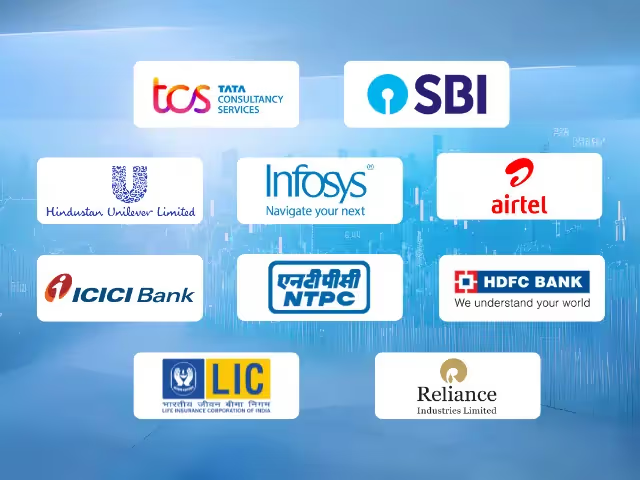
Market capitalization, or market cap, is a key indicator of a company's size and value in the stock market. It is calculated by multiplying the current share price by the total number of outstanding shares. In India, several companies stand out due to their substantial market caps, showing their significant influence and stability in the market. The Indian stock market is a powerhouse in Asia, and several domestic companies have grown into global giants.
Here, we look at the top 10 companies in India by market capitalization as on 29 june 2024
1. Reliance Industries:
Leading the pack is Reliance Industries, a conglomerate with fingers in many pies Led by Mukesh Ambani, is the largest company in India by market capitalization. The conglomerate operates across various sectors including petrochemicals, refining, oil, and gas exploration. It has also made significant inroads into telecommunications and retail.
2. Tata Consultancy Services (TCS):
Ever wondered how businesses manage their IT needs? Tata Consultancy Services (TCS) is a leading IT services, business solutions, and consulting firm headquartered in Mumbai. It ranks among the global leaders in the IT services segment, providing a wide range of technology and digital transformation services. It provides solutions for businesses of all sizes, making it a valuable partner in today's digital age.
3. HDFC Bank:
HDFC Bank is a household name in India, known for its stability and reliability in the financial sector. They offer a wide range of banking products and services, making them a one-stop shop for all your financial needs. It is known for its strong customer base and a wide range of banking and financial services. It has consistently demonstrated stability and growth in the financial sector.
4. ICICI Bank:
Another major private bank in India, ICICI Bank caters to a wide range of customers, offering banking products and financial services. They're known for their innovative approach to banking. They have a significant presence in both retail and corporate banking.
5. Bharti Airtel
Bharti Airtel is a prominent telecommunications company in 18 countries across Asia and Africa. It offers mobile voice and data services, fixed lines, high-speed broadband, IPTV, DTH, and enterprise services. Bharti Airtel's market valuation indicates its strong network and wide customer base.
6. State Bank of India (SBI):
SBI, India's largest public sector bank, offers a comprehensive suite of banking products and services. They play a vital role in the financial landscape of the country. They have a vast network of branches and a strong presence across the country.
7. Infosys:
Another IT powerhouse, Infosys helps businesses navigate the ever-evolving digital landscape.They , offer consulting and next-generation digital services. The company aims to help clients navigate their digital transformation journeys. Infosys recently joined the $100 billion market cap club, reflecting its robust growth and market presence.
8. Life Insurance Corporation of India (LIC):
Life Insurance Corporation of India (LIC) is India's biggest public insurance company. Besides general insurance, LIC also deals in mutual funds, asset management, exchange trades, and index funds.
9. Hindustan Unilever (HUL)
Hindustan Unilever, an Indian consumer goods company, is a subsidiary of the British-Dutch company Unilever. Its diverse portfolio includes cleaning agents, water purifiers, and personal care products. The market valuation of Hindustan Unilever reflects its strong brand portfolio and wide consumer base.
10. ITC
ITC is a multi-business conglomerate with a diverse portfolio, including FMCG, hotels, paperboards and packaging, agri-business, and information technology. The market valuation of ITC is a reflection of its strong brand presence and diverse operations.
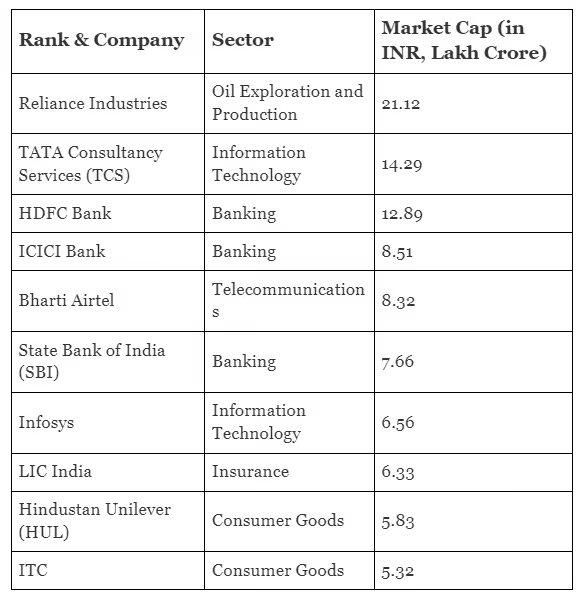
Source: https://www.forbesindia.com/article/explainers/top-10-companies-india-market-valuation/86307/1
Conclusion-
These top 10 companies by market capitalization in India showcase the strength and diversity of the Indian economy. From energy and banking to IT and consumer goods, they represent key sectors driving the country's growth. Their substantial market valuations highlight their stability, innovation, and influence in both domestic and global markets. As India continues its economic expansion, these companies are expected to play a crucial role in shaping the nation's financial and industrial future.

The 12 Stock Market Movies You Must Watch
The stock market is a fascinating world filled with drama, mystery, and high stakes. It’s no wonder that Hollywood has produced some incredible movies centered around the financial world. Whether you're a seasoned investor or just curious about the stock market, these movies offer valuable insights and a dose of entertainment. Here are 12 must-watch stock market movies that provide a thrilling look into the highs and lows of trading, investing, and the world of finance.
1. Wall Street (1987)
- Director: Oliver Stone
- Synopsis: This classic movie follows the story of Bud Fox, a young and ambitious stockbroker, who becomes entangled with the ruthless corporate raider Gordon Gekko. Gekko's famous mantra, "Greed is good," captures the essence of the 1980s financial world.
- Why Watch: "Wall Street" is a compelling tale of ambition, greed, and the moral dilemmas faced by those in the high-stakes world of finance. Michael Douglas’s portrayal of Gordon Gekko won him an Academy Award.
2. The Wolf of Wall Street (2013)
- Director: Martin Scorsese
- Synopsis: Based on the true story of Jordan Belfort, this film narrates his rise and fall as a stockbroker who engages in corruption and fraud on Wall Street. It’s a wild ride through the excesses and indulgence of the financial world.
- Why Watch: With Leonardo DiCaprio’s electrifying performance and Scorsese’s masterful direction, this film offers an steadfast look at the darker side of Wall Street. It's both hilarious and horrifying.
3. Margin Call (2011)
- Director: J.C. Chandor
- Synopsis: Set during the early stages of the 2008 financial crisis, "Margin Call" follows key employees at an investment bank over a 24-hour period as they realize the impending disaster.
- Why Watch: This movie provides a gripping and realistic portrayal of the decisions and panic that led to the financial meltdown. The ensemble cast, including Kevin Spacey and Jeremy Irons, delivers powerful performances.
4. The Big Short (2015)
- Director: Adam McKay
- Synopsis: Based on Michael Lewis’s book, "The Big Short" tells the story of a group of investors who predicted the 2008 financial crisis and bet against the housing market, making a fortune in the process.
- Why Watch: This film explains complex financial concepts in an accessible and entertaining way. With a star-studded cast including Christian Bale, Steve Carell, and Ryan Gosling, it’s both educational and highly engaging.
5. Guru (2007)
- Director: Mani Ratnam
- Synopsis: Inspired by the life of businessman Dhirubhai Ambani, "Guru" follows the journey of Gurukant Desai, a village boy who rises to become a powerful tycoon. The film explores his ambition, ethics, and the challenges he faces in building his business empire.
- Why Watch: "Guru" offers a compelling narrative about entrepreneurship, ambition, and the complexities of business ethics. Abhishek Bachchan's portrayal of Gurukant Desai and Aishwarya Rai's performance as his supportive wife add depth to the story.
6. Scam 1992: The Harshad Mehta Story (2020, Web Series)
- Director: Hansal Mehta
- Synopsis: Based on the true story of Harshad Mehta, a stockbroker who was involved in India's largest financial scam in the 1990s. The series chronicles his rise and fall, exploring the complexities of the stock market and the allure of wealth.
- Why Watch: "Scam 1992" is a critically acclaimed series that provides a detailed and nuanced portrayal of the stock market boom and subsequent crash. Pratik Gandhi's performance as Harshad Mehta received widespread praise for its depth and authenticity.
7. The Big Bull (2021)
- Director: Kookie Gulati
- Synopsis: Loosely based on the life of Harshad Mehta, "The Big Bull" portrays the journey of a small-time stockbroker who becomes a financial wizard. The film explores his meteoric rise, manipulation of the stock market, and eventual downfall.
- Why Watch: "The Big Bull" offers a dramatized account of the events surrounding Harshad Mehta's life, providing insights into the stock market's workings and the ethical dilemmas faced by traders. Abhishek Bachchan's performance as the protagonist is captivating.
8. Trading Places (1983)
- Director: John Landis
- Synopsis: This comedy classic tells the story of a snobbish investor and a street hustler whose lives are swapped as part of a bet by two wealthy brothers. The film explores themes of social class and the mechanics of the commodities market.
- Why Watch: "Trading Places" is a hilarious yet insightful look at the financial world. Eddie Murphy and Dan Aykroyd deliver memorable performances in this timeless comedy.
9. Boiler Room (2000)
- Director: Ben Younger
- Synopsis: A college dropout gets a job at a suburban investment firm, where he discovers the firm’s questionable business practices. He quickly rises through the ranks, only to face moral and legal dilemmas.
- Why Watch: "Boiler Room" offers a look at the high-pressure world of stock brokerage firms and the ethical challenges faced by brokers. It’s a thrilling and thought-provoking film.
10. Glengarry Glen Ross (1992)
- Director: James Foley
- Synopsis: Based on David Mamet’s play, this film follows a group of real estate salesmen who are under intense pressure to close deals. The story delves into their desperation and unethical tactics.
- Why Watch: With a stellar cast including Al Pacino, Jack Lemmon, and Alec Baldwin, "Glengarry Glen Ross" is a powerful exploration of the cutthroat nature of sales and the impact of capitalism on individuals.
11. Rogue Trader (1999)
- Director: James Dearden
- Synopsis: This film is based on the true story of Nick Leeson, a derivatives broker who caused the collapse of Barings Bank through unauthorized and risky trades.
- Why Watch: "Rogue Trader" provides a real-world cautionary tale about the dangers of unchecked trading and the consequences of financial recklessness. Ewan McGregor’s portrayal of Leeson is compelling.
12. Equity (2016)
- Director: Meera Menon
- Synopsis: This film centers around a senior investment banker who is navigating the world of IPOs while facing pressures from both her personal and professional life.
- Why Watch: "Equity" is one of the few films that focus on women in finance. It offers a unique perspective on the challenges faced by women in a male-dominated industry and is a gripping drama.
Conclusion
These 12 movies provide a captivating glimpse into the world of finance, each from a unique angle. From comedies to intense dramas and real-life stories, they explore the motivations, challenges, and ethical dilemmas faced by those in the stock market. Whether you’re an aspiring trader, an experienced investor, or simply someone interested in the financial world, these films are both entertaining and educational. They highlight the high stakes, the allure of wealth, and the potential pitfalls of the financial industry. So, grab some popcorn and get ready to dive into the fascinating world of stock market cinema!

.avif)
.avif)

.avif)