Information
%20(7)%20(5).avif)

Trent Shares Slide 8%: Slower Growth Momentum Overshadows Q3 Revenue Rise
.webp)

Key takeaways
- Trent shares corrected nearly 8% despite healthy Q3 revenue growth
- Market reacted to moderation in growth momentum and margin concerns
- Valuations remain demanding after a long rally in the stock
- Signals broader caution in high-growth retail and consumption names
- Investors should balance long-term brand strength with near-term risks
Trent Shares Slide 8%: Slower Growth Momentum Overshadows Q3 Revenue Rise
Trent’s latest quarterly update delivered a familiar contradiction that markets often struggle with. Revenue numbers were strong, store additions continued, and brand traction remained intact. Yet, the stock corrected sharply, sliding nearly 8 percent in a single session.
For a company that has been one of the biggest wealth creators in the Indian retail space, the reaction may look harsh at first glance. But the market was not reacting to what happened in Q3 alone. It was reacting to what may come next.
Let’s unpack why Trent shares fell despite rising Q3 revenue, what this means for investors, and how this fits into the broader Indian consumption story.
What Did Trent Report in Q3?
Trent reported healthy year-on-year revenue growth in the December quarter, supported by steady performance across its core formats.
Key Business Highlights
- Continued expansion of Westside and Zudio stores
- Strong footfall growth in value-focused formats
- Improved scale benefits from a larger store network
On paper, these are solid metrics. In most retail businesses, such numbers would have been celebrated. However, the market’s reaction suggests expectations were far higher.
Why Did Trent Shares Slide 8%?
The correction was not about growth disappearing. It was about growth slowing.
Moderation in Growth Momentum
Investors have priced Trent as a high-growth compounder for several years. When growth shows early signs of normalisation, even if from a high base, markets tend to reassess valuations quickly.
Slower same-store sales growth and cautious commentary around near-term demand created discomfort among momentum-driven investors.
Margin and Cost Pressures
Rising operating costs, including rentals, staffing, and logistics, remain a concern across organised retail. While Trent has managed costs well historically, incremental margin expansion is becoming harder as the base grows.
Markets are increasingly sensitive to margin trends, especially when valuations are rich.
Valuation Expectations Were Stretched
Trent has delivered exceptional returns over the past few years. That success also meant the stock was trading at premium multiples compared to peers in the retail and consumption space.
In such cases, good results are often not good enough. The stock needed exceptional numbers to sustain its upward trajectory.
Putting the Reaction in Market Context
This is not an isolated incident.
Broader Trend in Consumption Stocks
Several high-quality consumption and retail names have seen volatility despite stable earnings. Investors are becoming selective as:
- Interest rates remain relatively elevated
- Urban consumption shows signs of uneven recovery
- Valuations leave little room for disappointment
Trent’s correction fits into this broader pattern of de-rating rather than a fundamental breakdown.
Is the Trent Growth Story Broken?
Short answer: no. But it is evolving.
Long-Term Strengths Remain Intact
Trent continues to benefit from:
- Strong brand recall in Westside
- Rapid scale-up of Zudio as a mass-market fashion brand
- Backing of the Tata Group, which enhances trust and governance
These factors support long-term relevance in India’s organised retail expansion.
Growth Is Normalising, Not Vanishing
As companies scale, growth rates naturally moderate. The key question for investors is whether Trent can sustain profitable growth while managing costs and inventory efficiently.
This phase demands patience rather than blind optimism.
Impact on Indian Markets
Trent’s stock reaction has broader implications.
Signals Caution in High-Valuation Stocks
The sharp correction highlights how unforgiving markets can be when expectations are high. This serves as a reminder for investors chasing momentum without valuation discipline.
Reinforces the Importance of Earnings Quality
Revenue growth alone is no longer enough. Markets want clarity on margins, return ratios, and cash flows.
For retail investors, this episode underscores why disciplined analysis matters more than headlines.
What Should Investors Do Now?
The answer depends on your investment horizon.
For Long-Term Investors
Corrections driven by sentiment rather than structural issues can create opportunities. However, staggered investing and valuation awareness remain critical.
For Short-Term Traders
Volatility may persist as the market digests management commentary and future growth guidance. Risk management becomes key in such phases.
Using platforms like Swastika Investmart can help investors navigate these situations with greater confidence. As a SEBI-registered brokerage, Swastika Investmart offers robust research tools, tech-enabled trading platforms, responsive customer support, and a strong focus on investor education. This helps investors move beyond price action and focus on fundamentals.
Frequently Asked Questions
Why did Trent shares fall despite good Q3 revenue growth?
The market reacted to slower growth momentum, margin concerns, and high valuation expectations rather than just headline revenue numbers.
Is Trent still a good long-term stock?
Trent remains a strong retail franchise, but investors should factor in valuation comfort and growth sustainability.
Does this correction signal trouble for retail stocks?
Not necessarily. It reflects selective de-rating in stocks where expectations were very high.
Should existing investors exit Trent stock?
Decisions should align with individual risk profiles and investment horizons rather than short-term price movements.
What key factors should investors track next?
Same-store sales growth, margin trends, store expansion pace, and demand commentary will be crucial.
Conclusion
Trent’s 8 percent slide despite rising Q3 revenue is a classic example of markets looking ahead rather than reacting to the past. While the long-term retail story remains intact, near-term growth moderation and valuation sensitivity have taken centre stage.
For investors, this is a reminder that even high-quality businesses are not immune to corrections when expectations run ahead of fundamentals.
If you are tracking consumption and retail stocks and want research-backed insights, disciplined analysis, and tech-driven investing tools, consider partnering with Swastika Investmart

MOIL Delivers Record-Breaking Manganese Output in Q3 and 9M FY26
Key takeaways
- MOIL posts its highest-ever manganese ore production in Q3 and 9M FY26
- Strong steel demand and operational efficiency drive output growth
- Performance strengthens MOIL’s cash flow visibility and market positioning
- Positive signals for PSU metal stocks amid India’s infrastructure push
- Long-term investors should track volume sustainability and pricing trends
MOIL Delivers Record-Breaking Manganese Output in Q3 and 9M FY26
India’s largest manganese ore producer, MOIL, has delivered a standout operational performance in FY26 so far. With record-breaking production numbers in the third quarter and the first nine months of the financial year, the PSU miner has firmly reasserted its role as a critical supplier to India’s steel and alloy industries.
For investors tracking metal stocks and public sector enterprises, MOIL’s latest performance is more than just a headline. It reflects improving demand conditions, sharper execution, and a supportive domestic manufacturing environment.
This article breaks down what drove MOIL’s record manganese output in Q3 and 9M FY26, why it matters for Indian markets, and how investors can interpret this development.
Why Manganese Matters More Than Ever
Manganese is a key raw material in steelmaking. Nearly every tonne of steel produced requires manganese to improve strength, hardness, and durability.
Rising Steel Demand in India
India’s steel consumption continues to grow, driven by:
- Infrastructure spending on roads, railways, and urban development
- Expansion in renewable energy projects requiring structural steel
- Strong auto and capital goods manufacturing activity
As domestic steelmakers ramp up capacity, demand for manganese ore has followed suit. MOIL, with its integrated mining operations and long-standing customer relationships, is well positioned to benefit.
MOIL’s Record Performance Explained
MOIL reported its highest-ever manganese ore production during Q3 FY26, followed by a record cumulative output for the first nine months of the financial year.
Key Operational Drivers
Several factors contributed to this milestone:
- Improved mine productivity through mechanisation
- Better utilisation of mining leases across Maharashtra and Madhya Pradesh
- Stable labour relations and operational discipline
- Strong offtake from domestic steel and ferroalloy producers
Unlike commodity upcycles driven purely by price spikes, MOIL’s performance reflects volume-led growth, which is generally seen as more sustainable.
Real-World Context Behind the Numbers
To put this in perspective, consider a typical steel plant expansion in India. As blast furnaces scale up operations, raw material security becomes critical. Domestic sourcing of manganese reduces dependence on imports, lowers costs, and improves supply chain reliability.
MOIL’s ability to consistently deliver higher output directly supports this ecosystem. It also aligns with the government’s broader push for self-reliance in key industrial inputs.
Financial Implications for MOIL
Operational records often translate into financial strength, and MOIL is no exception.
Revenue and Cash Flow Visibility
Higher production volumes typically mean:
- Better absorption of fixed costs
- Improved operating margins during stable price periods
- Stronger cash generation
For a PSU like MOIL, this strengthens its balance sheet and supports steady dividend payouts, subject to board and government approval.
Cost Discipline Matters
MOIL has historically focused on cost control and efficiency. Record output achieved without aggressive cost escalation is a positive signal for long-term profitability.
Impact on Indian Markets and Metal Stocks
MOIL’s performance sends a broader message to the market.
Positive Signal for PSU Miners
Public sector mining companies often face scepticism around efficiency. MOIL’s record output challenges this perception and highlights how focused execution can deliver results.
Supportive for Steel and Infrastructure Themes
Reliable manganese supply supports India’s steel capacity expansion plans. This indirectly benefits infrastructure-linked stocks and capital goods manufacturers.
From a sectoral perspective, the development adds confidence to the metal and mining segment, which has seen selective investor interest amid global commodity volatility.
Regulatory and Policy Backdrop
MOIL operates under the regulatory framework of the Ministry of Steel and complies with mining regulations governed by the Mines and Minerals Development and Regulation Act.
Recent policy initiatives encouraging domestic mineral production and faster clearances have helped miners optimise output without compromising compliance. Transparency in disclosures and adherence to SEBI norms also improve investor confidence in PSU performance metrics.
What Investors Should Watch Next
While the headline numbers are encouraging, investors should track a few key aspects going forward.
Sustainability of Volumes
Record quarters are impressive, but consistency matters more. Monitoring quarterly production trends will be crucial.
Pricing Environment
Manganese prices are influenced by global supply and steel demand. Stable or improving prices can amplify the benefits of higher volumes.
Capital Allocation
How MOIL deploys its cash flows, whether through dividends, mine development, or efficiency upgrades, will shape long-term returns.
Using research-driven platforms like Swastika Investmart can help investors track these variables effectively. With SEBI registration, advanced research tools, responsive customer support, and a strong focus on investor education, Swastika Investmart enables informed decision-making in cyclical sectors like metals.
Frequently Asked Questions
What drove MOIL’s record manganese production in FY26?
Improved mine productivity, better utilisation of assets, and strong domestic demand from steel producers were key drivers.
Does higher production guarantee higher profits for MOIL?
Not always. Profitability also depends on manganese prices, cost control, and operating efficiency.
How does MOIL’s performance impact Indian steel companies?
Reliable domestic manganese supply supports steelmakers by reducing import dependence and improving cost stability.
Is MOIL a long-term investment candidate?
MOIL’s prospects depend on steel demand, commodity cycles, and operational consistency. Long-term investors should evaluate it within a diversified portfolio.
Are PSU mining stocks still relevant for retail investors?
Yes, especially when supported by strong execution, transparent disclosures, and stable demand fundamentals.
Conclusion
MOIL’s record-breaking manganese output in Q3 and 9M FY26 highlights what disciplined execution and favourable domestic demand can achieve. While commodity cycles remain inherently volatile, such operational milestones strengthen confidence in the company’s fundamentals.
For investors looking to track opportunities in mining and metal stocks with clarity and confidence, partnering with a reliable, tech-enabled platform makes a difference.

How ONGC Could Unlock $500 Million from Venezuela: What It Means for Investors
Key takeaways
- ONGC Videsh has significant trapped investments in Venezuela due to sanctions and payment issues
- A potential recovery of nearly $500 million could materially improve ONGC’s cash flows
- Any resolution depends on geopolitics, US sanctions, and oil-for-debt mechanisms
- The development may positively influence ONGC’s valuation and investor sentiment
- Long-term investors should track global energy diplomacy and regulatory updates closely
India’s largest oil and gas explorer, ONGC, has quietly been sitting on a high-stakes overseas bet in Venezuela. For years, geopolitical tensions, US sanctions, and payment bottlenecks have kept nearly $500 million of ONGC-linked value locked up in one of the world’s most oil-rich nations.
Now, with changing global energy dynamics and diplomatic recalibrations, the possibility of unlocking this money is back in focus. For Indian investors tracking ONGC stock, this is not just a foreign policy story. It has real implications for cash flows, valuations, and long-term strategy.
Let’s break down what’s at stake, how ONGC could unlock $500 million from Venezuela, and what it means for investors in the Indian markets.
Understanding ONGC’s Venezuela Exposure
ONGC’s international arm, ONGC Videsh Limited, has been present in Venezuela for over a decade. It holds stakes in key oil projects, including the San Cristóbal and Carabobo blocks in the Orinoco heavy oil belt.
These projects were expected to deliver long-term production and steady returns. However, Venezuela’s economic collapse and international sanctions disrupted everything.
Why the Money Got Stuck
Several factors led to the current situation:
- US sanctions restricted dollar-based transactions with Venezuela
- Venezuela’s state oil company faced severe liquidity issues
- Payments to foreign partners were delayed or settled through complex barter arrangements
- Crude exports became logistically challenging
As a result, ONGC accumulated receivables and stranded investments, estimated at close to $500 million.
Why the Venezuela Story Is Back in the Spotlight
The global energy landscape has shifted significantly over the last few years.
Changing Global Context
- Oil markets remain structurally tight due to underinvestment
- Emerging economies like India are prioritising energy security
- Western nations have selectively relaxed enforcement of certain energy-related sanctions
- Venezuela is gradually re-entering global oil supply chains
These changes open the door for negotiated settlements, oil-for-debt deals, or indirect recovery mechanisms.
For ONGC, even a partial recovery would be meaningful.
How ONGC Could Unlock $500 Million
There is no single switch that unlocks this money. Instead, multiple pathways are being explored.
Oil-for-Dues Arrangements
One practical option is receiving crude oil shipments instead of cash. ONGC could sell this oil in international markets or route it through Indian refiners.
This model has been used earlier by global energy companies operating in sanctioned regions.
Diplomatic and Government-to-Government Support
ONGC’s overseas investments often align with India’s strategic interests. Any resolution is likely to involve:
- Coordination between Indian and Venezuelan authorities
- Diplomatic engagement to ensure compliance with global regulations
- Structuring payments in non-dollar currencies where feasible
Accounting and Write-back Potential
If recoveries materialise, ONGC may reverse earlier impairments or provisions. This could improve reported earnings without incremental operating costs.
What This Means for ONGC’s Financials
From an investor’s perspective, the numbers matter.
Balance Sheet Impact
A $500 million recovery translates to over ₹4,000 crore at current exchange rates. Even staggered inflows could strengthen ONGC’s balance sheet.
Key potential benefits include:
- Improved cash flow visibility
- Lower pressure on borrowings
- Greater flexibility for dividends or capital expenditure
Valuation Re-Rating Potential
ONGC trades at relatively modest valuation multiples compared to global peers. Any positive surprise from overseas assets could prompt a reassessment by the market.
Importantly, this upside is not fully priced in, making it an optional kicker rather than a base-case assumption.
Impact on Indian Markets and Energy Sector
While the Venezuela exposure is specific to ONGC, the implications are broader.
Signal for PSU Overseas Assets
Successful recovery could:
- Restore confidence in Indian PSUs’ overseas investments
- Encourage more strategic energy diplomacy
- Reduce scepticism around legacy international projects
Alignment with India’s Energy Security Goals
India imports over 85 percent of its crude oil. Overseas equity oil assets act as long-term hedges against supply disruptions and price volatility.
A positive outcome in Venezuela reinforces the strategic rationale behind such investments.
Risks Investors Should Not Ignore
Despite the optimism, risks remain.
Geopolitical Uncertainty
Sanctions can tighten again if geopolitical equations change. Investors should remember that timelines are uncertain.
Operational and Quality Issues
Venezuela’s heavy crude requires specialised refining. Monetisation may not always be smooth or immediate.
Regulatory and Disclosure Aspects
ONGC, as a listed PSU, must comply with SEBI disclosure norms. Any recovery will be transparently reported, but until then, expectations should remain measured.
How Long-Term Investors Can Approach ONGC
For retail investors, this situation highlights the importance of looking beyond quarterly results.
ONGC’s core business remains linked to crude prices, domestic gas policies, and government regulation. The Venezuela angle is an additional lever, not the sole investment thesis.
Using research-backed platforms like Swastika Investmart can help investors track such developments with clarity. With SEBI registration, robust research tools, and strong customer support, Swastika Investmart enables investors to interpret global events through an Indian market lens.
Frequently Asked Questions
Is the $500 million recovery guaranteed for ONGC?
No. It depends on geopolitical developments, sanctions, and negotiated settlement mechanisms.
Will this directly impact ONGC’s stock price?
Any confirmed recovery could improve sentiment, but markets will wait for official disclosures before pricing it in.
Has ONGC written off its Venezuela investments?
ONGC has taken provisions and impairments, but it has not fully exited or written off all exposure.
Does this affect dividends for investors?
If cash flows improve, it could support dividend payouts, subject to government policy and capital needs.
Should retail investors buy ONGC only for this story?
No. This should be seen as an upside optionality, not the primary investment reason.
Conclusion
ONGC’s potential to unlock $500 million from Venezuela is a reminder that global energy investing often tests patience. While the road to recovery is complex, even incremental progress could meaningfully enhance ONGC’s financial profile and investor confidence.
For Indian investors, staying informed and grounded is key. Combining macro awareness with disciplined research makes all the difference.
If you’re looking to invest in energy stocks like ONGC with structured insights, tech-enabled platforms, and strong investor education, consider opening an account with Swastika Investmart.

IPO Action Next Week: Bharat Coking Coal IPO to Open as Sole Mainboard Issue
Key takeaways
- Bharat Coking Coal IPO is set to open next week as the only mainboard offering
- The issue revives primary market activity after a relatively quiet phase
- Investor focus will be on valuation, government divestment, and coal sector outlook
- Broader market sentiment and policy cues will influence subscription demand
Primary Markets Back in Focus
After a subdued few weeks in the primary market, IPO action next week is set to regain attention with the opening of the Bharat Coking Coal IPO, the only mainboard public issue scheduled during the period. For investors tracking fresh equity opportunities, a single-issue week often brings sharper focus, higher media attention, and concentrated liquidity.
Bharat Coking Coal Limited, a Coal India subsidiary, plays a critical role in supplying coking coal to India’s steel sector. Its public issue comes at a time when infrastructure spending, steel demand, and energy security remain key policy priorities for the government.
About Bharat Coking Coal Limited
Bharat Coking Coal Limited is one of India’s largest producers of coking coal, a crucial raw material for steel manufacturing. The company primarily operates in Jharkhand and contributes significantly to domestic steel production.
Coking coal differs from thermal coal in usage and pricing dynamics. While thermal coal is linked to power generation, coking coal demand is closely tied to steel capacity utilisation, infrastructure spending, and industrial growth. This makes the company’s fortunes more cyclical but also strategically important.
Why This IPO Matters
The Bharat Coking Coal IPO is expected to be part of the government’s broader divestment agenda. For the market, this issue matters for several reasons.
Sole Mainboard Issue Advantage
With no competing mainboard IPOs next week, investor attention is likely to remain undivided. Historically, weeks with a single large IPO often see:
- Higher participation from institutional investors
- Better retail visibility
- More stable subscription trends compared to crowded IPO calendars
Sectoral Significance
Coal remains central to India’s energy mix despite the renewable transition. Domestic steel capacity expansion keeps demand for coking coal resilient, offering medium-term visibility to producers.
Valuation and Market Expectations
Investor response to any IPO ultimately hinges on valuation. In PSU offerings, pricing discipline is closely scrutinised as investors weigh:
- Earnings visibility
- Dividend potential
- Policy and regulatory risks
Comparable PSU listings in the past have shown that reasonable pricing can drive strong long-term returns, while aggressive valuations often result in muted post-listing performance. Market participants will closely analyse financials, cost structures, and future capex plans once the price band is announced.
Broader Market Context
The timing of the IPO coincides with mixed global cues and cautious sentiment in equity markets. Rising geopolitical risks, crude oil volatility, and fluctuating interest rate expectations have kept investors selective.
For Indian markets, PSU IPOs tend to attract:
- Long-term institutional investors seeking yield and stability
- Retail investors looking for dividend-backed exposure
- Strategic interest aligned with policy-driven sectors
The absence of multiple IPOs next week may help Bharat Coking Coal garner stronger anchor and institutional participation.
Regulatory Framework and Investor Protection
SEBI’s IPO framework ensures transparency through detailed disclosures, risk factors, and mandatory allotment rules. Investors benefit from:
- Clear reservation categories for retail, QIB, and non-institutional investors
- ASBA-based application process that blocks funds without upfront debit
- Strict timelines for allotment and listing
Such safeguards have strengthened confidence in India’s primary markets, even during volatile phases.
How Retail Investors Can Approach This IPO
For retail participants, IPO investing should go beyond short-term listing gains.
Assess Business Fundamentals
Understanding the company’s role in the steel value chain, cost structure, and production outlook is critical.
Evaluate Policy Risk
As a PSU, Bharat Coking Coal operates within a regulated framework. Policy decisions on pricing, environmental norms, and divestment can impact performance.
Avoid Overexposure
Even promising IPOs should form part of a diversified portfolio rather than a concentrated bet.
Platforms like Swastika Investmart help investors navigate IPOs with clarity. As a SEBI-registered broker, Swastika Investmart offers strong research tools, simplified IPO application processes, responsive customer support, and ongoing investor education. This combination enables informed participation rather than speculative decision-making.
Impact on Indian Markets
A successful Bharat Coking Coal IPO could:
- Improve sentiment around PSU listings
- Encourage further divestment activity
- Support capital formation in core sectors
Conversely, weak response may prompt issuers to delay future offerings, affecting the IPO pipeline in the near term. Hence, this issue will be watched closely by both investors and policymakers.
Frequently Asked Questions
When does the Bharat Coking Coal IPO open?
The IPO is scheduled to open next week and will be the only mainboard public issue during the period.
Is this IPO part of the government’s divestment plan?
Yes, it is expected to align with the government’s broader PSU divestment and capital market strategy.
What drives demand for coking coal in India?
Coking coal demand is linked to steel production, infrastructure spending, and industrial growth.
Is this IPO suitable for long-term investors?
It may suit investors seeking exposure to core infrastructure-linked sectors, subject to valuation and risk assessment.
Final Thoughts
The upcoming IPO action next week, led by the Bharat Coking Coal IPO, marks an important moment for India’s primary markets. As the sole mainboard issue, it carries added visibility and responsibility in setting the tone for future offerings.
For investors, disciplined analysis, awareness of policy dynamics, and access to reliable research are key. With its SEBI registration, robust analytical support, and investor-centric approach, Swastika Investmart enables market participants to engage with IPO opportunities confidently and responsibly.
If you are planning to explore upcoming IPOs and strengthen your investing journey, now is a good time to get started.

ONGC in Focus as US Attacks Venezuela: Crude Oil Volatility and Overseas Exposure in Spotlight
Key takeaways
- US attacks on Venezuela have revived global crude oil volatility
- ONGC gains attention due to its sensitivity to oil prices and overseas assets
- Higher crude can support realizations but also raises policy and subsidy risks
- Indian markets may see selective impact on energy, currency, and inflation
Setting the Context
Geopolitical risks are back on investors’ radar after reports of US attacks on Venezuela unsettled global markets. While the immediate reaction was visible in crude oil prices and currency movements, Indian energy stocks such as ONGC quickly moved into focus.
For investors, the key question is whether rising oil prices are unequivocally positive for ONGC or whether overseas exposure and policy risks could temper the upside. As India’s largest upstream oil and gas producer, ONGC sits at the intersection of global crude dynamics and domestic regulation, making it a stock worth watching during such events.
Why Venezuela Matters to Crude Oil Markets
Venezuela holds one of the world’s largest proven oil reserves. Although production has been constrained by sanctions and infrastructure challenges, any escalation involving the US raises concerns over supply disruptions.
In the commodity markets, perception often matters as much as reality. Even without an immediate drop in output, geopolitical tension tends to push crude oil prices higher as traders factor in risk premiums. This is especially relevant at a time when global inventories are tight and OPEC decisions remain finely balanced.
For oil-importing countries like India, sustained crude volatility has wider implications for inflation, fiscal balance, and currency stability.
ONGC and Its Sensitivity to Crude Prices
ONGC’s earnings are directly linked to crude oil realizations. When oil prices rise, upstream producers typically benefit through higher revenue per barrel. This makes ONGC a natural hedge in periods of geopolitical tension.
However, the relationship is not linear.
Pricing and Government Intervention
In India, higher crude prices often bring policy considerations into play. To manage inflation, the government may moderate fuel prices through excise duty adjustments or informal price controls. While ONGC is better insulated than downstream companies, subsidy sharing and special levies have historically impacted profitability during high oil price cycles.
Cost Structure and Margins
ONGC’s operating costs are relatively stable. This means incremental increases in crude prices can improve margins, provided there are no adverse policy interventions. Investors often view ONGC as a beneficiary of moderate and sustained oil price strength rather than sharp spikes.
Overseas Exposure Adds Another Layer
ONGC Videsh, the overseas arm of ONGC, has investments across multiple geographies including Russia, Africa, and Latin America. While Venezuela exposure is not material in the current portfolio, geopolitical developments highlight the broader risks associated with overseas assets.
Currency and Political Risk
International projects expose ONGC to:
- Local regulatory changes
- Currency fluctuations
- Sanctions and geopolitical instability
These factors can impact asset valuations and cash flows, even if crude prices remain supportive.
Strategic Long-Term Value
Despite these risks, overseas assets are strategically important for India’s energy security. They provide diversification of supply sources and long-term optionality, which markets may not fully price in during short-term volatility.
Impact on Indian Equity Markets
The ripple effects of US attacks on Venezuela extend beyond ONGC.
Energy and Oil Stocks
Upstream companies may see positive sentiment, while oil marketing companies could face margin pressure if retail fuel price hikes are delayed.
Currency and Inflation
Higher crude prices tend to weaken the rupee due to increased import costs. This can influence RBI policy decisions, especially if inflation expectations rise.
Broader Market Sentiment
Geopolitical uncertainty often triggers risk-off behavior among global investors. Foreign institutional investors may reduce exposure to emerging markets temporarily, leading to short-term volatility in Indian equities.
That said, India’s macro fundamentals and regulatory safeguards help limit systemic risk.
Regulatory and Policy Backdrop
SEBI’s robust market surveillance mechanisms ensure orderly trading during volatile periods. Circuit limits, margin requirements, and disclosure norms help protect retail investors from extreme swings.
From a policy standpoint:
- The RBI monitors currency movements and inflation trends
- The government balances fiscal discipline with consumer price stability
- Strategic petroleum reserves offer limited cushioning against oil shocks
This framework ensures that while stocks like ONGC may react to global events, the broader market remains resilient.
How Investors Can Approach ONGC During Volatility
Geopolitical events often tempt investors to take short-term positions. A more balanced approach works better.
Focus on Fundamentals
ONGC’s reserves, production profile, and balance sheet strength matter more than day-to-day oil price moves.
Understand the Policy Angle
Returns are influenced not just by crude prices but also by government policy. Investors should factor this into valuation expectations.
Use Research-Driven Platforms
This is where Swastika Investmart stands out. As a SEBI-registered broker, it offers strong research tools, sector insights, and tech-enabled investing solutions. Its focus on investor education and responsive customer support helps investors make informed decisions rather than reacting to headlines.
Frequently Asked Questions
Does higher crude oil always benefit ONGC?
Not always. While higher crude improves realizations, government policies and subsidy sharing can offset some of the gains.
Is ONGC exposed to Venezuela directly?
ONGC does not have significant direct exposure to Venezuela, but global geopolitical tensions can still impact its overseas portfolio and market sentiment.
How does crude volatility affect Indian markets overall?
It influences inflation, the rupee, corporate margins, and foreign investment flows, leading to short-term volatility.
Is ONGC a defensive stock during geopolitical events?
ONGC can act as a partial hedge due to its upstream nature, but it is not immune to policy and market risks.
Closing Thoughts
The focus on ONGC as US attacks Venezuela highlights how global geopolitics can quickly shift investor attention. While crude oil volatility may support upstream energy stocks in the near term, long-term returns will depend on fundamentals, policy decisions, and disciplined execution.
For investors navigating such uncertain phases, access to credible research and a stable platform matters. With its SEBI registration, strong analytical capabilities, and investor-first approach, Swastika Investmart provides the tools needed to stay confident during volatile market cycles.
If you are considering opportunities in energy stocks or looking to strengthen your investing approach, now may be the right time to act.

US Strikes Venezuela: Global Markets on Edge as Investors Eye Dollar, Oil & Safe Havens
Key takeaways
- Reports of US military action against Venezuela have unsettled global markets and revived risk-off sentiment
- Crude oil prices and the US dollar tend to react first to Middle East or Latin America geopolitical shocks
- Equity markets face short-term volatility while gold and bonds attract defensive flows
- Indian markets may see sector-specific impact, especially oil marketing companies, IT exporters, and metals
Introduction
Geopolitical tensions are once again shaping global market narratives. News flows around US strikes on Venezuela have pushed investors into a cautious stance, prompting sharp reactions across commodities, currencies, and equities. While Venezuela is not a large consumer economy, it holds one of the world’s biggest proven oil reserves, making any escalation strategically important for energy markets.
For Indian investors, such global events are not distant headlines. They directly influence crude oil prices, the US dollar, foreign portfolio flows, and overall risk appetite. Understanding how these developments ripple through financial markets is crucial for portfolio positioning and risk management.
Why Venezuela Matters to Global Markets
Venezuela’s relevance stems less from its GDP and more from its energy footprint. Despite years of sanctions and underinvestment, the country remains a key geopolitical lever in global oil dynamics.
Oil Supply Sensitivity
Any military action involving Venezuela raises concerns over:
- Potential disruption to oil exports
- Tightening of global crude supply
- Renewed sanctions or logistical bottlenecks
Even the perception of supply risk can push Brent crude prices higher, as traders price in worst-case scenarios.
Strategic Signaling
US action in Latin America also signals a broader shift in geopolitical posture. Markets tend to react not just to the event, but to what it implies about future policy, alliances, and sanctions.
Immediate Global Market Reactions
Crude Oil and Energy Stocks
Oil is typically the first asset class to respond. In similar past episodes, crude prices have spiked intraday before stabilising as clarity emerges. Energy stocks often outperform broader indices during such phases, while oil-importing economies face cost pressures.
For India, which imports over 80 percent of its crude oil needs, sustained oil price increases can worsen the current account balance and fuel inflationary concerns.
US Dollar and Currencies
Geopolitical uncertainty usually strengthens the US dollar as global capital seeks safety. Emerging market currencies often come under pressure, particularly those with large trade deficits.
A stronger dollar can:
- Weigh on emerging market equities
- Increase imported inflation for countries like India
- Impact companies with foreign currency debt
Safe Haven Assets
Gold, US Treasuries, and sometimes the Japanese yen attract defensive flows. Gold, in particular, tends to benefit from a combination of geopolitical risk and currency volatility, making it a preferred hedge during uncertain periods.
Impact on Indian Equity Markets
While Indian markets are largely driven by domestic fundamentals, global risk events can influence short-term sentiment and flows.
Oil Marketing and Energy Companies
Higher crude prices can pressure margins of oil marketing companies if retail fuel price hikes are delayed. Upstream energy producers, however, may benefit from improved realizations.
IT and Export-Oriented Stocks
A stronger dollar can support IT exporters and pharmaceutical companies through better rupee realizations. However, risk-off global sentiment can still cap valuations in the near term.
Banking and Financials
Rising inflation expectations linked to higher oil prices may delay interest rate cuts. This can influence bond yields and impact rate-sensitive sectors such as banks, NBFCs, and real estate.
Foreign Institutional Investors
Geopolitical shocks often trigger short-term FII outflows from emerging markets. Indian equities, despite being relatively resilient, are not immune to global portfolio rebalancing.
Regulatory and Policy Context in India
From a regulatory standpoint, Indian markets remain structurally stable. SEBI’s risk management frameworks, margin norms, and circuit filters help contain excessive volatility during global shocks.
On the policy side:
- The RBI closely monitors currency volatility and inflation expectations
- Strategic petroleum reserves provide limited cushioning against oil price spikes
- Fiscal policy flexibility becomes important if energy subsidies rise
These factors ensure that while markets may react emotionally in the short term, systemic risks remain contained.
How Investors Can Navigate Such Volatility
Periods of geopolitical stress often test investor discipline. Instead of reacting to headlines, a structured approach works better.
Focus on Asset Allocation
Diversification across equities, debt, gold, and cash helps absorb shocks. Overexposure to a single theme or sector increases vulnerability.
Avoid Knee-Jerk Decisions
Market reactions to geopolitical events are often sharp but short-lived. History shows that many such sell-offs reverse once uncertainty reduces.
Use Research-Backed Insights
This is where platforms like Swastika Investmart add value. With SEBI registration, strong research coverage, and tech-enabled tools, investors get data-driven insights rather than noise-driven opinions. Educational resources and responsive customer support further help investors stay aligned with long-term goals during volatile phases.
FAQs
Will US strikes on Venezuela lead to a long-term market crash?
Historically, geopolitical events create short-term volatility rather than prolonged bear markets unless they significantly disrupt global growth or financial systems.
How does rising crude oil impact Indian investors?
Higher oil prices can increase inflation, pressure the rupee, and affect corporate margins, particularly in oil marketing, aviation, and logistics.
Is gold a good hedge during geopolitical tensions?
Gold has traditionally acted as a hedge during uncertainty, but allocations should align with overall risk profile rather than short-term speculation.
Should retail investors exit equities during such events?
For long-term investors, staying invested and avoiding emotional decisions is usually more effective than timing exits and re-entries.
Conclusion
The news around US strikes on Venezuela underscores how interconnected global markets have become. While such developments can unsettle sentiment and trigger short-term volatility, they rarely alter the long-term growth trajectory of fundamentally strong economies like India.
For investors, the key lies in staying informed, diversified, and disciplined. With its SEBI-registered framework, robust research capabilities, and investor-first approach, Swastika Investmart supports investors in navigating uncertain markets with confidence rather than fear.
If you are looking to align your portfolio with informed insights and disciplined strategies during volatile times, consider taking the next step.
.avif)
US Economy in 2026: What Lies Ahead and How It Impacts Indian Markets
Summary
- The US economy in 2026 is expected to grow steadily, not aggressively
- Interest rates may soften, influencing global capital flows
- US demand and dollar movement will directly impact Indian markets
- Indian investors should track global cues alongside domestic fundamentals
Introduction
The US economy remains the single most influential force in global financial markets. From equity flows to currency movements and commodity prices, decisions taken in Washington and by the US Federal Reserve ripple across economies worldwide. As we look ahead, understanding what to expect from the US economy in 2026 becomes essential for Indian investors, traders, exporters and policymakers.
In this blog, we break down the expected economic trends in the US for 2026 and explain how these developments could shape Indian stock markets, interest rates, currency movements and investment strategies.
US Economic Outlook for 2026
Moderate but Stable Economic Growth
After years of post pandemic recovery and policy tightening, the US economy is expected to enter 2026 with stable momentum. Most global institutions expect GDP growth to remain around the long term average rather than the sharp expansion seen earlier in the decade.
Key drivers include strong consumer spending, government infrastructure investment and continued capital expenditure in technology and artificial intelligence. At the same time, high base effects and tighter financial conditions could limit rapid growth.
For Indian investors, stable US growth is generally positive as it supports global risk appetite without creating excessive inflationary pressure.
Inflation and Interest Rates in the US
Inflation Likely to Cool Gradually
Inflation is expected to trend closer to the US Federal Reserve’s comfort zone by 2026, though it may not settle perfectly at two percent. Wage pressures, energy prices and supply chain restructuring will continue to influence price levels.
Lower inflation reduces the need for aggressive monetary tightening and supports equity markets globally.
Federal Reserve Policy Direction
One of the most watched elements of the US economy in 2026 will be interest rates. If inflation continues to ease, the Federal Reserve may shift towards a more accommodative stance or maintain stable rates.
For India, this matters because lower US interest rates often lead to increased foreign portfolio inflows into emerging markets like India, improving liquidity and supporting equity valuations.
US Dollar and Global Capital Flows
Dollar Strength and Rupee Impact
The US dollar’s trajectory in 2026 will depend largely on interest rate differentials and economic confidence. A stable or slightly weaker dollar typically benefits emerging market currencies, including the Indian rupee.
A stronger rupee can help reduce imported inflation for India, especially in crude oil and raw materials. However, exporters may face margin pressure if currency appreciation becomes sharp.
Impact on Indian Stock Markets
FII Flows and Market Sentiment
Foreign Institutional Investors closely track US bond yields and equity performance. If US yields remain stable and growth continues without shocks, India is likely to attract sustained FII inflows.
Historically, periods of US economic stability have coincided with strong performance in Indian sectors such as IT, banking, capital goods and consumer discretionary.
Sectoral Impact in India
- IT Sector: US demand directly impacts Indian IT companies. Stable enterprise spending in the US supports revenue visibility for Indian tech firms.
- Pharma and Healthcare: US healthcare spending trends influence Indian pharmaceutical exports.
- Metals and Commodities: Infrastructure spending in the US can support global metal prices, benefiting Indian producers.
Trade Relations and Global Supply Chains
US Trade Policies in 2026
Trade policy remains a key variable. Any shift towards protectionism or tariff changes can affect Indian exports to the US, particularly in textiles, engineering goods and specialty chemicals.
However, diversification away from China continues to create long term opportunities for Indian manufacturers under the China plus one strategy.
Regulatory and Policy Context in India
From an Indian regulatory standpoint, SEBI continues to emphasize transparency, investor protection and risk management. Global volatility originating from the US economy reinforces the importance of disciplined investing, asset allocation and regulatory compliance.
Platforms like Swastika Investmart, a SEBI registered intermediary, play a crucial role by offering research backed insights, technology driven trading platforms and investor education that helps clients navigate global uncertainty confidently.
👉 Open your trading and investment account today
How Indian Investors Can Prepare
Practical Investing Takeaways
- Track US inflation data and Federal Reserve commentary regularly
- Diversify portfolios across equity, debt and commodities
- Avoid overreacting to short term global news
- Focus on fundamentally strong Indian companies with global exposure
Long term wealth creation depends on staying invested with a clear strategy rather than timing global events perfectly.
FAQs
How will the US economy in 2026 affect Indian stock markets?
A stable US economy usually supports global risk appetite, leading to better FII inflows and positive sentiment in Indian equities.
Will US interest rate changes impact Indian investors?
Yes. Lower or stable US rates often encourage foreign investments into India, improving liquidity and market valuations.
Which Indian sectors are most influenced by the US economy?
IT, pharmaceuticals, metals and export oriented manufacturing sectors are most sensitive to US economic trends.
Is a weaker US dollar good for India?
Generally yes, as it supports the rupee and reduces import costs, though exporters may face some pressure.
Conclusion
Understanding what to expect from the US economy in 2026 is essential for making informed investment decisions in India. While global uncertainties will always exist, a balanced US growth outlook combined with easing inflation could create a supportive environment for Indian markets.
With expert research, robust trading platforms and strong customer support, Swastika Investmart helps investors stay ahead of global trends while focusing on long term financial goals.
%20(3).avif)
Indian Stock Market Today, 2 January 2026: Nifty, Sensex and Bank Nifty End Higher
The Indian stock market today (2 January 2026) ended the session on a positive note, reflecting steady investor confidence at the start of the new calendar year. Benchmark indices Nifty 50 and BSE Sensex closed firmly in the green, supported by gains in banking and IT stocks, while broader markets also showed resilience.
Despite mixed global cues, domestic factors such as strong credit growth expectations, stable macroeconomic indicators, and continued retail participation helped Indian equities maintain upward momentum.
Market Closing Highlights Today
At the close of trade on 2 January 2026, the key indices settled as follows:
- Nifty 50 closed at 26,328.55, up 0.70 percent
- Nifty Bank ended at 60,150.95, gaining 0.74 percent
- Nifty IT finished at 38,320.30, rising 0.39 percent
- BSE Sensex settled at 85,762.01, higher by 0.67 percent
The overall market breadth remained positive, indicating healthy participation beyond just index heavyweights.
Quick Market Summary Today
- Indian stock market today closed higher across key indices
- Banking stocks led gains as investor confidence remained strong
- IT stocks posted moderate gains amid stable global tech cues
- Market sentiment stayed positive at the start of 2026
Why the Indian Stock Market Rose Today
The positive close in the Indian stock market today, 2 January 2026, was driven by a mix of sector-specific strength and supportive domestic factors.
Banking Stocks Lead the Rally
The banking sector was the primary driver of today’s gains. Nifty Bank moving above the 60,000 mark highlights confidence in India’s financial system. Expectations of sustained credit growth, improving asset quality, and strong balance sheets across major banks continue to attract long-term investors.
The Reserve Bank of India’s consistent regulatory framework and focus on financial stability have further strengthened trust in banking stocks.
IT Sector Shows Gradual Improvement
IT stocks ended marginally higher as global technology sentiment remained stable. While demand from overseas markets is still selective, Indian IT companies are benefiting from digital transformation deals, artificial intelligence-led projects, and cost optimisation initiatives.
For Indian investors, IT remains a strategic sector for diversification within equity portfolios.
Institutional and Retail Participation
Domestic institutional investors, supported by strong SIP inflows, continue to provide stability to the markets. Retail participation has also remained consistent, helping absorb short-term volatility and supporting long-term market trends.
This balance between institutional and retail flows has become a key strength of Indian capital markets in recent years.
Technical Outlook After Today’s Closing
From a technical perspective, the Nifty 50 continues to trade above key support levels, maintaining a bullish structure. Immediate support is seen near the 26,000 zone, while higher levels may act as short-term resistance.
The Sensex also shows strength, though some consolidation cannot be ruled out at elevated levels. Traders are advised to remain cautious with strict risk management, while long-term investors may consider staggered investments.
What Today’s Market Means for Indian Investors
For Indian investors, today’s market performance reinforces the importance of staying disciplined and goal-oriented.
- Long-term investors can remain invested, focusing on quality stocks
- SIP investors continue to benefit from regular investing despite market levels
- Short-term traders should be selective and avoid over-leveraging
SEBI’s continued emphasis on transparency, disclosures, and investor protection has strengthened confidence in Indian markets, making them more accessible and reliable for all categories of investors.
How Swastika Investmart Supports Smarter Investing
In a dynamic market environment like today, having access to reliable research and seamless execution is crucial.
Swastika Investmart, a SEBI-registered brokerage, empowers investors with:
- Research-backed stock and derivatives insights
- Tech-enabled trading platforms for smooth execution
- Dedicated customer support for retail and active traders
- Ongoing investor education to build long-term wealth
These strengths help investors navigate markets with greater confidence and clarity.
👉 Open your trading and investment account with Swastika Investmart
Frequently Asked Questions
Why did the Indian stock market rise today, 2 January 2026?
Positive sentiment, strong banking stocks, and stable domestic economic indicators supported today’s rally.
Is it risky to invest when Nifty is near record levels?
High levels may bring short-term volatility, but long-term investors can stay invested with proper asset allocation.
Which sector performed best today?
The banking sector outperformed, with Bank Nifty leading the gains.
How did IT stocks perform today?
IT stocks closed modestly higher, supported by stable global technology cues.
What should retail investors do after today’s market close?
Remain disciplined, focus on long-term goals, and avoid impulsive trading decisions.
Conclusion
The Indian stock market today, 2 January 2026, delivered a strong start to the year, with benchmark indices closing higher and investor sentiment remaining optimistic. While short-term fluctuations are inevitable, India’s long-term growth story continues to support equity markets.
If you are looking to invest or trade with confidence, partnering with a trusted, research-driven brokerage can make a meaningful difference.
👉 Open your trading and investment account with Swastika Investmart
Stay informed. Invest wisely. Grow with India’s markets.

Maruti Suzuki Baleno Leads December Sales; Dzire Emerges as 2025’s Best-Selling Car
Key takeaways
- Maruti Suzuki Baleno emerged as the highest-selling car in December
- Dzire took the lead as India’s best-selling car for 2025
- Strong demand highlights Maruti Suzuki’s dominance in the passenger vehicle segment
- Sales momentum reflects improving consumer sentiment and stable auto demand
- Positive cues for the Indian auto sector and auto ancillary stocks
Maruti Suzuki Baleno Leads December Sales; Dzire Emerges as 2025’s Best-Selling Car
India’s passenger vehicle market ended the year on a strong note, with Maruti Suzuki once again reinforcing its leadership. According to industry data, the Maruti Suzuki Baleno topped the sales chart in December, while the Dzire claimed the crown as the best-selling car of 2025.
These numbers are more than just monthly rankings. They reflect changing consumer preferences, the strength of Maruti Suzuki’s product portfolio, and the broader recovery trend in the Indian automobile sector. For investors and market watchers, the sales performance also offers important insights into demand patterns and sectoral momentum.
December Sales Snapshot: Why Baleno Took the Lead
Strong Urban Demand and Premium Hatchback Appeal
The Baleno has consistently been one of India’s most popular premium hatchbacks. Its December sales leadership can be attributed to a mix of urban demand, festive season carryover, and its value proposition in terms of features and fuel efficiency.
In real-world terms, buyers today are looking for cars that balance affordability with technology. Touchscreen infotainment, safety features, and mileage have become non-negotiable. Baleno’s positioning fits well with these expectations, helping it outperform peers in a competitive segment.
Dealer Network and Availability Advantage
Another key factor is Maruti Suzuki’s unmatched dealer and service network. During peak demand periods, availability plays a crucial role. While some manufacturers face supply constraints, Maruti’s scale allows it to convert enquiries into deliveries faster, boosting monthly sales numbers.
Dzire’s 2025 Milestone: Best-Selling Car of the Year
Why Dzire Continues to Dominate
The Dzire’s emergence as 2025’s best-selling car underlines the enduring appeal of compact sedans in India. Despite the rise of SUVs, Dzire continues to attract buyers seeking comfort, boot space, and reliability at a reasonable price point.
For fleet operators, first-time buyers, and families alike, Dzire remains a practical choice. Its consistent performance across economic cycles shows how strong brand recall and trust influence purchasing decisions.
Consistency Over Flashy Trends
Unlike trend-driven launches, Dzire’s success is built on consistency. Incremental upgrades, strong resale value, and low maintenance costs have helped it maintain volumes year after year. This stability is something equity investors often look for when evaluating companies with long-term earnings visibility.
What This Means for Maruti Suzuki as a Company
Market Leadership Reinforced
With Baleno and Dzire leading sales charts, Maruti Suzuki continues to command a significant share of the passenger vehicle market. This leadership translates into stable cash flows, pricing power, and resilience during demand fluctuations.
From an investor’s perspective, such dominance reduces earnings volatility and strengthens the company’s long-term fundamentals.
Alignment With Regulatory and Policy Environment
India’s automobile industry operates under evolving regulatory norms, including emission standards and safety requirements. Maruti Suzuki’s ability to adapt its portfolio while maintaining volumes indicates strong compliance capabilities and operational efficiency.
This alignment with regulatory expectations is critical in a market governed by standards set by bodies such as the Ministry of Road Transport and Highways and evolving environmental norms.
Impact on the Indian Auto Sector and Markets
Positive Sentiment for Auto Stocks
Strong sales data from a market leader often lifts sentiment across the sector. Auto ancillaries, component manufacturers, and dealerships tend to benefit from sustained volume growth. Investors usually interpret such data as a sign of healthy consumer demand.
In previous cycles, consistent sales leadership by Maruti Suzuki has coincided with improved earnings visibility for the broader auto ecosystem.
Consumption and Economic Indicators
Car sales are closely linked to consumer confidence and disposable income levels. Baleno and Dzire’s performance suggests that demand in the mass and mid-premium segments remains intact, even amid macro uncertainties.
For Indian markets, this supports the narrative of steady domestic consumption, which is a key pillar of economic growth.
How Investors Can Read These Trends
Beyond Monthly Numbers
While monthly sales rankings grab headlines, long-term investors should focus on trends such as product mix, margin stability, and market share. Maruti Suzuki’s diversified portfolio across hatchbacks, sedans, and SUVs provides balance against shifting consumer preferences.
Importance of Research-Led Decisions
Interpreting auto sales data requires context. Factors like seasonality, inventory levels, and promotional campaigns all play a role. This is where structured research and investor education become valuable.
SEBI-registered platforms such as Swastika Investmart support investors with research tools, market insights, and tech-enabled investing solutions. Combined with responsive customer support, this helps investors make informed decisions rather than reacting to short-term news.
Frequently Asked Questions
Why did Maruti Suzuki Baleno lead December sales?
Baleno benefited from strong urban demand, feature-rich positioning, and Maruti Suzuki’s wide dealer network ensuring timely deliveries.
How did Dzire become the best-selling car of 2025?
Dzire’s consistent demand from families and fleet buyers, along with strong brand trust and value-for-money pricing, helped it top annual sales.
Does strong car sales impact Maruti Suzuki’s stock?
Sales leadership generally supports earnings stability, but stock performance also depends on margins, costs, and overall market conditions.
What does this mean for the Indian auto sector?
Strong sales indicate healthy consumer demand, benefiting auto manufacturers and ancillary companies.
Should investors track monthly auto sales data?
Yes, but it should be combined with long-term fundamentals and sector trends for better decision-making.
Conclusion
The fact that Baleno led December sales and Dzire emerged as 2025’s best-selling car highlights Maruti Suzuki’s deep understanding of the Indian consumer. It also reinforces the strength of the domestic automobile market at a time when consumption trends are closely watched by investors.
For those looking to interpret such market signals effectively, access to credible research and regulatory-compliant guidance is essential. Swastika Investmart, with its SEBI registration, strong research framework, investor education initiatives, and tech-enabled investing platform, aims to empower investors to navigate market trends with confidence.
If you want to stay aligned with evolving market opportunities and invest with clarity, now is a good time to take the next step.

Sapphire Foods–Devyani International Merger: Swap Ratio Set at 177:100
Key takeaways
- Sapphire Foods and Devyani International announced a merger with a swap ratio of 177:100
- The deal aims to create a stronger QSR platform with scale and operational efficiency
- Shareholder value depends on execution, synergies, and post-merger integration
- The merger reflects consolidation trends in India’s fast-growing QSR sector
Sapphire Foods–Devyani International Merger: Swap Ratio Set at 177:100
The Indian quick service restaurant space is witnessing a major consolidation move. Sapphire Foods and Devyani International have announced a proposed merger, with a swap ratio fixed at 177 shares of Devyani International for every 100 shares of Sapphire Foods. The announcement has drawn strong interest from investors, analysts, and market participants tracking the listed QSR universe.
Mergers in consumer-facing businesses often reshape competitive dynamics. In this case, the deal combines two well-known franchise operators with deep exposure to brands like KFC, Pizza Hut, and other global food chains. The Sapphire Foods–Devyani International merger is being viewed as a strategic step toward building scale, improving margins, and strengthening long-term growth visibility.
Understanding the Swap Ratio of 177:100
What the Swap Ratio Means for Shareholders
A swap ratio of 177:100 means that Sapphire Foods shareholders will receive 177 shares of Devyani International for every 100 shares they currently hold. The ratio is typically derived from relative valuations, future earnings potential, and independent fairness opinions.
For investors, this is not just a numerical adjustment. It reflects how the market and advisors view the comparative strength and growth outlook of both companies. If Devyani International trades at a premium valuation, Sapphire Foods shareholders may see value creation over the medium to long term, provided execution remains strong.
Valuation Logic Behind the Merger
In mergers within the Indian listed space, valuation often considers metrics such as EV to EBITDA, store-level profitability, and same-store sales growth. Both Sapphire Foods and Devyani International operate asset-light franchise models, but differ in geographic mix and brand exposure.
The swap ratio suggests that the combined entity aims to balance scale with profitability, while ensuring fairness to minority shareholders. The merger is subject to approvals from SEBI, stock exchanges, and the National Company Law Tribunal, ensuring regulatory oversight.
Strategic Rationale Behind the Merger
Building Scale in a Competitive QSR Market
India’s QSR industry is growing at a steady pace, driven by urbanisation, rising disposable incomes, and changing consumption habits. However, competition is intense, with both global and domestic players fighting for market share.
By combining operations, Sapphire Foods and Devyani International can leverage procurement efficiencies, better bargaining power with suppliers, and shared technology platforms. Scale also helps in faster expansion into Tier 2 and Tier 3 cities, where organised QSR penetration is still low.
Operational Synergies and Cost Efficiencies
Real-world examples from past mergers in the FMCG and retail space show that backend integration often leads to margin improvement. Shared logistics, common sourcing, and unified digital ordering systems can reduce costs over time.
For investors, the key variable will be how quickly these synergies translate into improved return ratios and free cash flows.
Market Reaction and Broader Impact on Indian Markets
How the Market Typically Reacts to Such Deals
Historically, merger announcements in India trigger short-term volatility. Share prices may move based on perceived valuation fairness, arbitrage opportunities, and expectations of synergy benefits.
In the case of the Sapphire Foods–Devyani International merger, market participants are closely watching trading volumes and price movements to assess institutional sentiment. Mutual funds and long-term investors tend to focus on execution quality rather than immediate price reaction.
What This Means for the QSR Sector
This merger highlights a broader trend of consolidation in consumer-facing sectors. As input costs remain volatile and competition rises, scale becomes a critical advantage. Other listed QSR players may also explore strategic partnerships or acquisitions to strengthen their market position.
For the Indian equity market, such consolidation often improves sector maturity and long-term earnings stability.
Regulatory and Governance Considerations
Mergers of listed entities in India follow a well-defined framework under SEBI regulations and the Companies Act. Independent valuation reports, fairness opinions, and shareholder voting are mandatory steps in the process.
This ensures transparency and protects minority investors. The Sapphire Foods–Devyani International merger will go through these checks, providing confidence around governance standards.
How Investors Can Evaluate the Merger
Focus on Long-Term Fundamentals
Rather than reacting to short-term price movements, investors should track post-merger metrics such as store additions, margin trends, and return on capital employed. The ability of the combined entity to generate consistent cash flows will ultimately decide shareholder value.
Importance of Research-Led Investing
Events like mergers underline why research-backed decision-making matters. SEBI-registered platforms like Swastika Investmart support investors with structured research tools, market insights, and investor education. Tech-enabled investing and responsive customer support help investors interpret complex corporate actions with clarity.
Frequently Asked Questions
What is the swap ratio in the Sapphire Foods–Devyani International merger?
The swap ratio is 177 shares of Devyani International for every 100 shares of Sapphire Foods.
Will existing Sapphire Foods shares be delisted after the merger?
Post-merger, Sapphire Foods shareholders will hold shares in Devyani International, subject to regulatory approvals.
Why are QSR companies consolidating in India?
Rising competition, cost pressures, and the need for scale are driving consolidation in the QSR sector.
Does the merger guarantee higher returns for investors?
No merger guarantees returns. Value creation depends on execution, synergy realisation, and long-term demand growth.
Is regulatory approval required for this merger?
Yes, approvals from SEBI, stock exchanges, and NCLT are mandatory.
Conclusion
The Sapphire Foods–Devyani International merger marks an important development in India’s evolving QSR landscape. With a clearly defined swap ratio and strategic intent to build scale, the deal has the potential to reshape competitive dynamics in the sector. However, as with any merger, long-term success will depend on integration quality and disciplined execution.
For investors navigating such corporate actions, access to reliable research and regulatory-compliant guidance is crucial. Swastika Investmart, with its SEBI registration, strong research ecosystem, and investor-focused approach, aims to empower investors to make informed decisions in changing market conditions.
If you are looking to stay ahead of market developments and invest with confidence, take the next step.
ITC Under Pressure: Shares Sink 10% Amid Excise Duty Hike and Massive Volumes
Key takeaways
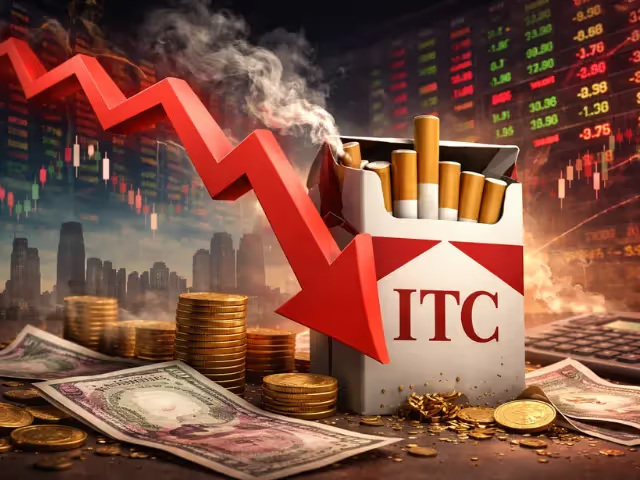
- ITC shares dropped nearly 10% after reports of an excise duty hike on cigarettes
- Trading volumes surged, indicating strong institutional activity
- Higher taxes could impact ITC’s cigarette margins in the short term
- Long-term fundamentals remain diversified beyond tobacco
- Market volatility highlights the importance of research-led investing
ITC Under Pressure: Shares Sink 10% Amid Excise Duty Hike and Massive Volumes
ITC Ltd, one of India’s most tracked large-cap stocks, found itself under sharp selling pressure as its shares slipped close to 10% in a single trading session. The trigger was news around a potential excise duty hike on cigarettes, a core profit driver for the company. What made the fall more striking was the unusually high trading volume, suggesting aggressive participation from institutional investors.
For retail investors, this sudden correction raises important questions. Is this just a knee-jerk reaction to policy news, or does it signal deeper concerns? And more importantly, how should investors approach such events in the Indian equity market?
This blog breaks down what happened, why markets reacted the way they did, and what it could mean for ITC and the broader market.
Why Did ITC Shares Fall Sharply?
Excise Duty Hike and Its Immediate Impact
The primary reason behind the sharp fall in ITC’s stock price was news of a proposed excise duty hike on cigarettes. In India, cigarette taxation is governed by the GST framework along with additional cess, and any increase directly impacts pricing and consumption.
Historically, cigarette volumes are sensitive to price hikes. While ITC has managed to offset some of this impact through calibrated price increases and cost efficiencies, higher taxes usually compress margins in the near term. Markets tend to discount this impact immediately, which explains the sharp sell-off.
Massive Trading Volumes Tell a Story
What stood out during this decline was the spike in volumes. Such high volumes often indicate large institutional trades rather than panic selling by retail investors. Mutual funds and foreign institutional investors tend to rebalance their positions quickly when regulatory risks emerge.
In previous instances, including past tax hikes on tobacco products, ITC has witnessed similar volume-led corrections, followed by periods of consolidation.
Understanding ITC’s Business Dependence on Cigarettes
Cigarettes Still Drive Profitability
While ITC has successfully diversified into FMCG, hotels, paperboards, and agri-business, cigarettes continue to contribute a significant share of profits. The segment enjoys high margins, which help fund growth in other businesses.
This is why any regulatory change affecting cigarettes disproportionately impacts the stock, even if other segments are performing well.
FMCG and Non Cigarette Businesses as Shock Absorbers
Over the last decade, ITC has invested heavily in its FMCG portfolio, building strong brands in packaged foods, personal care, and staples. Although margins here are lower compared to cigarettes, consistent growth has reduced the company’s overall risk profile.
In real-world terms, this diversification works like a financial cushion. When one engine slows down, others help keep the company moving forward.
Broader Impact on Indian Markets
Regulatory Risk and Market Sentiment
The ITC episode highlights how sensitive Indian markets remain to policy and regulatory developments. Sectors like tobacco, alcohol, mining, and energy are particularly exposed to government decisions.
Whenever such news breaks, it often leads to short-term volatility not just in the stock concerned, but across the sector. For example, FMCG and consumption stocks may see mixed reactions as investors reassess tax pass-through abilities.
What This Means for Investors
For long-term investors, such corrections often test conviction. A sudden fall can feel uncomfortable, especially when headlines are negative. However, experienced investors know that regulatory risks are part of investing in India, and quality companies tend to adapt over time.
This is where disciplined research and a long-term perspective become crucial.
How Smart Investors Can Approach Such Corrections
Look Beyond the Headline
A 10% fall in a large-cap stock like ITC does not automatically mean a structural breakdown. Investors should evaluate factors such as balance sheet strength, cash flows, and management commentary.
Use Volatility as a Learning Opportunity
Sharp moves provide valuable insights into how markets price risk. Tracking volume patterns, delivery data, and institutional activity can help investors understand market behaviour better.
Platforms backed by strong research frameworks and investor education, like Swastika Investmart, can play a key role here. Being a SEBI-registered entity, Swastika Investmart focuses on transparent research, tech-enabled investing tools, and responsive customer support, helping investors navigate volatile phases with confidence.
ITC in the Long-Term Context
Despite near-term challenges, ITC remains one of India’s strongest cash-generating companies. Its zero-debt balance sheet, consistent dividends, and diversified business model provide stability.
Regulatory headwinds may affect short-term performance, but historically, ITC has shown the ability to recalibrate pricing and operations to protect profitability. Long-term investors often track such phases to reassess valuations rather than react emotionally.
Frequently Asked Questions
Why did ITC stock fall so sharply in one day?
The fall was triggered by news of a potential excise duty hike on cigarettes, which could impact margins and volumes in the short term.
Does the excise duty hike affect ITC’s entire business?
No, it mainly affects the cigarette segment. Other businesses like FMCG and agri continue to operate independently.
Is ITC still a good long-term investment?
That depends on individual risk appetite and investment horizon. ITC’s strong balance sheet and diversification support long-term stability, but regulatory risks remain.
Why were trading volumes so high during the fall?
High volumes usually indicate institutional activity, such as portfolio rebalancing by mutual funds and foreign investors.
How can retail investors handle such market volatility?
By focusing on fundamentals, avoiding panic decisions, and using reliable research and advisory platforms.
Conclusion
The sharp correction in ITC shares following the excise duty hike news is a reminder of how quickly sentiment can change in Indian markets. While the short-term outlook may remain volatile, long-term investors should evaluate the company beyond headlines and understand the broader business dynamics.
Having access to strong research, regulatory-compliant advisory, and investor education can make a meaningful difference during such phases. Swastika Investmart, with its SEBI registration, advanced research tools, and investor-first approach, aims to support investors in making informed decisions rather than emotional ones.
.avif)
MCX Turns Ex-Split Today: Key Things Investors Should Know Friday, 2 January 2026
Summary
- MCX shares turned ex-date for their first-ever stock split in a 5:1 ratio
- One MCX share of face value ₹10 is split into five shares of ₹2 each
- Stock split improves affordability and liquidity without changing fundamentals
- Existing shareholders remain unaffected in terms of total investment value
- MCX fundamentals and growth outlook continue to stay intact
MCX Stock Split Explained: Why MCX Shares Are in Focus Today
Shares of Multi Commodity Exchange of India (MCX) are firmly in the spotlight as the stock trades ex-date for its first-ever stock split. This corporate action marks a historic moment for MCX since its listing in 2012 and has drawn strong attention from investors tracking capital market and exchange-related stocks.
The development has sparked discussion not only because of the sharp price adjustment seen on trading screens, but also due to what it means for liquidity, retail participation, and long-term investor sentiment in the Indian stock market.
What Is the MCX Stock Split and What Has Been Announced
MCX has approved a 5:1 stock split, meaning one equity share with a face value of ₹10 has been subdivided into five equity shares of face value ₹2 each.
The company fixed January 2, 2026, as the record date to determine shareholder eligibility. As a result, MCX shares traded ex-date on this day, leading to a proportionate adjustment in the share price.
This is the first stock split in MCX’s history, making it a significant corporate milestone.
How the MCX Stock Split Works in Practice
To understand this clearly, consider a simple example.
If an investor held 10 MCX shares before the record date, those holdings will now convert into 50 shares after the split. While the number of shares increases fivefold, the overall investment value remains unchanged.
Before the split, MCX shares closed around ₹11,015. Post split, the stock naturally trades at a much lower price, reflecting the revised face value and increased share count.
Any sharp fall visible on trading apps is purely technical, not a reflection of value erosion.
Why MCX Share Price Appears to Fall Sharply
Many investors may notice an apparent drop of nearly 80 percent in MCX share price on certain platforms. This happens because some trading apps initially display the unadjusted pre-split price.
There is no cause for concern. Once prices are fully adjusted for the stock split, the charts normalize. The company’s market capitalisation and investor wealth remain exactly the same.
Such adjustments are standard for stock splits and are regulated under SEBI’s corporate action framework.
Who Is Eligible for the MCX Stock Split
Eligibility is straightforward.
Investors who held MCX shares in their demat accounts as of January 1, 2026, before market close, are eligible for the split.
Those purchasing MCX shares on or after the ex-date will not receive additional shares under this corporate action.
Typically, shares arising from a stock split are credited to demat accounts within one to two working days after the record date.
Why Companies Like MCX Opt for a Stock Split
Stock splits are often undertaken to make shares more accessible to a broader investor base.
For MCX, the stock had reached a 52-week high of ₹11,218 in December 2025, making the ticket size relatively high for smaller investors. A lower post-split price improves affordability and encourages wider retail participation.
Additionally, stock splits tend to:
- Improve trading liquidity
- Enhance price discovery
- Increase market participation
However, it is important to note that stock splits do not alter earnings, profitability, or business strength.
MCX Fundamentals Remain Intact
The stock split does not change MCX’s underlying business fundamentals. The exchange continues to benefit from strong momentum in commodity derivatives trading and rising participation across energy, bullion, and metals.
Brokerage commentary has highlighted sustained volume growth and elevated commodity volatility as near-term drivers. Profit growth expectations remain supported by increased trading activity and product expansion.
Upside risks include higher traction in commodity options and new product introductions, while risks may arise from regulatory changes, technology transitions, or lower volatility impacting volumes.
Stock Split vs Bonus Issue: Key Difference Investors Should Know
While stock splits and bonus issues may appear similar, their objectives differ.
A stock split reduces the face value and increases the number of shares, keeping share capital unchanged. Dividend per share adjusts proportionately.
A bonus issue distributes free shares from accumulated reserves without changing face value. Dividend entitlement remains unchanged in a bonus issue.
Understanding this distinction helps investors interpret corporate actions more clearly.
What Should Investors Do Now
For existing shareholders, no action is required. The split is automatic, and holdings adjust accordingly.
For new investors, the lower post-split price makes MCX more accessible, but entry decisions should always be backed by research rather than corporate actions alone.
Long-term returns will continue to depend on MCX’s trading volumes, regulatory environment, and growth in India’s commodity markets.
How Swastika Investmart Supports Investors
Tracking corporate actions, understanding technical price adjustments, and evaluating fundamentals requires timely insights. Swastika Investmart, a SEBI-registered financial services provider, supports investors with strong research tools, tech-enabled platforms, and responsive customer support.
With a focus on investor education and data-backed analysis, Swastika helps clients navigate events like stock splits with clarity and confidence.
Frequently Asked Questions
Why are MCX shares in focus today
MCX shares are in focus as they are trading ex-date for their first-ever 5:1 stock split.
What is the MCX stock split ratio
MCX has announced a 5:1 stock split, where one ₹10 face value share becomes five ₹2 shares.
Does the MCX stock split affect fundamentals
No, the stock split does not impact MCX’s business, earnings, or market value.
Who is eligible for the MCX stock split
Investors holding MCX shares before market close on January 1, 2026, are eligible.
Why does the share price look sharply lower after the split
The price drop is a technical adjustment due to the increased number of shares.
Final Thoughts
The MCX stock split is a structural move aimed at improving liquidity and accessibility, not a reflection of changes in business strength. For investors, understanding the mechanics behind such corporate actions is far more important than reacting to headline price movements.
If you are looking to track stocks in focus, corporate actions, and market trends with expert-backed insights, Swastika Investmart can be your trusted investing partner.
.avif)
ETFs in 2026: Why Exchange-Traded Funds Are Becoming the Smart Investor’s Choice
Summary
- ETFs offer low-cost, transparent, and flexible investing for Indian investors in 2026
- Ideal for long-term wealth creation, SIPs, and thematic exposure
- Popular ETF categories include index, sectoral, gold, and international ETFs
- SEBI regulations ensure transparency and investor protection
- ETFs work best when combined with strong research and disciplined strategy
ETF Investing in 2026: A Smart & Scalable Way to Build Wealth in India
Exchange Traded Funds, commonly known as ETFs, have steadily moved from being a niche product to a mainstream investment choice in India. As we step into 2026, ETFs are no longer limited to passive index followers. They now play a crucial role in portfolio construction, tactical allocation, and long-term wealth creation for Indian investors.
With market volatility, global uncertainty, and rising awareness around cost-efficient investing, ETFs are becoming a preferred option for both first-time investors and seasoned market participants.
What Are ETFs and How Do They Work?
An ETF is a market-linked investment instrument that tracks an index, sector, commodity, or asset class and trades on the stock exchange like a regular share.
For example, when you buy a Nifty 50 ETF, you indirectly invest in the 50 largest companies listed on NSE in the same proportion as the index. The ETF’s price moves in line with the underlying index and can be bought or sold during market hours.
In India, ETFs are regulated by SEBI and managed by fund houses, offering transparency, liquidity, and cost efficiency.
Why ETFs Are Gaining Momentum in 2026
Lower Costs Matter More Than Ever
Expense ratios play a big role in long-term returns. ETFs typically have much lower expense ratios compared to actively managed mutual funds. In a long-term investment horizon, even a small cost difference can translate into significant savings.
Transparency and Real-Time Pricing
Unlike mutual funds that are bought at end-of-day NAV, ETFs trade in real time. Investors can see prices, volumes, and holdings during market hours, making decision-making more informed.
Diversification Without Complexity
Instead of picking individual stocks, ETFs allow investors to gain exposure to an entire sector or index in one transaction. This reduces stock-specific risk and simplifies portfolio management.
Popular ETF Categories in India (2026)
Index ETFs
These remain the most widely used ETFs in India.
Examples include Nifty 50 ETFs, Sensex ETFs, and Nifty Next 50 ETFs.
They are commonly used as the core of long-term portfolios.
Sectoral and Thematic ETFs
Sector-focused ETFs have seen rising interest, especially in banking, IT, PSU, infrastructure, and manufacturing themes. Thematic ETFs allow investors to participate in trends such as digital transformation, renewable energy, and consumption growth.
Gold and Commodity ETFs
Gold ETFs continue to act as a hedge against inflation and market uncertainty. In 2026, many investors use gold ETFs as a stabilizer during volatile equity markets.
International ETFs
Indian investors are increasingly seeking global exposure through ETFs tracking US indices like Nasdaq or S&P 500, helping diversify beyond domestic markets.
ETFs vs Mutual Funds: What Works Better in 2026?
While both instruments have their place, ETFs stand out for investors who value cost efficiency, flexibility, and transparency. Mutual funds still appeal to investors seeking active fund management, but ETFs are increasingly preferred for core portfolio allocation.
For example, a long-term investor may use a Nifty 50 ETF as the foundation of their portfolio and complement it with select active funds or stocks.
ETF SIPs: A Growing Trend Among Indian Investors
Systematic investing is no longer limited to mutual funds. Many investors now create disciplined ETF investment plans by buying ETFs regularly through their trading accounts.
ETF SIPs help average market volatility and encourage long-term discipline. This approach is especially popular among young professionals and first-time investors building wealth over time.
Regulatory Framework and Investor Safety
ETFs in India are regulated by SEBI, ensuring strict disclosure norms, transparency in holdings, and investor protection. Fund houses are required to disclose daily portfolio data, tracking errors, and expense ratios.
However, investors should still pay attention to liquidity and tracking difference, especially in niche or low-volume ETFs.
Real-World Example: ETFs in Market Volatility
During periods of market correction, many investors prefer index ETFs instead of timing individual stocks. For instance, when markets experience short-term volatility due to global cues or interest rate concerns, staggered investments in index ETFs can help investors stay invested without taking concentrated risk.
Similarly, gold ETFs often gain attention when equity markets turn uncertain, offering balance to portfolios.
Who Should Consider ETF Investing in 2026?
ETFs are suitable for:
- Beginners looking for simple and diversified exposure
- Long-term investors focused on cost efficiency
- Investors planning disciplined investments
- Traders seeking short-term tactical opportunities
- Investors exploring global markets
How Swastika Investmart Helps ETF Investors
Choosing the right ETF and timing investments requires research and guidance. Swastika Investmart, a SEBI-registered financial services provider, supports investors with strong research insights, advanced trading platforms, and dedicated customer support.
With a focus on investor education and tech-enabled investing, Swastika helps clients understand market trends, ETF strategies, and portfolio alignment based on risk profiles.
Frequently Asked Questions
Are ETFs safe for Indian investors?
ETFs are regulated by SEBI and offer transparency, but returns are market-linked, so risks remain.
Can I invest in ETFs without a Demat account?
No, a Demat and trading account is required to invest in ETFs.
Are ETFs good for long-term investment?
Yes, especially index ETFs, which are widely used for long-term wealth creation.
Do ETFs pay dividends?
Some ETFs may distribute dividends, while others reinvest them depending on the structure.
How much money is needed to start investing in ETFs?
You can start with the price of one ETF unit, making them accessible for most investors.
Final Thoughts
ETF investing in 2026 reflects a shift towards smarter, cost-conscious, and transparent investing in India. Whether you are building your first portfolio or refining an existing one, ETFs offer flexibility and efficiency that align well with modern investment goals.
If you are looking to explore ETF investing with reliable research, robust platforms, and expert support, Swastika Investmart can be a trusted partner in your investment journey.
.avif)
Market Opening Updates: Nifty, Bank Nifty & IT Index Snapshot Today, 2 January 2026
Market Opening Updates: Nifty, Bank Nifty & IT Index Snapshot
Date: 2 January 2026
Indian equity markets opened on a steady note today, reflecting a cautious but stable start to the first trading session of the New Year. Benchmark indices are trading marginally higher, while sectoral trends show mixed participation in early trade.
Market at a Glance
At the opening bell, frontline indices are holding mild gains, supported by selective buying in heavyweight stocks.
- NIFTY 50: 26,155.10 ▲ 0.03%
- NIFTY BANK: 59,757.40 ▲ 0.08%
- NIFTY IT: 38,134.60 ▼ 0.10%
The broader market sentiment remains balanced, with investors closely watching global cues and stock-specific triggers.
Nifty 50: Flat-to-Positive Start
The Nifty 50 has opened marginally higher, indicating a lack of aggressive buying or selling pressure at the start. The index continues to trade near record levels, suggesting consolidation after the recent rally.
Market participants are focusing on:
- Sustainability above the 26,100 zone
- Stock-specific action in index heavyweights
- Follow-through buying as the session progresses
A decisive move above early resistance levels could attract fresh momentum during the day.
Bank Nifty: Slight Outperformance
Bank Nifty is showing relative strength compared to the broader market, trading modestly higher in early trade. Buying interest in select private banking stocks is supporting the index.
Key observations:
- Strength above recent support zones
- PSU banks remain range-bound
- Traders watching intraday momentum near resistance levels
Sustained strength in Bank Nifty often plays a crucial role in determining overall market direction.
Nifty IT: Mild Profit Booking
The Nifty IT index has opened marginally lower, indicating mild profit booking after recent gains. Weakness in global tech cues and cautious sentiment around IT spending trends may be weighing on the sector.
Sector view:
- Near-term consolidation likely
- Stock-specific movement expected
- Long-term outlook remains stable
Investors are expected to remain selective within the IT space.
Market Outlook for the Day
The overall market opening suggests a range-bound to mildly positive session unless fresh triggers emerge. With limited cues at the start, intraday movement may be driven by institutional activity, global market trends, and sector rotation.
Traders are advised to stay disciplined, follow key technical levels, and avoid aggressive positions during early hours.
Trade with Confidence at Swastika Investmart
Staying ahead in fast-moving markets requires timely insights and reliable execution. At Swastika Investmart, investors benefit from SEBI-registered research, advanced trading platforms, and dedicated customer support to navigate every market phase with confidence.
👉 Open your trading account today
Smart starts lead to smarter trades.
.avif)
Market Set-Up for 02 January 2026: Global Cues, FII DII Flow & Technical Outlook
Market Set-Up Today: Global Cues, FII-DII Flow & Technical Outlook
Date: 2 January 2026
Indian equity markets begin the first trading session of 2026 with supportive global cues and a cautiously optimistic derivative setup. Let’s take a detailed look at today’s market set-up, covering global trends, FII-DII activity, derivatives data, and technical levels for Nifty and Bank Nifty.
Global Market Overview
Global cues are largely positive as Asian markets trade in the green despite a holiday in the US markets.
- US markets remained closed due to New Year’s Day
- Dow futures are trading higher by around 104 points
- Asian equities are trading on a positive note
- GIFT Nifty indicates a positive start with a gain of nearly 50 points
Market sentiment: Positive opening bias for Indian equities.
Institutional Activity: FII & DII Data
Foreign and domestic institutional flows show mixed participation in the cash market.
- FII: Net sellers worth ₹3,269 crore
- DII: Net buyers worth ₹1,526 crore
- Net flow: ₹1,743 crore selling pressure
While FIIs remained cautious, DIIs continued to provide support, helping stabilize market sentiment.
Derivatives & Volatility Snapshot
Key derivatives indicators suggest a balanced-to-positive undertone.
- Nifty Put-Call Ratio: 1.13 compared to previous 1.27
- India VIX: 9.18, down by 3.06 percent, indicating lower volatility
- Highest Open Interest (06 Jan 2026 expiry):
- 26200 CE
- 26000 PE
- Max Pain: 26150
Lower VIX and steady PCR indicate reduced fear and controlled volatility in the near term.
FII Activity in Index Derivatives
Change in number of contracts shows selective bullish positioning.
- Futures Long: +1,024
- Futures Short: -936
- Call Long: +44,680
- Call Short: +44,272
- Put Long: +5,372
- Put Short: +23,304
Interpretation: FII positioning remains mixed but tilts towards a mildly positive bias in F&O.
Technical Outlook
Nifty Outlook (Spot)
Nifty has witnessed a strong bounce from the confluence of its 20-day and 50-day moving averages, indicating buying interest at lower levels.
- Immediate resistance: 26,230 and 26,300
- Immediate support: 26,050 and 26,000
Sustaining above the 26,050 zone may encourage further upside momentum.
Bank Nifty Outlook (Spot)
Bank Nifty is showing strength after rebounding from its 50-day moving average.
- Immediate resistance: 59,800 and 60,100
- Key support levels: 59,450 and 59,200
The index needs to hold above 59,450 to maintain its positive structure.
Market View for the Day
The overall market set-up suggests a positive start supported by global cues and reduced volatility. However, cautious FII activity indicates that stock-specific action and technical levels will play a crucial role in today’s trade.
Investors and traders should stay disciplined, focus on key support-resistance zones, and align positions with prevailing market trends.
Trade Smarter with Swastika Investmart
At Swastika Investmart, our SEBI-registered research, real-time market insights, and advanced trading platforms help investors navigate markets with confidence.
.avif)
Stocks in News Today: Key Market Movers to Watch 2 January 2026
Summary
- Ola Electric grabs attention with India’s first indigenous dry electrode battery cell
- Sapphire Foods and Devyani International merger reshapes the QSR space
- MOIL hikes manganese ore prices, aiding metal sector sentiment
- Time Technoplast receives regulatory approval, strengthening growth visibility
- These developments set the tone for sector-specific moves in Indian equities
Stocks in News Today: Market Movers Shaping Indian Equities on 2 January 2026
The Indian stock market begins 2026 with a strong flow of corporate updates and regulatory developments. For active investors and traders, tracking stocks in news today is critical as such announcements often influence short-term price action and long-term valuation trends.
On 2 January 2026, select stocks are in focus across electric vehicles, quick service restaurants, metals, and industrial manufacturing. Let’s break down the key updates, their relevance, and what they could mean for Indian markets.
Why Tracking Stocks in News Today Matters
Daily stock-specific news plays a crucial role in shaping market sentiment. Corporate actions such as mergers, technology breakthroughs, pricing changes, and regulatory approvals often act as immediate triggers for volatility and volume spikes.
For Indian investors, combining news-based insights with fundamentals and technicals helps in making informed decisions, especially in a regulatory environment governed by SEBI norms and disclosure standards.
Ola Electric: Boost to India’s EV and Battery Ecosystem
Ola Electric is among the prominent stocks in news today after announcing the successful development of India’s first dry electrode battery cell, the 4680 Bharat Cell, built entirely from scratch.
Why this matters
India’s EV ecosystem has long depended on imported battery technology. A domestically developed dry electrode cell improves cost efficiency, energy density, and scalability. This aligns well with the Government of India’s focus on self-reliance under the Make in India initiative.
Market impact
- Positive long-term sentiment for EV and clean energy themes
- Strengthens India’s battery manufacturing capability
- Supports the broader electric mobility supply chain
For investors, such innovation-driven developments usually signal long-term value creation rather than immediate price gains.
Sapphire Foods and Devyani International: A Strategic Merger
Sapphire Foods has announced its merger with Devyani International, effective 1 April 2026. Under the approved swap ratio, Sapphire shareholders will receive 177 Devyani shares for every 100 Sapphire shares held.
Industry context
The Indian QSR sector continues to benefit from rising urban consumption, food delivery penetration, and brand-led growth. Consolidation in this space often results in improved operating leverage and stronger brand reach.
What investors should watch
- Synergy benefits post-merger
- Margin improvement through scale
- Integration execution and cost control
This merger places the combined entity in a stronger competitive position within India’s fast-growing organised food services market.
MOIL: Price Hike Supports Metal Sector Sentiment
MOIL has announced a 3 percent increase in manganese ore prices across both higher-grade and lower-grade ferro manganese categories.
Why this is important
Manganese is a critical input for steel manufacturing. With infrastructure and construction demand remaining steady in India, pricing power reflects stable industrial demand.
Likely market reaction
- Marginally positive for MOIL’s revenue visibility
- Supportive for metal and mining sector sentiment
- Reinforces pricing discipline amid cost pressures
Price hikes in commodity-linked companies often signal improving demand dynamics rather than speculative moves.
Time Technoplast: Regulatory Approval Opens New Avenues
Time Technoplast received approval from the Petroleum and Explosives Safety Organisation (PESO) to manufacture and supply high-pressure cylinders with 2-litre capacity.
Regulatory relevance
PESO approvals are mandatory for safety-critical industrial products in India. Such clearances enhance credibility and expand addressable markets.
Growth implications
- Entry into specialised industrial and gas storage segments
- Improved order visibility
- Strengthens compliance-driven manufacturing capabilities
For long-term investors, regulatory approvals often act as enablers for sustainable business expansion.
How These Updates Influence Indian Markets
Collectively, today’s stock-specific developments highlight four key market themes:
- Innovation-led growth in EVs and clean energy
- Consolidation in consumer-facing sectors
- Pricing power in commodities amid steady demand
- Regulatory compliance driving industrial expansion
Investors tracking stocks in news today can use these insights to identify sectoral opportunities while aligning them with broader market trends.
How Swastika Investmart Helps You Stay Ahead
Navigating daily market news requires more than headlines. At Swastika Investmart, investors benefit from:
- SEBI-registered brokerage credibility
- In-depth equity research and market insights
- Advanced trading platforms and analytical tools
- Dedicated customer support and investor education initiatives
By combining real-time news with expert research, Swastika empowers investors to make confident, well-informed decisions.
👉 Open your account with Swastika Investmart
Frequently Asked Questions
Which stocks are in news today on 2 January 2026
Ola Electric, Sapphire Foods, Devyani International, MOIL, and Time Technoplast are in focus due to major corporate and regulatory updates.
Why is Ola Electric’s battery development significant
It marks India’s first indigenous dry electrode cell, reducing dependence on imported EV battery technology.
What does the Sapphire Foods merger mean for investors
The merger with Devyani International could unlock synergies, improve scale, and strengthen presence in the QSR segment.
How do commodity price hikes affect stock prices
Price hikes often improve revenue outlook but depend on demand sustainability and cost management.
Are regulatory approvals important for stock performance
Yes, approvals enhance business credibility and enable expansion into regulated markets.
Final Thoughts
The start of 2026 highlights how innovation, consolidation, pricing strategies, and regulatory compliance continue to shape Indian equities. Tracking stocks in news today helps investors identify actionable trends while staying aligned with market realities.
If you want expert-backed insights, seamless trading, and reliable research support, now is the right time to get started.
👉 Open your account with Swastika Investmart
Smart investing begins with informed decisions.
Indian Stock Market Closes Higher Today, 1 January 2026: Nifty, Bank Nifty & IT Lead Gains
Indian equity markets ended the first trading session of the New Year on a positive note on 1 January 2026, supported by steady buying in banking and technology stocks. Benchmark indices closed marginally higher, reflecting cautious optimism as investors began the year with selective positioning rather than aggressive risk-taking.
The overall tone of the market remained stable, with sector-specific strength helping indices maintain gains through the session.
Market Closing Snapshot | 1 January 2026
At the close of trade today, key indices settled as follows:
- Nifty 50: 26,146.55 🟢 +0.06%
- Nifty Bank: 59,711.55 🟢 +0.22%
- Nifty IT: 38,171.50 🟢 +0.76%
The closing data highlights modest but broad-based strength, led primarily by IT and banking stocks.
Nifty 50 Ends Slightly Higher
The Nifty 50 closed marginally in the green, indicating a steady start to the New Year. Buying interest was visible in select large-cap stocks, while others remained range-bound. The index continued to consolidate near higher levels, suggesting that investors are waiting for stronger triggers such as earnings updates and global cues before taking decisive positions.
The muted yet positive close reflects disciplined participation rather than speculative momentum.
Bank Nifty Shows Relative Strength
Bank Nifty outperformed the broader market, closing with healthy gains. The index benefited from selective buying in banking and financial stocks as investors remained confident about credit growth, asset quality stability, and regulatory clarity under RBI norms.
The strength in Bank Nifty also helped support the broader indices, reinforcing the role of financial stocks as market anchors during early-year sessions.
Nifty IT Leads the Market
The standout performer today was the Nifty IT index, which closed significantly higher. IT stocks gained traction on the back of stable global technology cues, currency comfort, and expectations of steady demand visibility from overseas clients.
IT stocks often attract interest during periods of cautious market sentiment due to their defensive nature and export-linked earnings, which was clearly visible in today’s trade.
Market Sentiment: Calm and Constructive
The first trading session of 2026 was marked by controlled volatility and selective participation. There were no major global shocks, allowing domestic factors to guide price action. Investors appeared focused on portfolio alignment rather than chasing quick gains.
Lower volumes, typical of early January sessions, also contributed to a measured market move.
What Investors Should Track Next
As the market settles into the New Year, investors may keep an eye on:
- Sustained strength in banking and IT stocks
- Global market cues and bond yield movements
- FII and DII flow trends in early January
- Upcoming corporate earnings announcements
For traders, disciplined risk management remains key, while long-term investors may continue to accumulate quality stocks gradually.
How Swastika Investmart Supports Smarter Investing
Navigating daily market movements requires timely insights and reliable research. Swastika Investmart, a SEBI-registered brokerage, empowers investors with:
- Daily market opening and closing updates
- Research-backed sectoral insights
- Tech-enabled trading and investing platforms
- Dedicated customer support and investor education
Whether markets are trending or consolidating, having structured research and tools can make a meaningful difference.
Closing Note
The Indian stock market closed the first trading day of 2026 on a positive note, with gains led by Bank Nifty and Nifty IT. The calm and constructive close sets a steady tone for the days ahead, as investors focus on fundamentals and long-term opportunities.
If you’re planning to approach 2026 with a disciplined and informed strategy, Swastika Investmart is here to support your investing journey.
👉 Open your trading and investment account today
Stay informed. Trade smart. Invest with confidence.

Cigarette Tax Hike: Centre Imposes New Excise Duty Effective February 1
Key takeaways
- The Centre has imposed a fresh cigarette tax hike effective February 1
- Higher excise duty may impact cigarette prices and consumption trends
- FMCG and tobacco stocks could see short term volatility
- Long term impact depends on pricing power and volume resilience
- Investors should track regulatory risks and margin dynamics closely
Introduction: Why the Cigarette Tax Hike Is Back in Focus
The cigarette tax hike announced by the Centre, effective February 1, has once again put the tobacco sector under the spotlight. While tax increases on cigarettes are not new in India, every such move has implications beyond public health. It affects company earnings, government revenues, consumer behavior, and stock market sentiment.
For investors, this development raises familiar questions. Will cigarette companies be able to pass on the higher tax burden? Will volumes take a hit? And how should portfolios respond to renewed regulatory pressure?
This blog breaks down the latest excise duty change, its likely market impact, and what investors should keep in mind.
What Has the Centre Announced?
New excise duty effective February 1
The Centre has imposed a fresh increase in excise duty on cigarettes, effective from February 1. This duty is levied over and above GST and varies based on cigarette length and filter type.
While the exact increase differs across categories, the intent is clear: raise government revenue while discouraging consumption.
Regulatory context behind the move
Cigarettes are among the most heavily taxed products in India. Apart from GST, they attract compensation cess and excise duty. Periodic hikes are aligned with public health objectives and fiscal needs.
Such measures are typically notified through changes in excise schedules under the Central Excise Act.
How Cigarette Tax Hikes Impact the Industry
Pricing power vs volume risk
Historically, large cigarette manufacturers have demonstrated strong pricing power. In many past instances, companies have passed on tax hikes through price increases without a sharp fall in volumes.
However, sustained hikes can gradually push consumers towards cheaper alternatives or illicit products, especially in price sensitive markets.
Impact on margins
In the near term, margins may face pressure if companies absorb part of the tax increase to protect volumes. Over time, margins stabilize if price hikes are fully passed on.
Investors closely watch how quickly and effectively companies adjust retail prices after such announcements.
Stock Market Reaction: What History Tells Us
Short term volatility is common
Whenever a cigarette tax hike is announced, tobacco stocks often react negatively in the short term. The uncertainty around volumes and margins leads to cautious investor sentiment.
However, history shows that strong players tend to recover as clarity on pricing and demand emerges.
Long term investors focus on cash flows
Despite regulatory headwinds, cigarette businesses generate strong cash flows due to low capital intensity. This makes them attractive from a dividend and balance sheet perspective, provided regulatory risks remain manageable.
Broader Impact on Indian Markets
FMCG sector sentiment
The cigarette tax hike could weigh on broader FMCG sentiment in the near term, especially for companies with exposure to tobacco. However, diversified FMCG players with non tobacco revenue streams are better positioned to absorb shocks.
Government revenue considerations
Cigarettes remain a significant source of indirect tax revenue. The hike is expected to support fiscal collections, especially in a period where the government balances growth with fiscal discipline.
Consumer behavior dynamics
Repeated tax hikes may encourage down trading or increased use of non duty paid products. This remains a structural risk for the legal cigarette industry and a key variable for long term forecasts.
What Should Investors Do Now?
Avoid knee jerk reactions
A cigarette tax hike does not automatically translate into long term value erosion. Investors should assess company specific factors such as pricing strategy, brand strength, and cost control.
Track quarterly commentary
Management commentary in upcoming earnings calls will provide insights into volume trends and pricing actions. This information is crucial for making informed decisions.
Frequently Asked Questions
Why has the Centre increased excise duty on cigarettes?
The government aims to raise revenue and discourage consumption due to public health concerns.
Will cigarette prices increase after February 1?
Most likely, manufacturers may raise prices to pass on the higher excise duty, though the timing may vary.
How does a cigarette tax hike affect tobacco stocks?
Stocks often face short term pressure, but long term impact depends on pricing power and volume resilience.
Are cigarette companies still profitable despite high taxes?
Yes, leading players continue to generate strong cash flows, though regulatory risks remain a constant factor.
Conclusion: Balancing Regulation and Investor Strategy
The latest cigarette tax hike effective February 1 reinforces the regulatory risks associated with the tobacco sector. While short term uncertainty is inevitable, long term outcomes depend on how companies manage pricing, volumes, and compliance.
For investors, this is a reminder to stay informed and research driven rather than reactive. With its strong research framework, investor education initiatives, and customer centric approach, Swastika Investmart helps investors navigate such regulatory developments with clarity and confidence.

December Auto Sales Boost: Escorts Kubota Jumps 38.5%, SML Mahindra Surges 67%
Key takeaways
- December auto sales data shows strong momentum in tractors and commercial vehicles
- Escorts Kubota reports a sharp 38.5% year on year sales growth
- SML Mahindra posts an impressive 67% surge, outperforming peers
- Rural demand, infrastructure spending, and fleet replacement drive optimism
- Auto stocks see renewed investor interest across Indian markets
Why December Auto Sales Data Matters for Investors
Monthly auto sales numbers are among the most closely tracked indicators in the Indian equity markets. They offer early signals on consumer demand, rural income trends, infrastructure activity, and overall economic momentum.
The December auto sales boost has caught market attention, especially with Escorts Kubota and SML Mahindra delivering standout growth. At a time when investors were cautious about demand sustainability, these numbers have added fresh confidence to the auto and auto ancillary space.
Escorts Kubota’s 38.5% Jump: What Drove the Surge
Strong tractor demand from rural India
Escorts Kubota’s sharp rise in December sales reflects improving rural sentiment. Higher minimum support prices, better reservoir levels, and stable crop realizations have supported farm incomes. Tractors remain a key indicator of rural capital spending, and Escorts Kubota appears to be benefiting directly from this trend.
Product mix and distribution strength
The company’s diversified product portfolio across mid and high horsepower segments has helped it capture demand from both small farmers and commercial users. Strong dealer networks in north and west India have also supported timely deliveries during the peak season.
Market reaction and stock sentiment
Following the December auto sales boost, Escorts Kubota’s stock saw renewed buying interest. Investors are factoring in better volume visibility and operating leverage as capacity utilization improves.
SML Mahindra’s 67% Surge: A Commercial Vehicle Comeback
Revival in light commercial vehicles
SML Mahindra’s 67% sales growth stands out even within a strong month for autos. The surge reflects a recovery in light and intermediate commercial vehicles, supported by rising logistics activity and last mile delivery demand.
Infrastructure and replacement demand
Government spending on roads, housing, and public transport continues to drive demand for buses and haulage vehicles. Additionally, fleet operators are replacing older vehicles due to tighter emission norms and better financing availability.
Why the market is taking note
For a relatively smaller player, such strong growth changes the narrative. The December auto sales boost has positioned SML Mahindra as a turnaround candidate, attracting interest from investors looking beyond large cap auto names.
Broader Auto Sector Trends Behind the December Rally
Rural economy shows resilience
Tractors, two wheelers, and entry level commercial vehicles are all closely linked to rural demand. December sales suggest that the rural slowdown fears may be easing, at least in pockets where crop output and cash flows remain healthy.
Credit availability and financing support
NBFCs and banks have maintained credit flow to vehicle buyers, supported by stable interest rates and improving asset quality. This has helped convert demand into actual sales, particularly in the commercial vehicle segment.
Regulatory tailwinds
Indian auto companies have adjusted well to emission norms and safety regulations. With most transition costs now absorbed, incremental volumes are translating into better margins, a positive sign for equity markets.
Impact on Indian Stock Markets
Auto stocks regain leadership
The December auto sales boost has reinforced the auto sector’s role as a market leader during economic recovery phases. Stocks linked to tractors, commercial vehicles, and auto components have seen higher trading volumes and improved sentiment.
Spillover effect on ancillaries
Higher vehicle production supports auto ancillary companies involved in engines, axles, tyres, and castings. This creates broader participation across mid cap and small cap segments.
What investors should watch next
While December numbers are encouraging, sustainability matters. Investors should track upcoming quarterly results, margin trends, and management commentary on demand visibility before taking long term positions.
How Investors Can Approach Auto Stocks Now
Balance optimism with discipline
Strong monthly sales data often leads to short term rallies. Long term investors should focus on companies with strong balance sheets, pricing power, and execution capabilities rather than chasing momentum alone.
Frequently Asked Questions
Why did Escorts Kubota report such strong December sales?
Escorts Kubota benefited from improved rural demand, better farm income visibility, and a strong product mix in the tractor segment.
What explains SML Mahindra’s 67% sales surge?
The growth was driven by recovery in light commercial vehicles, infrastructure led demand, and fleet replacement cycles.
Does strong December auto sales guarantee long term growth?
Not necessarily. Monthly data is an indicator, but investors should track consistency, margins, and future order visibility.
How do auto sales numbers affect stock prices?
Better sales often improve earnings expectations, leading to positive stock sentiment, especially in cyclical sectors like autos.
Conclusion: A Promising End to the Year for Auto Stocks
The December auto sales boost has delivered a positive surprise for Indian markets. Escorts Kubota’s 38.5% jump and SML Mahindra’s 67% surge highlight improving demand dynamics in both rural and commercial segments.
While near term sentiment has turned upbeat, smart investing still requires careful analysis and risk management. With its strong research ecosystem, investor education focus, and customer centric approach, Swastika Investmart supports investors in navigating such sectoral opportunities with confidence.
Vodafone Idea AGR Dues: What Lies Ahead for India’s Struggling Telecom Giant?
Key takeaways
- Vodafone Idea’s AGR dues continue to strain its balance sheet despite relief measures
- Government support has prevented immediate collapse, but long-term viability is uncertain
- Capital raising and tariff hikes are critical for survival
- The situation has wider implications for Indian telecom competition and investors
Introduction: Why Vodafone Idea’s AGR Dues Matter
Vodafone Idea’s AGR dues have become one of the most debated issues in India’s telecom sector. For investors, policy watchers, and even everyday mobile users, the question is simple yet crucial: can Vodafone Idea survive under the weight of massive adjusted gross revenue liabilities?
Once a strong challenger in India’s telecom market, Vodafone Idea today represents the fragile balance between regulation, competition, and financial sustainability. Its AGR dues are not just a company problem but a systemic issue with implications for banks, markets, and consumers.
This blog breaks down what lies ahead for Vodafone Idea, what the numbers really mean, and how this situation could shape the future of Indian telecom.
Understanding AGR Dues in Simple Terms
What are AGR dues?
Adjusted Gross Revenue refers to the share of revenue that telecom operators must pay to the government as license fees and spectrum usage charges. In 2019, the Supreme Court ruled that AGR should include not just core telecom revenue but also non telecom income such as interest and rent.
This ruling led to massive retrospective liabilities for telecom companies, with Vodafone Idea emerging as the worst hit.
Why Vodafone Idea suffered the most
Vodafone Idea was already dealing with losses due to intense price competition and high debt from past spectrum auctions. The AGR ruling added tens of thousands of crores in dues, pushing the company into a severe liquidity crisis.
Current Status of Vodafone Idea’s AGR Liabilities
The size of the problem
Vodafone Idea’s AGR dues run into tens of thousands of crores, making them one of the largest corporate liabilities owed to the government. Even after relief measures like moratoriums and conversion of interest into equity, the dues remain a major overhang.
Government support so far
The government has taken several steps to prevent a market duopoly:
- Moratorium on AGR and spectrum payments
- Conversion of interest into government equity, making the government a significant shareholder
- Telecom reforms aimed at improving cash flows
These steps have bought time but have not solved the core issue of long-term profitability.
What Lies Ahead for Vodafone Idea
Capital raising is non negotiable
Vodafone Idea needs fresh capital to survive. Without new equity or strategic investments, meeting future AGR payment schedules will be extremely challenging. The company has repeatedly indicated plans to raise funds, but investor appetite depends on clarity around cash flows and policy stability.
Tariff hikes could offer breathing room
Industry wide tariff hikes have improved average revenue per user. For Vodafone Idea, higher tariffs are essential to generate sustainable operating cash flows. However, tariff increases must balance consumer affordability, especially in price sensitive rural markets.
Network investments remain critical
Even as it struggles financially, Vodafone Idea must invest in network quality and 5G readiness. Falling behind peers on technology could lead to further subscriber losses, creating a vicious cycle.
Impact on Indian Telecom Markets
Competition and consumer choice
If Vodafone Idea exits or weakens significantly, India risks moving towards a duopoly. Reduced competition could eventually hurt consumers through higher tariffs and slower innovation.
Banking and investor sentiment
Vodafone Idea’s debt exposure affects banks and institutional investors. Any adverse development could impact sentiment in telecom related stocks and increase caution toward highly leveraged sectors.
Policy credibility and regulatory confidence
The AGR episode has become a case study in regulatory risk. How the government balances revenue collection with sector sustainability will influence long-term investor confidence in regulated industries.
What This Means for Retail Investors
Stock market perspective
Vodafone Idea’s stock remains a high risk bet. Price movements are often driven by news flow around government relief, fundraising, or policy changes rather than fundamentals.
Learning from the AGR episode
For investors, the AGR saga highlights the importance of:
- Understanding regulatory risks
- Avoiding excessive leverage exposure
- Focusing on companies with strong balance sheets and governance
Platforms like Swastika Investmart help investors analyze such risks with structured research tools and SEBI registered advisory frameworks.
Frequently Asked Questions
Will Vodafone Idea be able to pay its AGR dues?
Vodafone Idea can meet near term obligations only with continued government support and successful capital raising. Long-term sustainability depends on profitability and tariff growth.
Has the government waived AGR dues for Vodafone Idea?
No waiver has been granted. Relief has come in the form of moratoriums, equity conversion, and payment restructuring.
Is Vodafone Idea bankruptcy a possibility?
While immediate bankruptcy risk has reduced, financial stress remains high. The company’s future hinges on funding and operational turnaround.
How do AGR dues affect telecom users?
In the long run, high sector costs can lead to higher tariffs and reduced competition, impacting consumer choice.
How Swastika Investmart Helps Investors Navigate Such Risks
In complex cases like Vodafone Idea, informed decision making is critical. Swastika Investmart stands out through:
- SEBI registration ensuring trust and compliance
- Strong equity and sector research tools
- Tech enabled investing platforms for data driven decisions
- Investor education initiatives that explain regulatory and market risks clearly
- Dedicated customer support for long term investors
Whether tracking telecom stocks or building a diversified portfolio, having the right research partner makes a real difference.
Conclusion: A Defining Chapter for Indian Telecom
Vodafone Idea’s AGR dues represent more than a balance sheet issue. They reflect the evolving relationship between regulation, competition, and sustainability in Indian telecom. While government support has kept the company afloat, the road ahead remains challenging.
For investors, this episode reinforces the need for disciplined analysis and reliable advisory support. With its research driven approach and investor first philosophy, Swastika Investmart empowers market participants to navigate such high risk narratives with confidence.

.avif)
.avif)

.avif)